


Cafeteria manager Neda Grayson has worked in Hawthorne Elementary’s kitchen for seven years, but until this week she was never trained as a chef. After a few hours with a master, she was firing up the stove and making honey roasted sweet potatoes from scratch.
“This right now, we’re like ‘Next Level Chef’ to me,” said Grayson, a huge Gordon Ramsay fan. “So I’m loving it.”
Dozens of cafeteria managers like Grayson underwent training at Tulsa Tech’s Owasso teaching kitchen this week, learning knife skills, safe cooking methods and fundamentals of flavor from a state-funded program, Cooking for Kids. The chef-led training is part of Tulsa Public Schools’ ongoing transition to bringing management of child nutrition back in house.
Grayson is praying the change helps improve food quality and student satisfaction.
“I’m all good with challenges, I love change and challenge,” she said. “It’s something new I’ve gotta learn.”
School meals at TPS have been managed by outside companies for more than three decades, resulting in menus that are largely heat-and-serve. Earlier this year, the Flyer reported on mounting frustration from students and staff with the district’s current vendor, Aramark. In June, the district announced it would return to operating its own program. With the shift, TPS hopes to reinstate more speed-scratch cooking, which takes more time and skill.
Aramark is expected to run child nutrition through December until TPS is self-sufficient.

“I’m a little excited, a little nervous because I’ve been in food service management — we’re dealing with them for over 20 years, so it’s gonna be a little different,” area manager Kurt Stillman said while weighing ingredients for roasted buffalo cauliflower.
When Stillman started at TPS in 2009, the district had 60,000 students. His last culinary training with child nutrition was with another food service management company around 15 years ago. This week, he and other staff spent the day working on recipes that were fresh, tasty and compliant with the state’s nutritional guidelines.
“It helps with their presentation, it helps them with understanding the waste, good knife skills,” he said. “It’s been a long time since we’ve had that kind of training.”
It’s imperative to give cafeteria staff safe and proper techniques to do their job, said Cooking for Kids chef Callie Fowler Farish. Anyone can cook, she added, if they’re given the confidence and skills to do so.
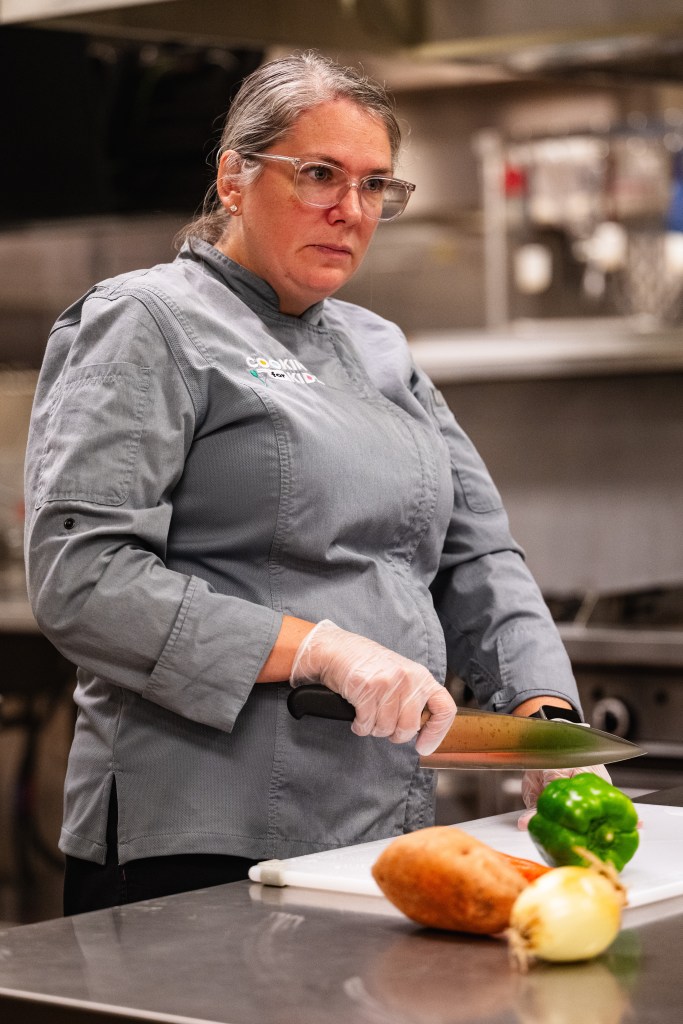
“Trying to ensure that their kids have access to fresh fruits and vegetables is a huge deal,” said Fowler Farish. “A lot of the students in TPS are underprivileged and so this could be their only hot meal, or their only meal that they get throughout the day.”
Fowler Farish also worked with the district’s contracted adviser for the transition, Lisa Griffin, when Union Public Schools moved school meals in house. Before coming back to Oklahoma, Fowler Farish trained at the Culinary Institute of America, one of the best culinary colleges in the world.
The pair believe the training will make a big difference at TPS.
“It’s not just the actual techniques and technical stuff. It’s the pride that they get from making something that tastes good, smells good, kids like,” Griffin said. “I think they’re gonna see a change in the kids and their response to the food.”
Griffin has gotten “no sleep” in the first two months on the job. She has a lot on her plate.
She’s tackling labor challenges, getting the district back in compliance for bids on food commodities and pushing for evaluations of decades-old freezers in the district’s warehouse. To make the transition to in-house management, TPS will need to set up several back of house systems for routine tasks like menu writing or inventory records, then train 70 managers on the new programs.
There’s also the issue of food waste and quality. Currently, only 65% of TPS kids are eating lunch and 32% are eating breakfast, Griffin said, creating millions of dollars in lost revenue for the district.
Afsheen Gul, an area manager at TPS, says staff are ready for the change and managers are eager to train their teams in new culinary skills.
“We’re learning a lot of new things which we never use in our kitchen,” Gul said. “Everything is like powder, or we never use a lot of chopping, so I mean, it’s a good experience for us.”
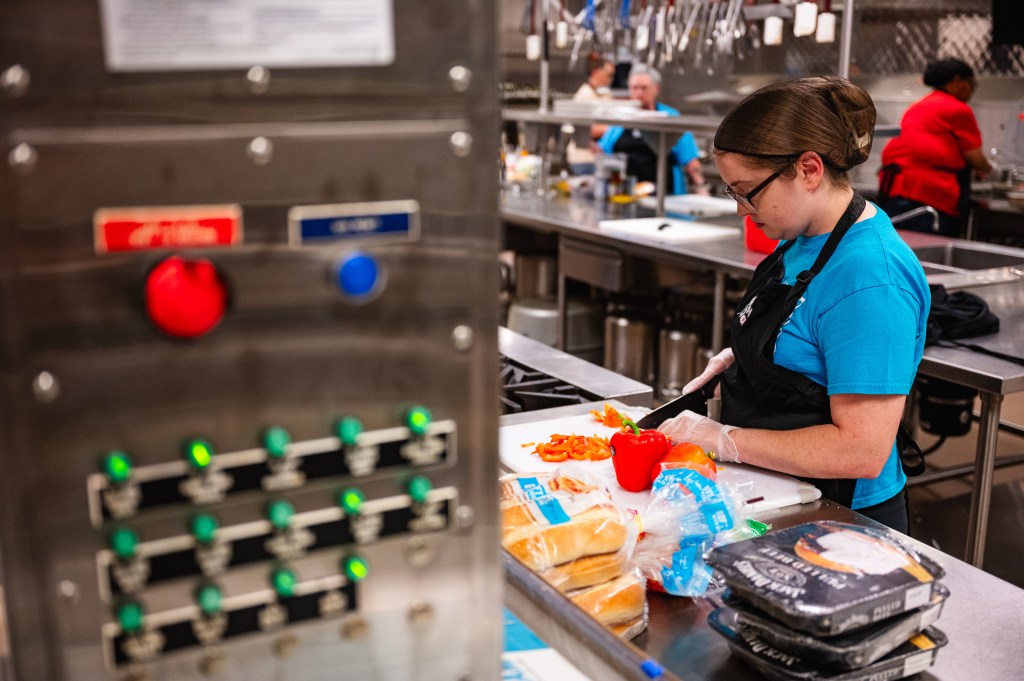
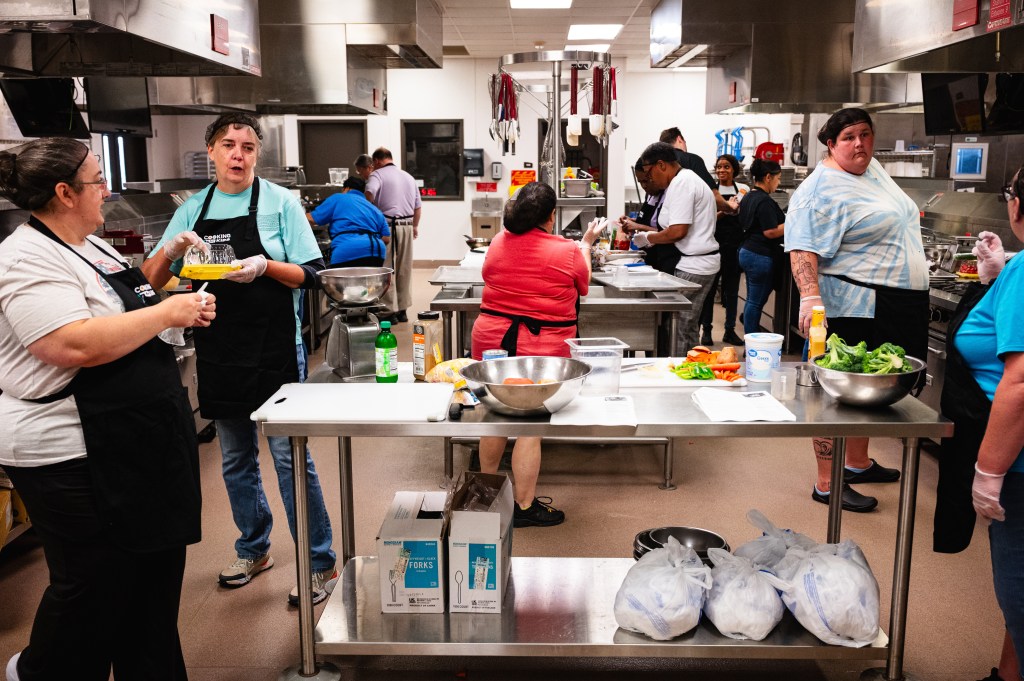
The single training session isn’t enough, Griffin says. Managers share what they’ve learned in cafeterias across the district, but Griffin hopes to host another training for kitchen cooks while schools are on break in January.
Fowler Farish will check in with TPS staff throughout the year with 10 “chef consults” assessing the program’s training needs and working with teams to improve service through an action plan.
After training, labor is another focus.
The child nutrition team is not efficient after years of bringing people in and moving them around, Griffin said, often with differing hours and pay scales. The district will also likely need to make cuts — gradually and through attrition — then start hiring more intentionally.
After more than three decades under food service management companies, an “us versus them” culture has emerged in many kitchens, Griffin said. She hopes the next leaders in child nutrition take up a “servant leader” approach instead.
“If I can change the culture and they help me do that and impact their schools … I think we’re gonna have a lot better food, a lot happier environment in the kitchens, and that transfers to the kids who need to eat,” Griffin said.
News decisions at the Tulsa Flyer are made independently of our board members and financial supporters. Read more about our editorial independence policy here.
