


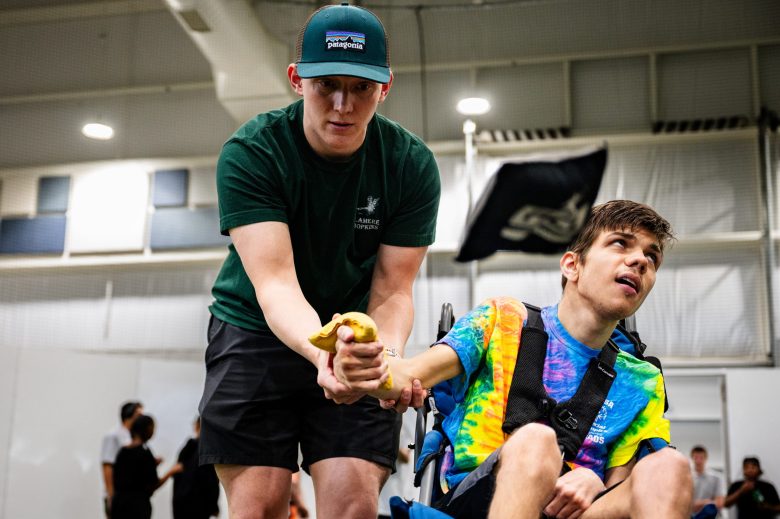
Holden Crawford, 25, has participated in Special Olympics since grade school. After graduating from Memorial High School in 2020, he continued competing — and as part of a district-wide push for inclusion, his family plays alongside him.
“I’m the oldest of six, so I’ve got to watch everyone else grow up and compete,” said Crawford’s brother, Hayden. “He’s the only one who I’ve gotten to compete with, so that’s pretty special.”
The brothers joined 140 other Tulsa Public Schools teams in the district’s third Unified Cornhole Tournament at Nathan Hale High School Thursday. The “unified” approach to Special Olympics sports allows students with disabilities to play on the same teams as their peers without disabilities. That model is growing at TPS, from just 20 participants to nearly 300 in the last three years.
“Unified sports comes out of a need, that basically is a global need, for inclusion for people with intellectual and developmental disabilities,” said Jennifer Diggs, a special education transition coordinator at TPS.
She’s led the expansion of unified sports at the district level.
“All schools have historically had some exclusionary practices for that population,” Diggs said. “And in order for them to be part of their communities, we have to connect them with their peers that don’t have disabilities.”

Increasing participation district-wide
Janet Parker led the Memorial High School Special Olympics program for more than three decades and started spreading the unified model. Parker joined Diggs in creating a district-wide initiative.
Inside Hale High School’s new soccer field complex, everyone from elementary students to adult graduates joined in that effort.
“I always enjoy playing cornhole,” Devon Cook, 20, said while participating in the spring tournament.
Cook first got involved as a sophomore at Memorial. He loves playing with his teachers, his mom or anyone who wants to join in.
“There aren’t a lot of programs or things for sped adults to do, especially in Tulsa. This gives them something to be proud of, something to look forward to,” said Cook’s mom, Lacie. “Devon doesn’t do a lot outside of this, so this gets him that sense of camaraderie.”
Like many other TPS Olympians, Cook competes in the statewide games based in Stillwater. Olympians stay in dorms, without their families, while they compete. It’s like a festival, Lacie Cook said. Athletes are also given free eye exams and dental care while attending.
“He doesn’t really get to do much else far away from home, so that’s a big thing for him,” she said. “He likes to take that trip, and be independent, and he enjoys himself.”
The best athletes “play fair with any partner,” Cook said.
When Cook first started on unified teams, Memorial and Tulsa Transition Academy had 28 athletes and unified partners — most of whom were family members. The next year, 60 athletes and unified partners joined in from all high schools except Booker T. Washington and Edison.
Now, the roster for spring games is up to 278, with more unified partners than Olympians.
‘Spread the word’
“It can really change a lot of things for the students,” said Simeon Thomas, a senior at East Central and unified partner. “It’s more so for them to have fun and to not just do the same thing every day.”
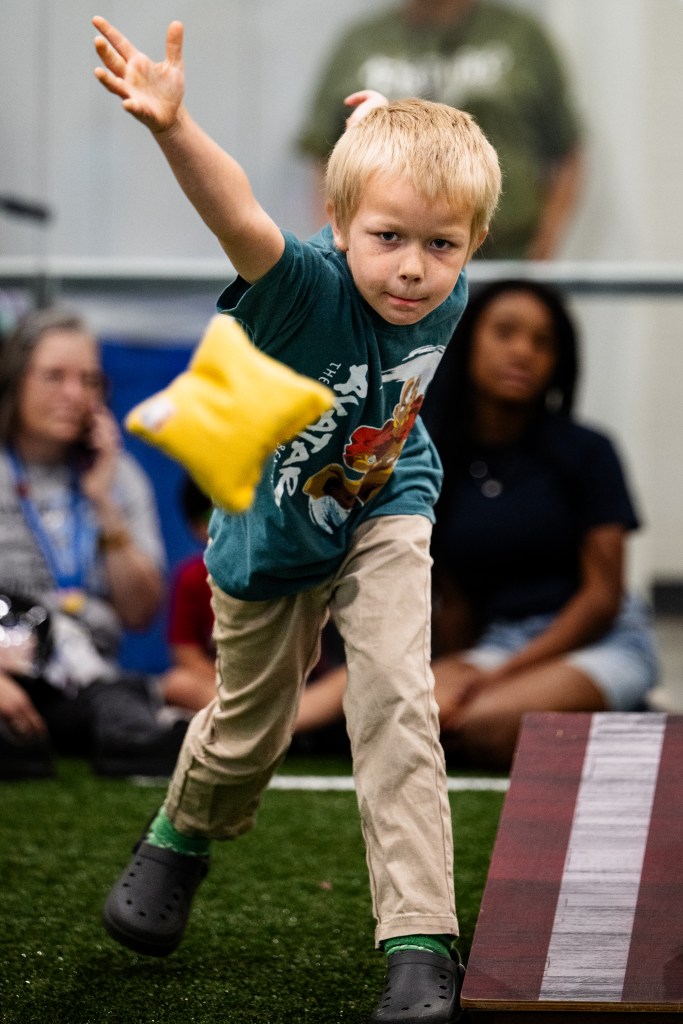
Thomas plays with Olympian Isaac Aguilar, who prefers bocce ball to cornhole — but was excited nonetheless to play last week.
“You get better” by playing around other students, Aguilar said. Everything about it is “exciting,” he said.
East Central High School boasts a large team, with 22 students at the spring tournament. The size is partially due to more unified partners who “spread the word” with peers last year, said Mindy Schmid, East Central special education teacher.
Thomas says participating as Aguilar’s unified partner for two years changed his views on peers with disabilities.
“To be open to helping, get to know them for who they are and not just put them as a title, or someone who needs help,” Thomas said. “They just do little things differently to us.”
Through unified sports, several TPS high schools have launched a “spread the word campaign” to end the use of the r-word, a slur for people with disabilities. Next year, Hale High School hopes to add unified athletics as a physical education class. Diggs hopes in the future every elementary school will have a team.
“The real benefit is when you walk into the cafeteria and you see the unified partners having lunch with the Special OIympians,” Diggs said. “They’re just like any other kid in the cafeteria, any other group of friends, and you wouldn’t be able to really pick out which group is which.”
At TPS, the Special Olympics inclusion extends to age too. Dozens of Tulsa Transition Academy students and graduates competed Thursday. TTA educates students who received special education until they turn 22. But even after they graduate, they’re welcome to continue attending competitions.
Tina Sanders, 20, is a student at TTA and won first place in her statewide division last year. It was her first time competing, something she says built her confidence.
“You can do it,” Sanders said. “It makes you feel better to talk to other people, it makes me so proud.”
Now, she competes with her best friend, Anisha, who she met at McClain High School and will join her at TTA next fall.
The cost of participating
“Disabilities are so misunderstood,” said Martin Caudle, the director of special education programs at the district. “So often our students with significant disabilities don’t have those social skills and they don’t know how to make friends sometimes, so to be able to create those connections, it’s wonderful.”
Caudle has spent 30 years participating in Special Olympics for a “selfish reason.”
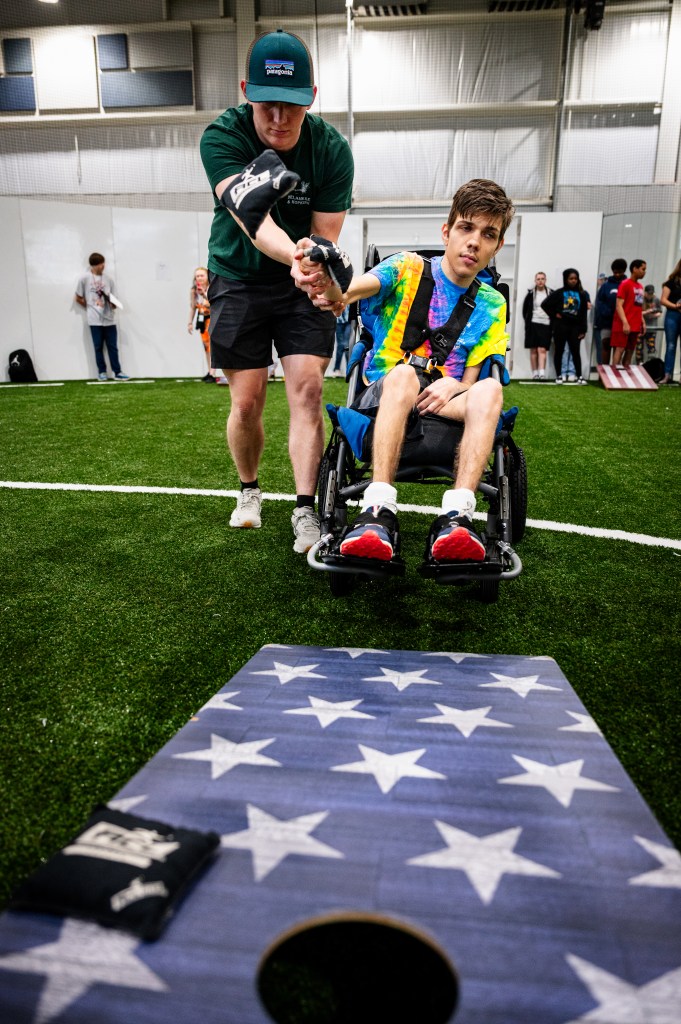
“I get so much out of it, because it’s so wonderful to see the kids just, like their faces light up — everybody wins,” he said.
But cost and time are barriers for district-wide expansion, Diggs said.
It costs about $200 per person for the entire Special Olympics season and the program is 100% funded through outside fundraising, according to Diggs. The district-wide team draws on a small grant from Special Olympics and sells T-shirts but has not secured consistent corporate sponsorships.
“Everything that we do, we are constantly begging for money,” Diggs said. “We do have some incredibly supportive parents that have helped with some fundraising, but most of it is just kind of trying to scrape together the funds.”
It also requires about 200 hours worth of work each year to manage all the players, Diggs said. That includes tracking down releases and entering each school delegation and competitor manually into the Special Olympics system.
Even with the obstacles, Diggs continues the push for more expansion and inclusion at the district.
“It’s been a challenge, but I would do it 100%,” Diggs said. “When all those kids show up and they’re all playing, and they’re winning their ribbons and they’re doing their thing, I’m going to be standing there saying it was totally worth it.”
News decisions at the Tulsa Flyer are made independently of our board members and financial supporters. Read more about our editorial independence policy here.
