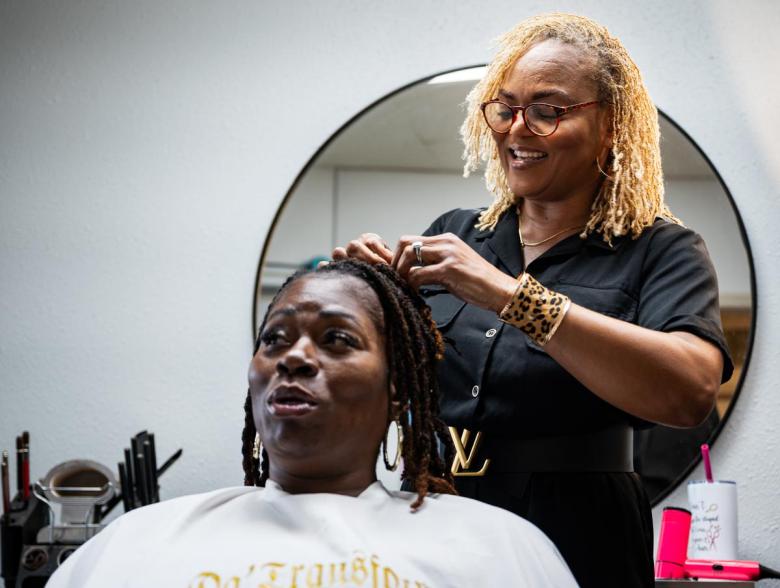
It’s not often that you find a bag of money when you’re opening a store, but Amanda Woody did. The owner of Mandy’s Beauty Supply got the keys to her first store in Okmulgee nine years ago.
“My husband and I, we were like, ‘Oh my God, this is a blessing. We got some free money,’” Woody said.
She moved to Tulsa from Houston in 2001 and spent over a decade working as a surgical assistant. It wasn’t until she and her husband watched a documentary about the lack of Black-owned beauty supply stores that they began to pursue their own.
After two years in Okmulgee, Woody moved her shop to Tulsa near East 41st Street and South 72nd East Avenue, where she has been since 2019.
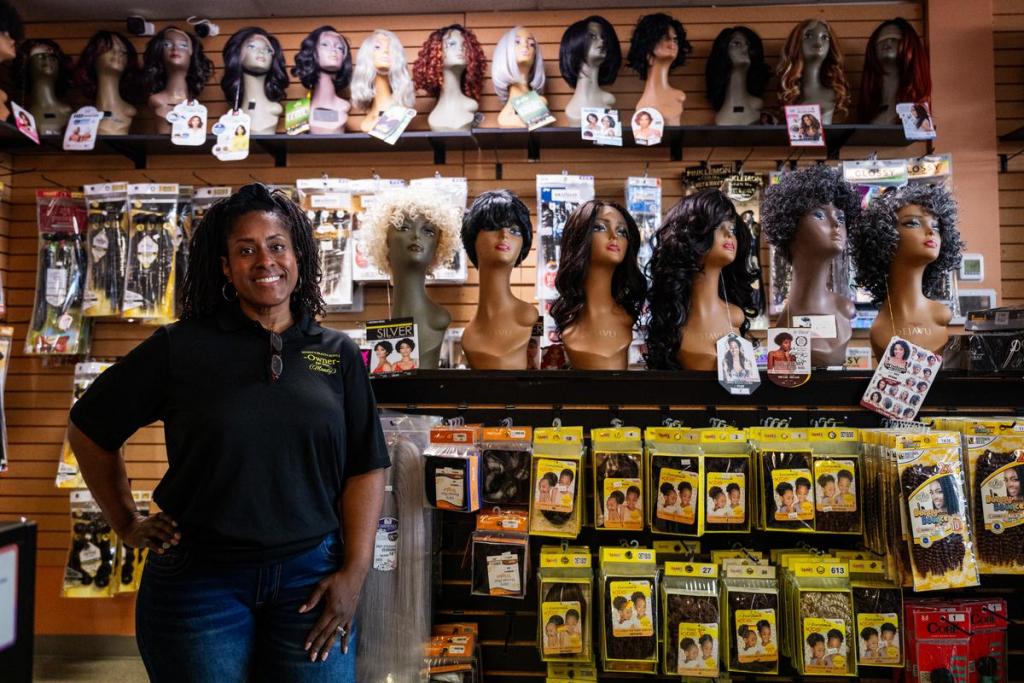
In fact, Mandy’s Beauty Supply is the only Black-owned beauty supply shop in the city. According to Woody, her story could have turned out a lot different had she not found that bag.
The money belonged to the previous owner, who left all the merchandise in the store as well as some personal belongings. She promptly called the previous owner so she could return the money, and as a show of gratitude, the former owner issued Woody a warning.
“She said, ‘You know what, Mandy, they’re not going to sell to you,”’ Woody recalled.
The word “they” was a reference to major hair care manufacturers that supply ethnic beauty stores. These companies, she said, are mainly South Korean-owned and dominate the manufacturing, distribution and retail sale of wig and hair extensions.
But the warning also came with a favor.
“She said; ‘I’m going to call some people for you.’ So right there that day, she called several other manufacturing companies and they opened three of the major accounts for me that day,” Woody said.
A history of suppliers
South Korean-owned businesses “control over 85% of all ethnic hair care products sold” in beauty supply stores, according to Felix Chang, a professor at The Ohio State University’s Morwitz College of Law.
The exclusion of Black people on the supply side stems back decades, according to Chang, who has authored studies detailing the origins of the ethnically segmented market of the natural hair industry.
South Korean business owners began to get into ethnic hair products during the Cold War, specifically during the 1960s, Chang told The Eagle. At the time, there was a boycott against hair from China — giving Koreans an advantage in the market.
This coincided with waves of Korean immigration into the U.S. where they faced discrimination, motivating them to get their hands into niche ethnic markets. At the same time, Black entrepreneurs struggled with obtaining financing to start businesses, which made acquiring products a difficult endeavor.
“Over time, it just kind of evolved where Koreans and Korean Americans just began to have more and more of a lock on their product, and they would just tend to distribute and tend only to sell to Korean Americans,” he told The Eagle.
Breaking the bank
Afro textured hair is one of the many distinguishing traits of African American culture. It serves as a form of expression, and sometimes resistance, against European-centric beauty standards.
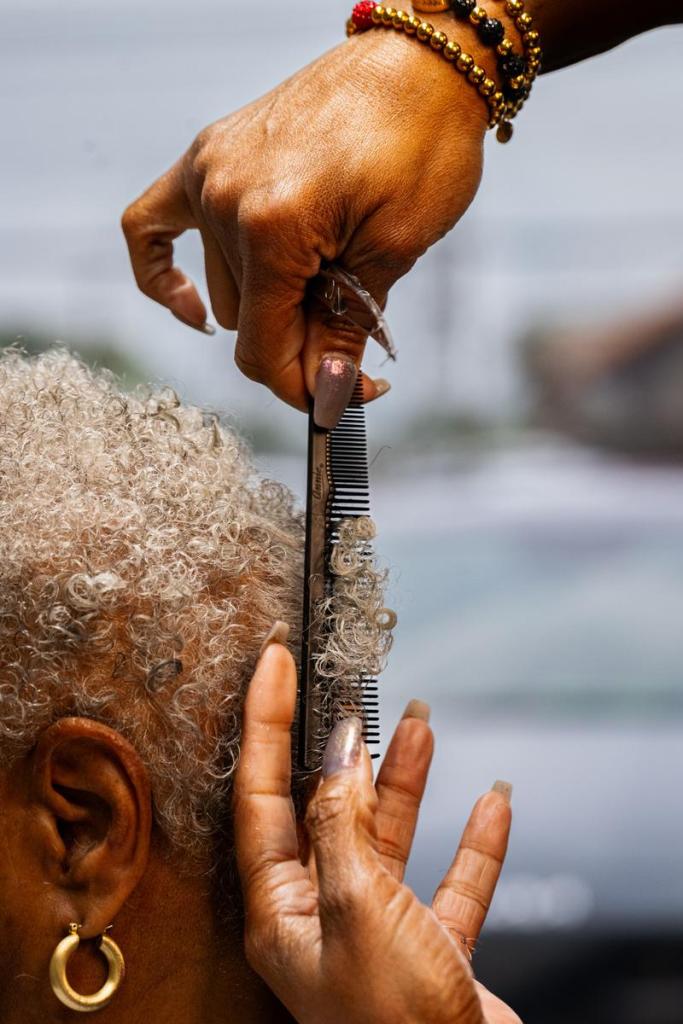
A person can rock a low cut, braids, bantu knots or locks, just to name a few. But, according to some hair stylists, managing these styles and maintaining healthy hair can also break the bank.
“Back then, the hairstyle (would) be like $25, (but now) a hairstyle is $75,” Tonya Johnson, owner of Tulsa salon Nu Xpressions, told The Eagle. Depending on what you get, braids can run someone $150 or more.
Johnson has been in the salon business for about 29 years and has watched the business of natural hair grow into a multi-billion dollar industry that involves hair oils, creams, wigs and extensions.
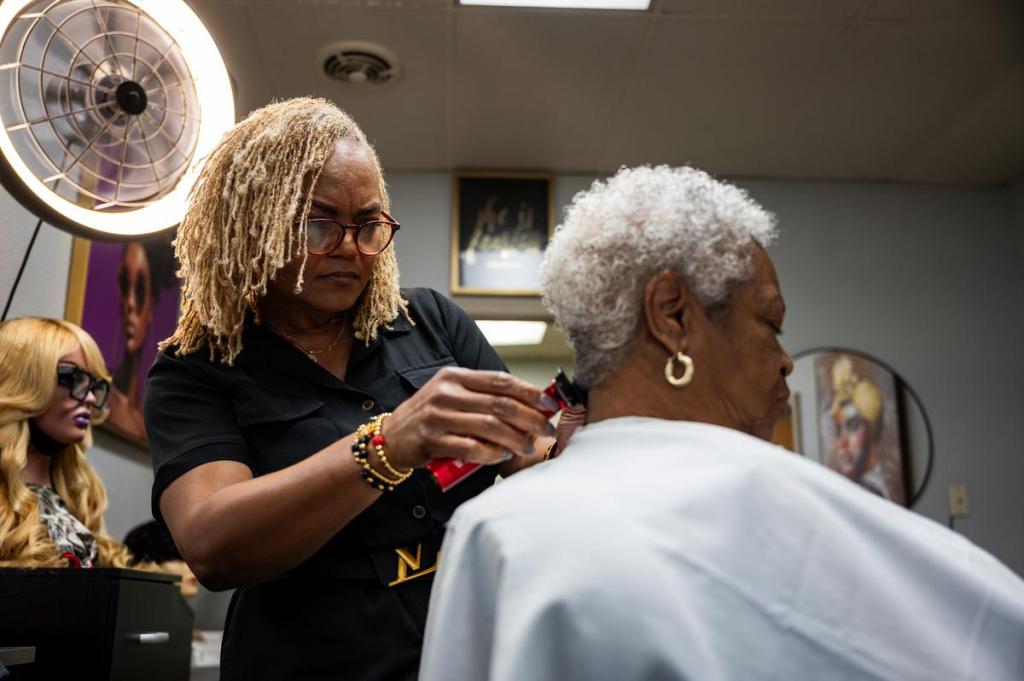
“We want to look beautiful. We want to look together for work. So what we do is budget it in as if it was a bill,” she said.
Black women are responsible for purchasing over 70% of all wigs and extensions, making the costs of maintenance an expensive endeavor that has only increased over the years.
Despite this, most beauty supply shops are not owned by Black people. That makes places like Mandy’s a rare breed.
“If you’re a Black-owned business, and you can’t get inventory, you can’t break into the market because inventory is controlled by Korean and Korean American wholesalers, who, for a variety of reasons, would sell only to Korean Americans,” Chang said.
Good hair, bad hair
Black people have also historically faced regulations and policing of their hair. Negative stereotypes have also been prescribed to Black people with certain natural styles.
A 2020 study by Michigan State and Duke universities titled “The Natural Hair Bias in Job Recruitment” found that Black women face the highest likelihood of being subjected to hair discrimination.
The study suggests that Black women who wear natural hairstyles are less likely than white women or Black women with straight hair to get job interviews.
Recognizing that, Johnson said, she prioritizes making her salon a safe space for her clients — almost like a therapist’s office.
“Back then, we had to be forced to wear our hair straight to even get a job, because they felt if our hair wasn’t straight, it was nappy and didn’t look good on TV or film,” Johnson said.
That has had a direct impact on the market — and making it a lucrative venture for some, Chang said.
“That means that no matter how much you raise the price, Black women will continue buying hair,” Chang said. “If you know that you can’t advance professionally without having long, straight hair, (the point where you would be priced out) would have to be very, very high.”
Ownership as the goal
Woody’s pathway to ownership didn’t begin with the favor bestowed upon her predecessor. Prior to opening her store in Okmulgee, she tried her hand at opening a store in Tulsa but was turned away.
“Before we found the store in Okmulgee, in every space, every location that we would try to get, (manufacturers) would say, ‘You’re too close to Kim’s (Beauty Supply), so we can’t give you a contract. Oh, you’re too close to such and such, so we can’t give you a contract,’” Woody said.
Chang described the relationship between consumer and distributor in the natural hair space as “not natural.”
“You would not expect for a good that’s consumed by one community to be produced by people of another community, to maintain that kind of ethnic misalignment for so many decades,” he said.
Chang suspects the market will change in the coming years as younger generations inherit their parents’ businesses. Younger people, he said, are more sensitive to interracial dynamics, which could result in more collaboration between communities.
Instead of only having to rely on favors, and what Woody described as “God opening up doorways,” she now wants a seat at the table. She plans to either become a manufacturer or promote Black-owned options.
“We could still keep our manufacturing company overseas, but we would still own it, and then we could take back some of this industry,” Woody said. “When Black people want to open a beauty supply, you’d have your hair that’s manufactured in a Black-owned manufacturing company, and they can give you the contracts.”
As for her store, Woody’s next goal is to stop leasing and relocate to a building she owns sometime this year. That, she says, is another step toward ownership.
Ismael Lele is a Report for America corps member and writes about business in Tulsa for The Oklahoma Eagle. Your donation to match our Report for America grant helps keep him writing stories like this one; please consider making a tax-deductible gift of any amount today by visiting this link.