Only 53% of eligible voters in Oklahoma turned out for the 2024 general election — the second-lowest percentage in the U.S. behind Hawaii.
The low turnout during a presidential election was the latest example of a much larger trend as Oklahoma voters have consistently avoided the polls.
Trying to get more people to weigh in on national and local elections has been an uphill battle. Tamya Cox-Touré, executive director of the ACLU of Oklahoma, told The Eagle she thinks it comes down to apathy.
“People just do not believe that there are candidates that share their values,” Cox-Touré said.
Though residents might not have much say over who decides to run, she said policy changes could also play a role in increasing turnout.
“If we really want voter participation, we need to make sure we’re creating environments that make it easier for people to vote,” she said.
That could include things like automatic voter registration at age 18, allowing same-day voter registration, getting rid of the notary requirement for absentee ballots and increasing early voting dates. The U.S. is nearly alone in putting most of the responsibility to register to vote on individuals, according to NPR.
Right now, Oklahoma allows in-person, early voting the Wednesday, Thursday, Friday and Saturday before general elections and the Thursday, Friday and Saturday before all other elections like primaries or runoffs.
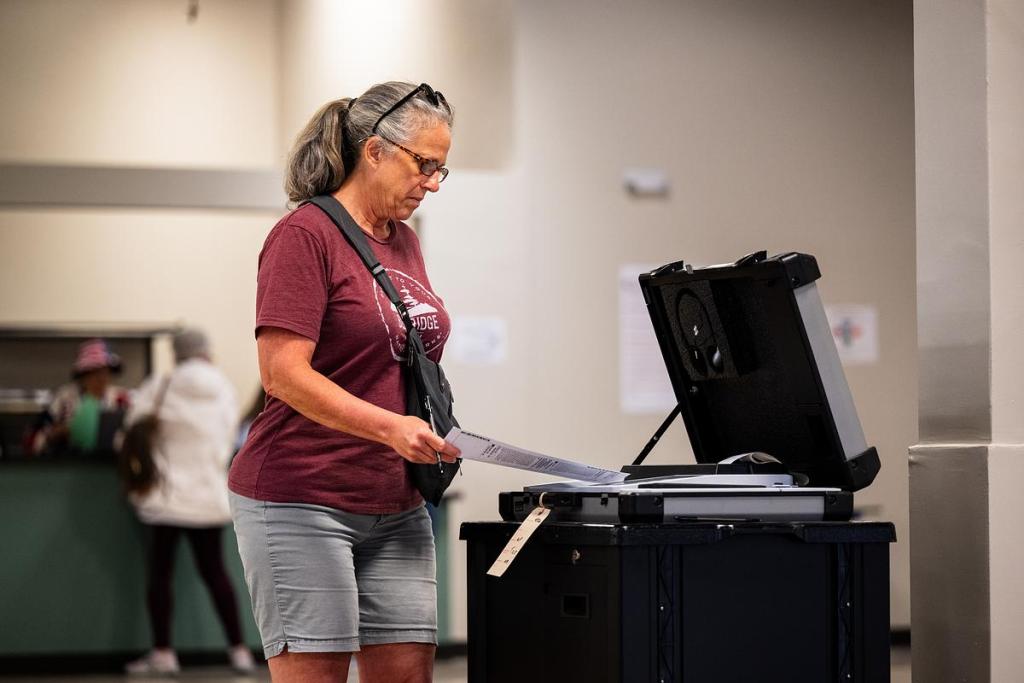
Beyond policy changes, advocates like Andy Moore said grassroots efforts can help the state shift from what he calls “a culture of civic disengagement” to one of engagement.
A decade ago, Moore formed Let’s Fix This with friends who wanted to talk with lawmakers after the state’s 2016 revenue crisis. Since then, the Oklahoma City-based organization has facilitated neighborhood canvassing sessions, voter registration drives and meetings with state lawmakers.
“What we’ve learned is that there are a lot of Oklahomans who want to see things get better (and) who want to be more involved in civic life. But they aren’t sure where to get started,” he said.
Even people who are well-versed in the process remain disengaged, Moore said. Part of that could be attributed to a single party having a grip on the state, making voters on the losing side feel apathetic.
A 2011 Fair Vote investigation found states that were overwhelmingly in favor of Democratic or Republican in presidential elections saw decreasing voter participation, regardless of party affiliation. Republican presidential candidates have won every county in Oklahoma since 2004.
Moore and other advocates point to the state’s practice of closed primaries — meaning voters have to be registered with a party to participate — as yet another barrier.
For the nearly 374,000 active registered Independents, that means either picking a party or sitting out the selection of candidates in the June 16 primary. However, any registered voter can weigh in on State Question 832, which would gradually increase Oklahoma’s minimum wage to $15 an hour over the next three years.
Distrust in elected officials is among the other reasons Oklahomans are reluctant to cast a ballot, Moore said.
“A lot of people feel like politicians are a bunch of crooks and they’re going to do whatever they want to do to benefit themselves and their wealthy donors and they don’t really feel like elected officials really care about what’s happening for regular everyday Oklahomans,” he said.
Ultimately, he said, “people feel like their vote doesn’t matter.”
While many civic engagement efforts target getting people registered, Jim Provenzano is focusing his outreach on the state’s inactive or infrequent voters. A 2024 report found that Democrats and Independents were overwhelmingly represented in the group of registered voters who the state deleted for inactivity.
“People who are already registered also aren’t voting,” Provenzano said. That’s why the Tulsan started the nonprofit Why Don’t We Vote, Oklahoma, though the organization is still in its infancy.
These trends play out in local elections as well. Tulsa had 402,547 registered voters ahead of the 2024 municipal election, but only about a third voted in the city’s mayoral election.
For ACTION Tulsa volunteers, reversing the trend of low turnout starts with having more conversations around hyper-local issues like stray dogs and sidewalk safety. ACTION Tulsa is a non-partisan organizing group that helps people get politically engaged.
“A lot of our work comes out of wanting to know what’s going on in the lives of people who are hopefully going to show up to vote on candidates that represent them [and] to vote on issues that matter to and impact their family,” Whitney Waller Garcia, a pastor and ACTION representative at Harvard Avenue Christian Church, said.
Beyond voting, Cox-Touré encouraged people to stay and remain civically engaged.
“It’s more than just voting in your general election,” she said. “It’s making sure that you are part of the decision-making process that impacts our daily lives.”