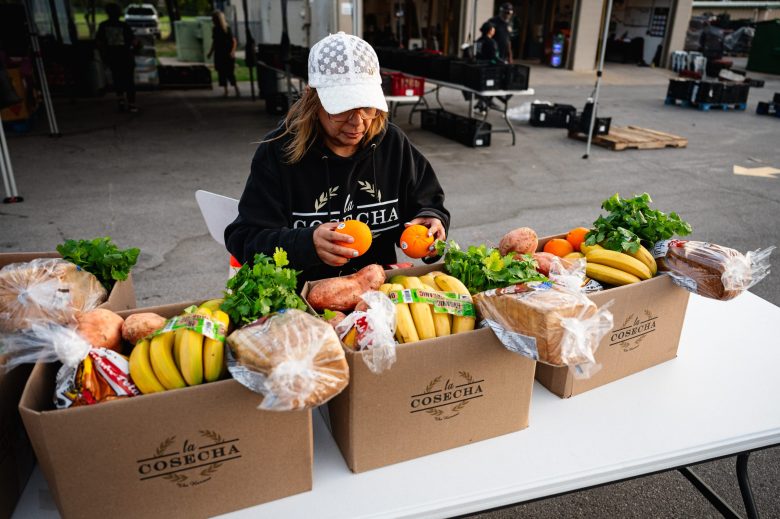
Before Tulsa is awake on Thursday mornings, the team at La Cosecha is setting up tarps and moving boxes on forklifts as early as 5 a.m. Each week, the team and its volunteers provide an average of 20,000 pounds of food throughout the day.
By 5 p.m., everything will be taken down and preparations for the following week’s distribution begins.
On Tuesdays, Wednesdays and Saturdays, the faith-based Loaves & Fishes Ministries provides breakfast and groceries to “Feed the Spirit, Soul, and Body.”
Less than two miles away, St. Thomas More Catholic Church’s Helping Hands Food Pantry offers food twice a month on the church grounds.
In Tulsa County, 26.1% of children face food insecurity, with 36% likely ineligible for federal nutrition programs, according to 2024 data kept by the hunger relief organization Feeding America. Across Oklahoma, the child food insecurity rate is 27.3%, with 35% likely ineligible for federal nutrition programs.
According to the Food Bank of Eastern Oklahoma, the state ranks among the hungriest in the nation with a hunger rate of 14% for all residents. About 25% of children live in food-insecure homes. One in four children in eastern Oklahoma do not know where their next meal will come from.
The need is nothing new in the east side. Permanent food distributions have been operating across the area for years, from La Cosecha/The Harvest, St. Thomas More’s Helping Hands Food Pantry and Loaves and Fishes Ministries. Most recently, Tulsa-based Food on the Move partnered with One Hope Tulsa, a nonprofit organization cultivating relationships and building resilience, to provide food distribution to the eastside community.
The organizations agree on one thing: people always need the help.
“It still always (comes) down to people that want to raise a family and feed their kids and it’s just kind of difficult sometimes with our situation and our societies,” said Pastor Al Poncel, executive director of Loaves & Fishes Ministries.
Food on the Move: Finding an ‘organic’ way to serve east Tulsa
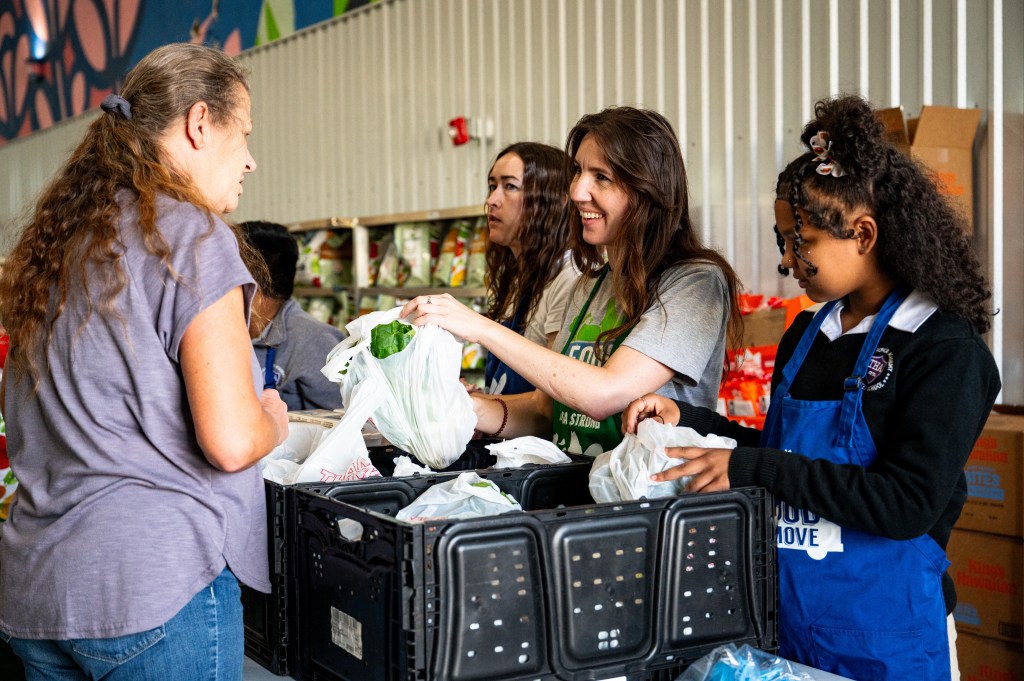
Alice April shows greens to a customer during Food On The Move’s first festival at One Hope Tulsa Sept. 23, 2026. 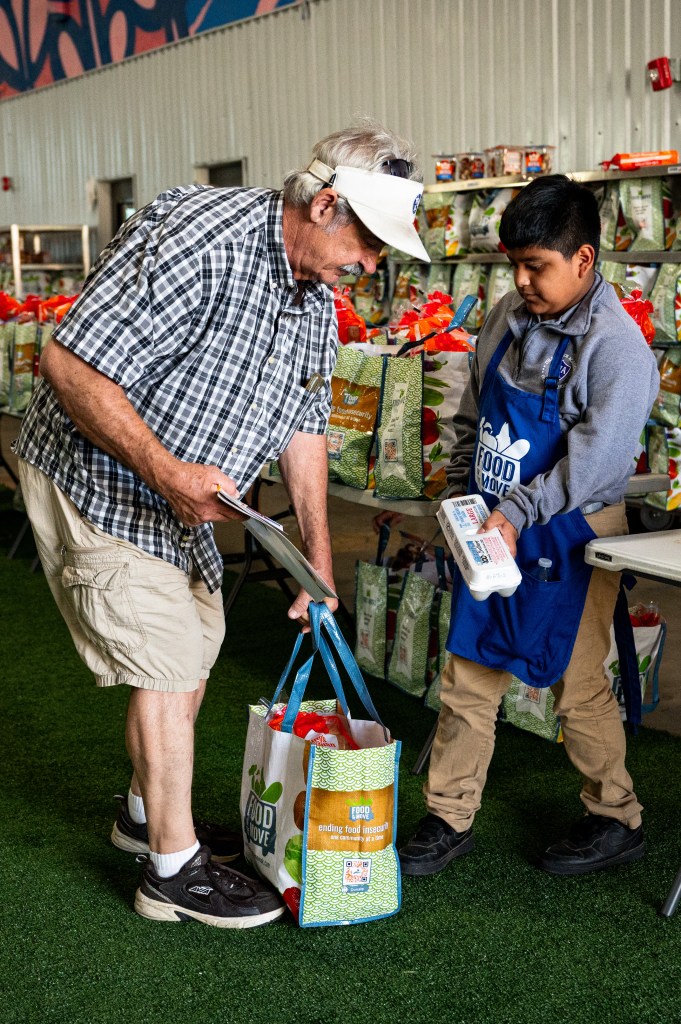
A volunteer puts eggs into a bag during Food On The Move’s first festival at One Hope Tulsa Sept. 23, 2026. 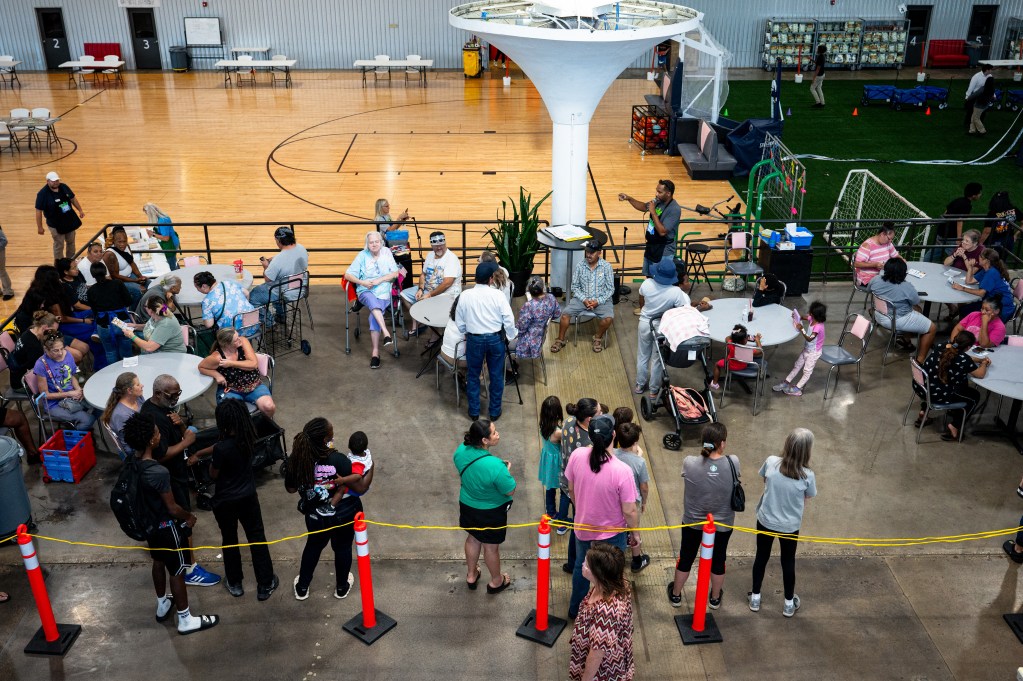
Attendees wait to receive food during Food On The Move’s first festival at One Hope Tulsa, Sept. 23, 2026.
Food on the Move is mobile by design, which allowed for an expansion to the eastside in September, said CEO Tina Parkhill.
The organization started off by connecting with other organizations in east Tulsa. It ultimately connected with One Hope Tulsa, located at 7419 E. 11th St.
Food on the Move hosts monthly festivals with partner organizations coming together to provide food and local resources and education. Typically, they average about 275 to 300 bags distributed at each event.
“It really is just a great aggregation of resources and families that, you know, really (is) neighbors helping neighbors in a lot of ways,” Parkhill said.
During the suspension of SNAP benefits during the 2025 government shutdown, the organization found there were a lot of people experiencing challenges. While access to food stamps has been restored, the crisis taught the organization key lessons.
“We were able to, during that time, access resources from the Eastern Food Bank and other donations that allowed us to put shelf-stable items as well as protein in the bags. So that really educated us on trying to provide a more comprehensive meal planning option for the families,” Parkhill said.
Food on the Move’s community outreach coordinator had a lot of conversations with partners in east Tulsa, she said. During his visits, One Hope kept coming up.
“They knew what their surrounding community looked like and what their needs were,” Parkhill said. “And so really it’s just making connections. I know, I wish I could say it was some strategic plan and we had a dartboard and we picked a location. It’s really just organic. Everything is very organically developed.”
Oklahoma doesn’t want to be known for its high numbers of hungry kids, she said. That means organizations have to work together to tackle food insecurity.
”However we can activate, we are going to do that,” Parkhill said.
La Cosecha: ‘This area has been forgotten’

Rita Gallardo, founder of La Cosecha, stands near fresh produce waiting to be distributed to east Tulsans Sept. 17, 2026. 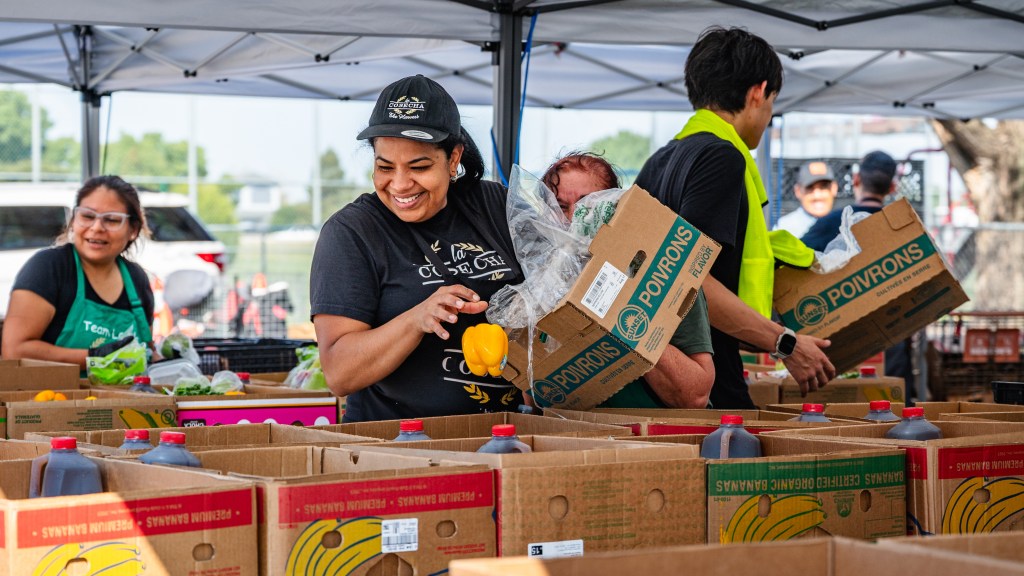
Volunteers pack boxes of food at La Cosecha’s Sept. 17, 2026, food distribution event. 
Crates of food wait for distribution at La Cosecha Sept. 17, 2026. 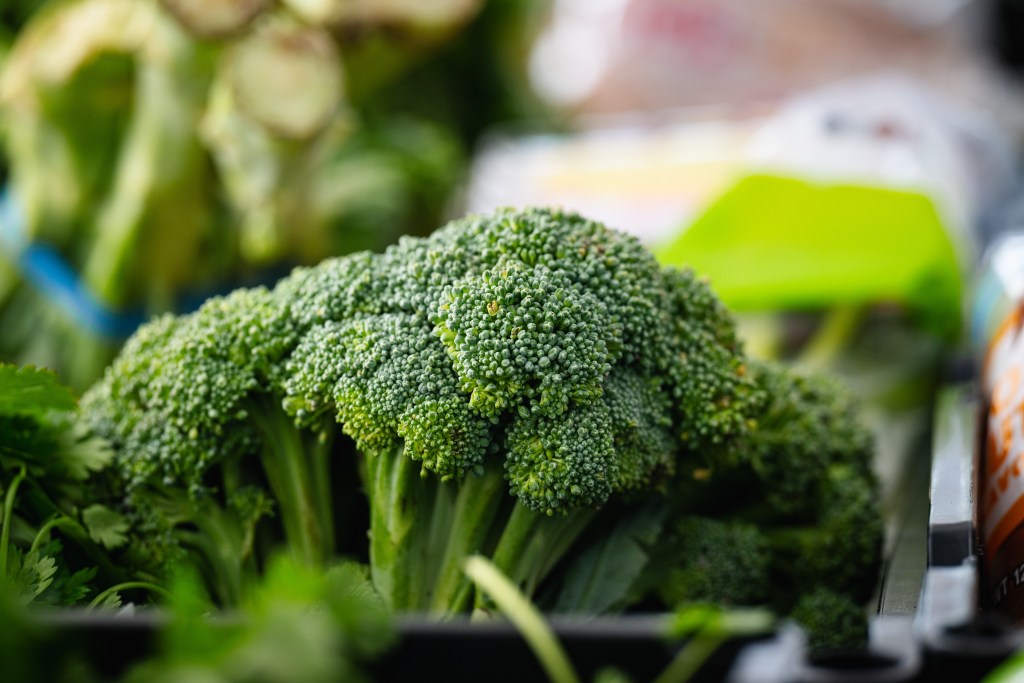
Broccoli sits inside a box of food at La Cosecha’s food distribution Sept. 17, 2026. 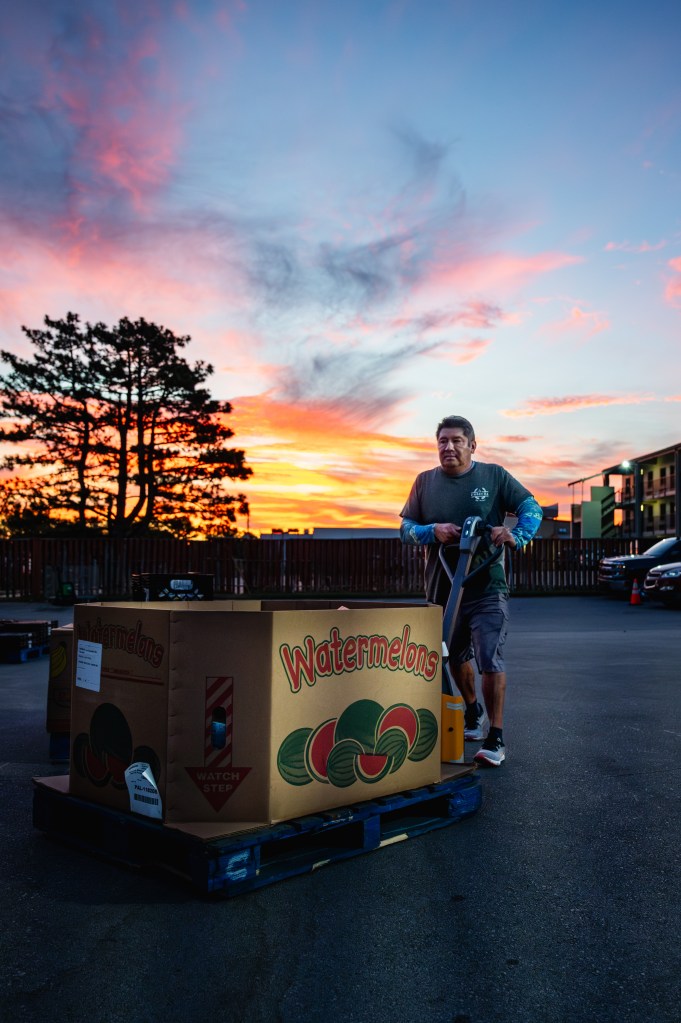
A volunteer moves pallets of food for La Cosecha’s food distribution Sept. 24, 2026. They serve 600 cars every Thursday morning. 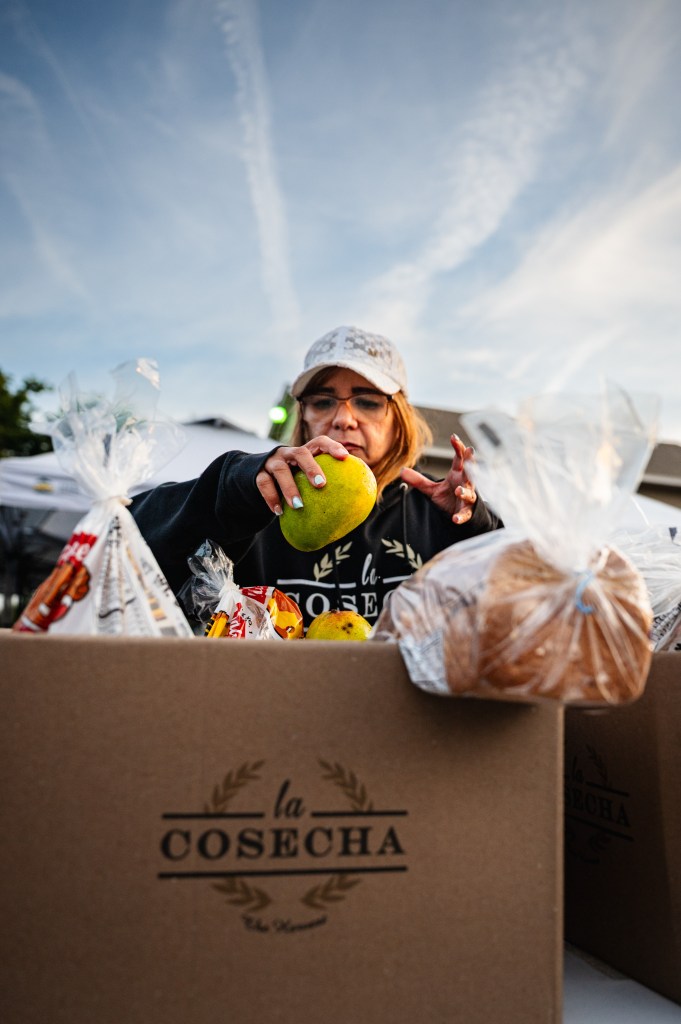
Volunteers set up for La Cosecha’s food distribution Sept. 24, 2026. They serve 600 cars every Thursday morning. 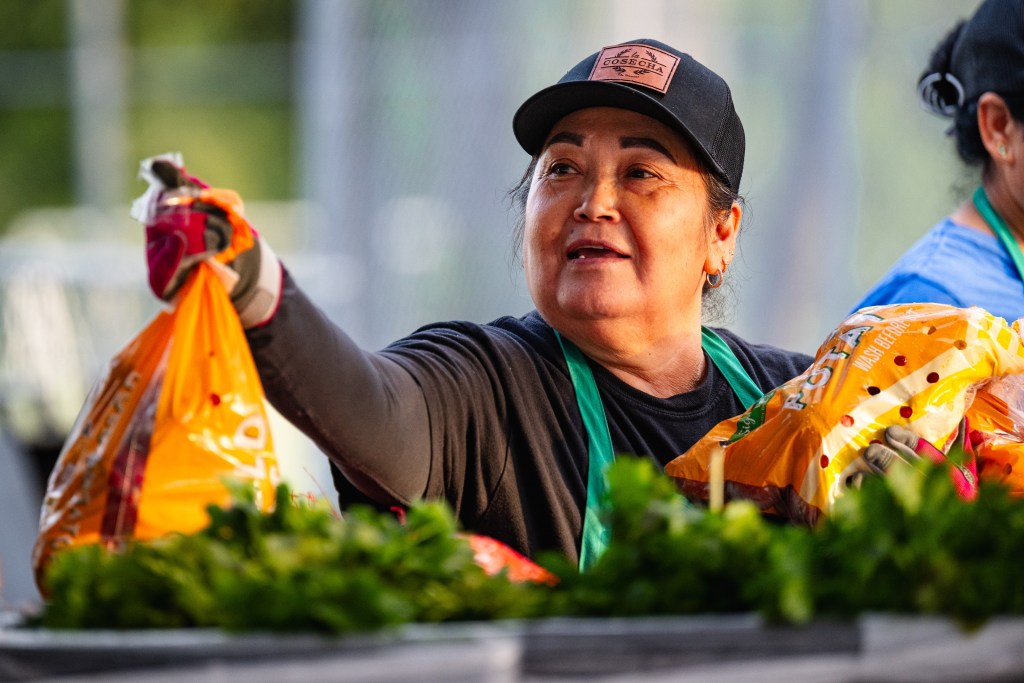
Volunteers set up for La Cosecha’s food distribution Sept. 24, 2026. They serve 600 cars every Thursday morning. 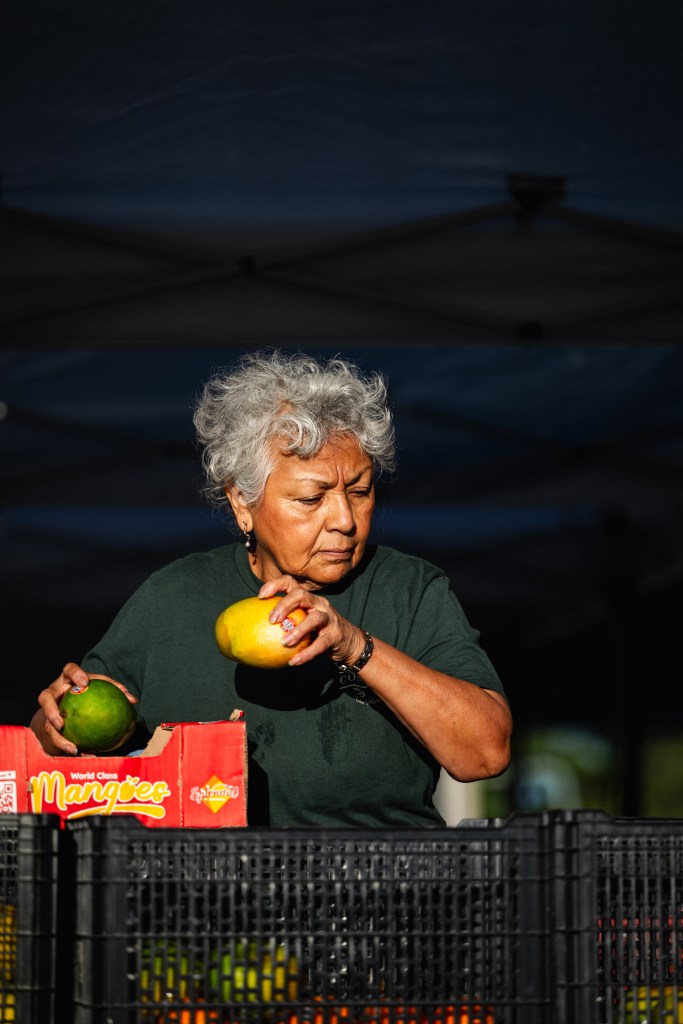
Volunteers set up for La Cosecha’s food distribution Sept. 24, 2026. They serve 600 cars every Thursday morning. 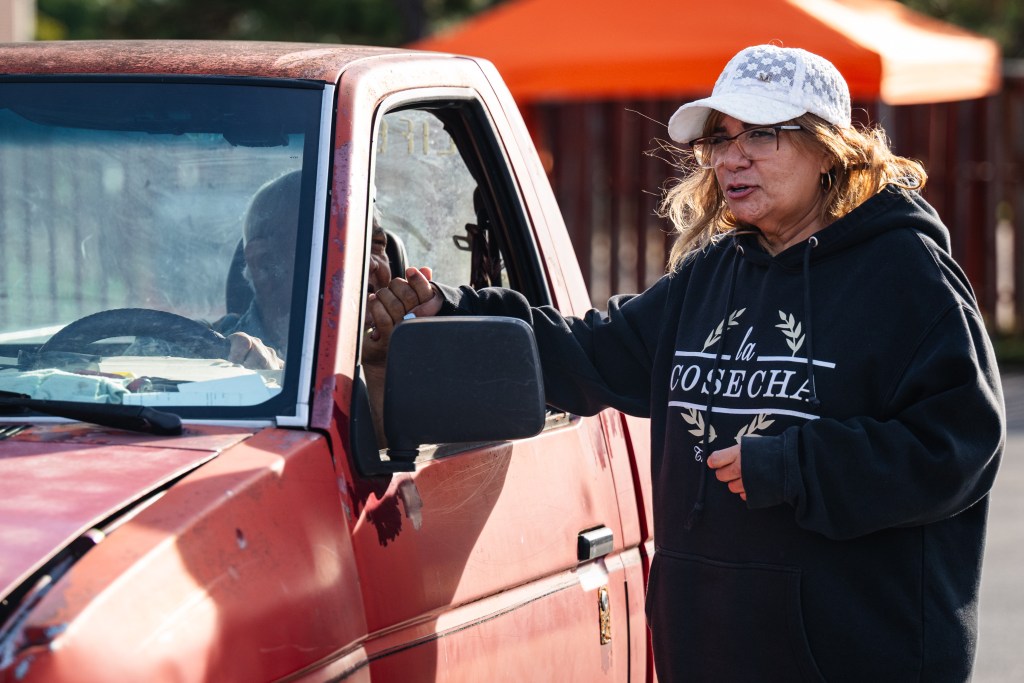
Volunteers greets a client at the La Cosecha food distribution Thursday, Sept. 24, 2026. They serve 600 cars every Thursday morning.
Across her 11 years distributing food in the eastside, Rita Gallardo has discovered misconceptions about food insecurity in Oklahoma. There are people who are one paycheck away from losing their homes or apartments and becoming homeless, she said.
“People might see a nice vehicle, but people face different circumstances,” she said. “So, we serve people that might have a job, but they might have a chronic illness, or they have a family member who is in hospice care or they are, as we have seen, the grandparents raising grandchildren.”
Founded by Gallardo in 2015, La Cosecha/The Harvest distributes groceries every Thursday starting at 9 a.m. The organization provides nutrition support to 600 to 700 families each week.
People start lining up as early as 6 a.m.
“So that tells you that they really need the food,” Gallardo said. “It’s not that they’re abusing the system. They’re not taking advantage of us.”
One of their recent challenges is not being able to accept certain donations because of lack of space. La Cosecha leases space from Iglesia Hispana Victory, 10811 E. 41st St.
Her goal is to find a forever home for the organization where they can accept more donations and more food. They typically don’t have items for senior citizens or female products, but otherwise, they’re able to meet the needs of their diverse clientele, Gallardo said.
“This area has been forgotten, and there is more support in other areas in Tulsa, and we decided to do something about it,” she said.
St. Thomas More: ‘Donations are down’ but spirits remain high
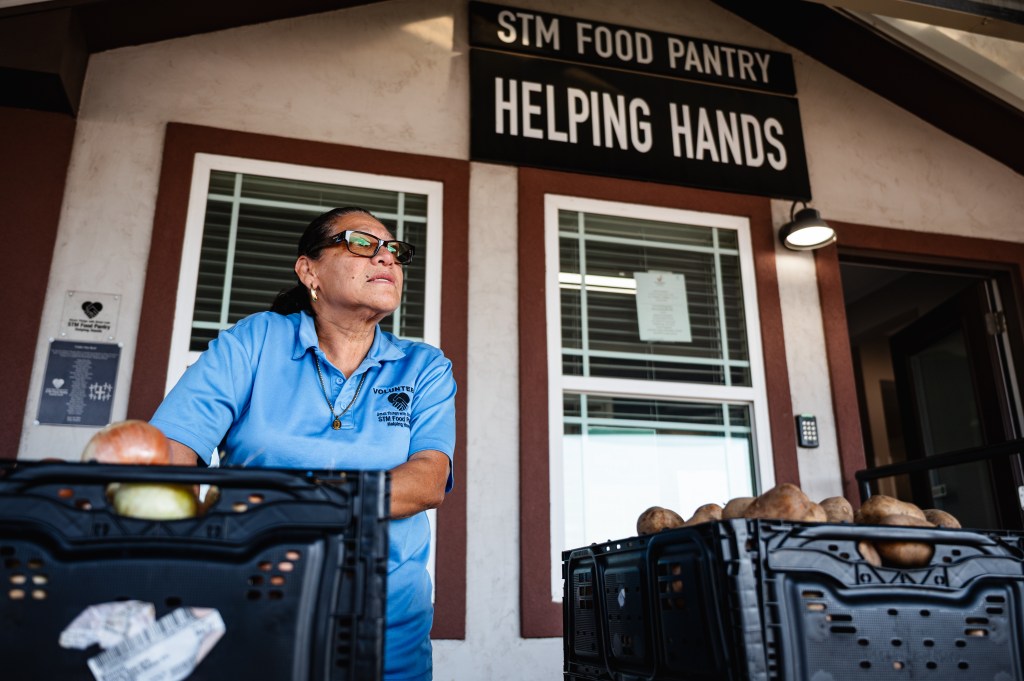
Teresa Tobar packs boxes of food at St. Thomas More’s Helping Hands Food Pantry Sept. 18, 2026. 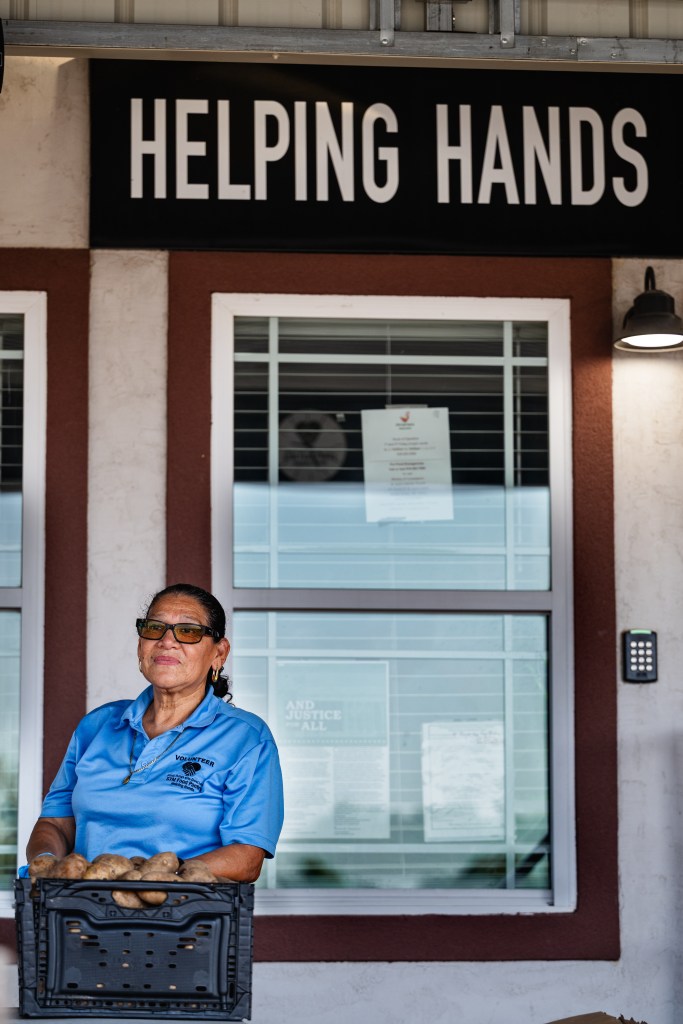
Teresa Tobar packs boxes of food at St. Thomas More’s Helping Hands Food Pantry Sept. 18, 2026. 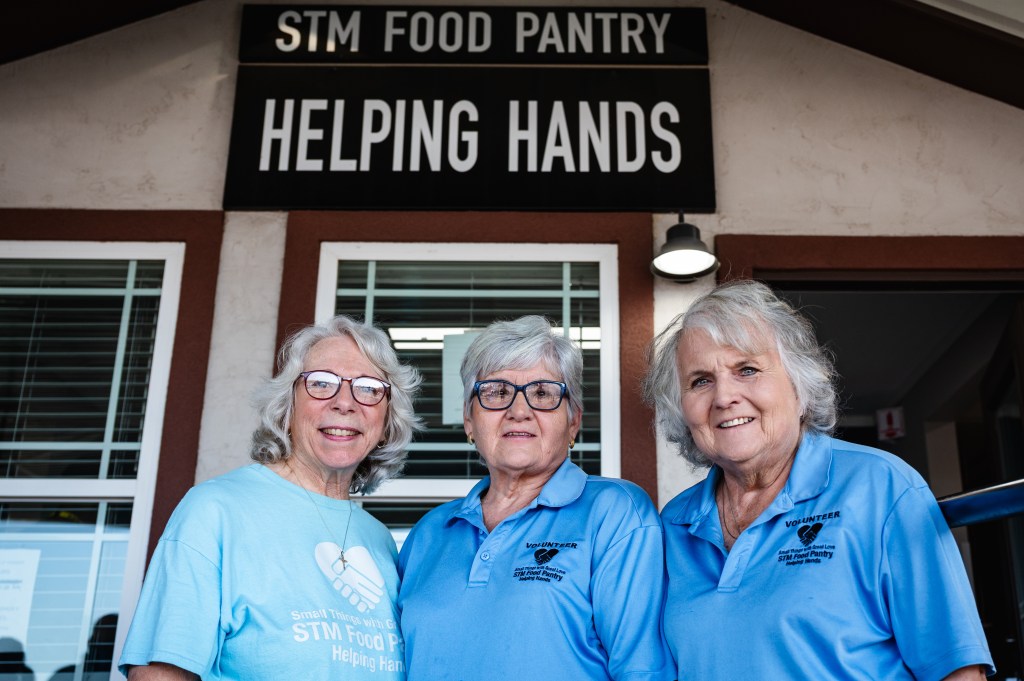
From left: Jaye Hawkins, Millie Owings and Pam Haag pose for a portrait at St. Thomas More’s Helping Hands Food Pantry Sept. 18, 2026. 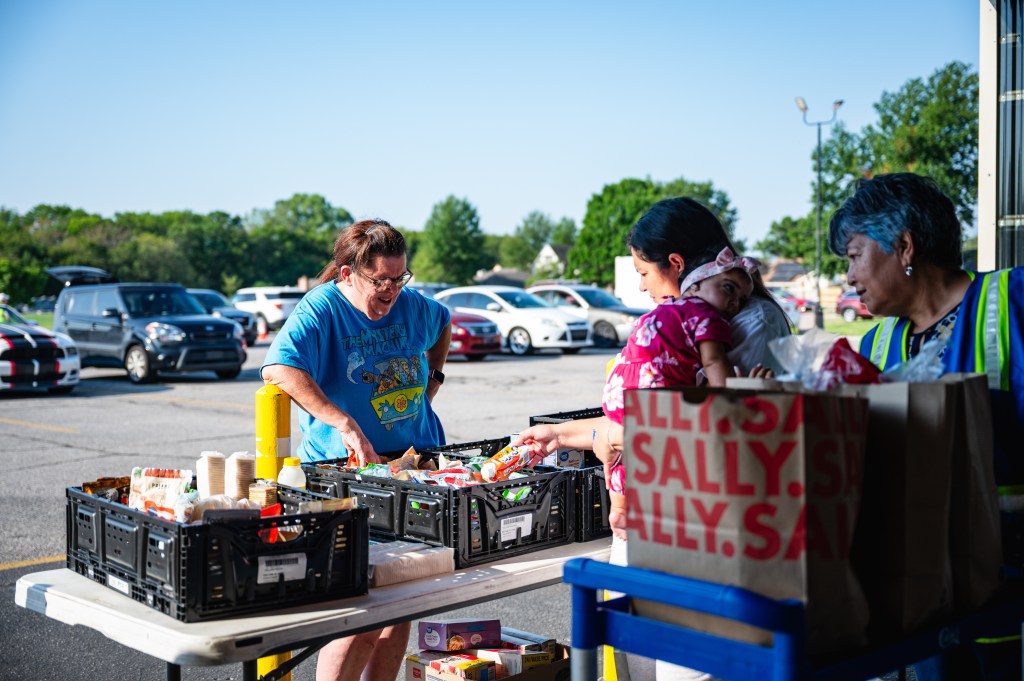
Laura True assists shoppers with boxes of food at St. Thomas More’s Helping Hands Food Pantry Sept. 18, 2026.
Next door to one of the most-well known gathering places in Tulsa’s eastside sits a fairly new addition: the Helping Hands Food Pantry, operated by members at St. Thomas More Catholic Church.
Started four years ago, co-coordinator Pam Higgins said they need more food for the mixture of young families and elderly people they serve.
The food pantry sets up 150 bags for families each week. Sometimes they have 80 families come out. At others, they’ve seen up to 200 in need, Higgins said.
The food pantry is open twice a month on the first and third Friday. It stays open for about four hours or until food runs out.
Helping Hands is a volunteer-only operation. Current volunteers are an older group, Higgins said, and she hopes some of the Spanish-speaking churchgoers will take it over with time.
“We love to volunteer. We love to see people getting food. I think all of us have the same idea,” Higgins said.
One of their challenges is not always having enough protein available. They used to offer peanut butter as a protein, but the families didn’t like it as much as they anticipated, she said. It helps when people collaborate to donate the same product each month.
“There are groups of people from the church that dedicate themselves to bring oil once a month, sugar once a month, beans, I think, and rice,” Higgins said.
Donations help out the pantry a lot, but they’re seeing fewer contributions from churchgoers as household costs go up.
“Our donations are down. Everything’s down, I’m sure, everywhere,’” she said. “We still are getting plenty of food though.”
Loaves & Fishes: Serving families with ‘nothing’ in their homes
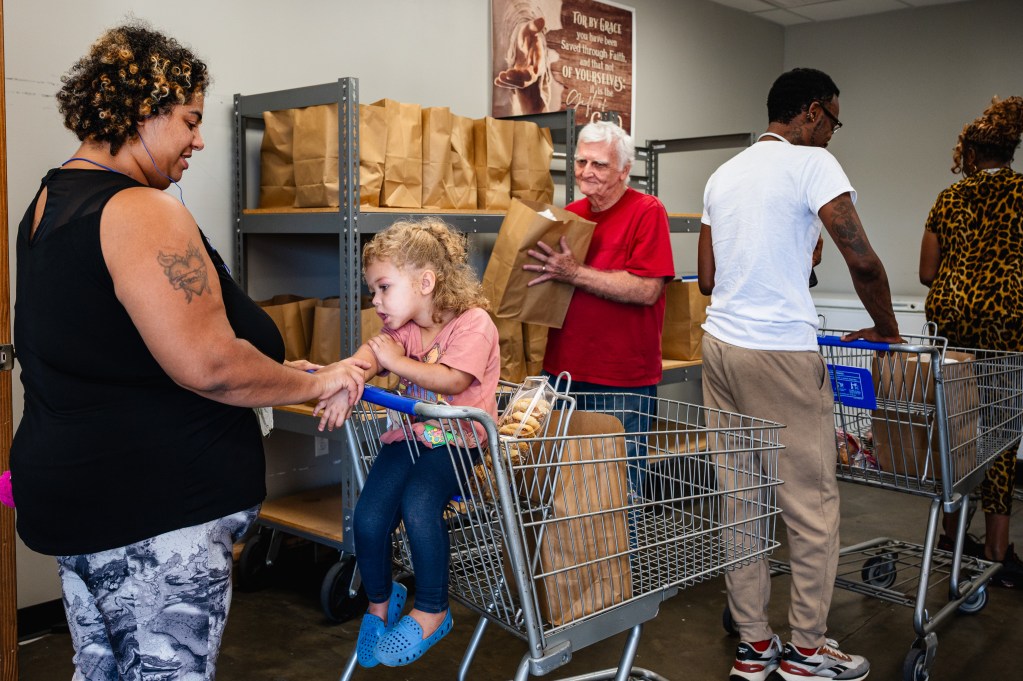
Keyonna Haley and Shauna Nail shop at Loaves & Fishes in east Tulsa Sept. 23, 2026. 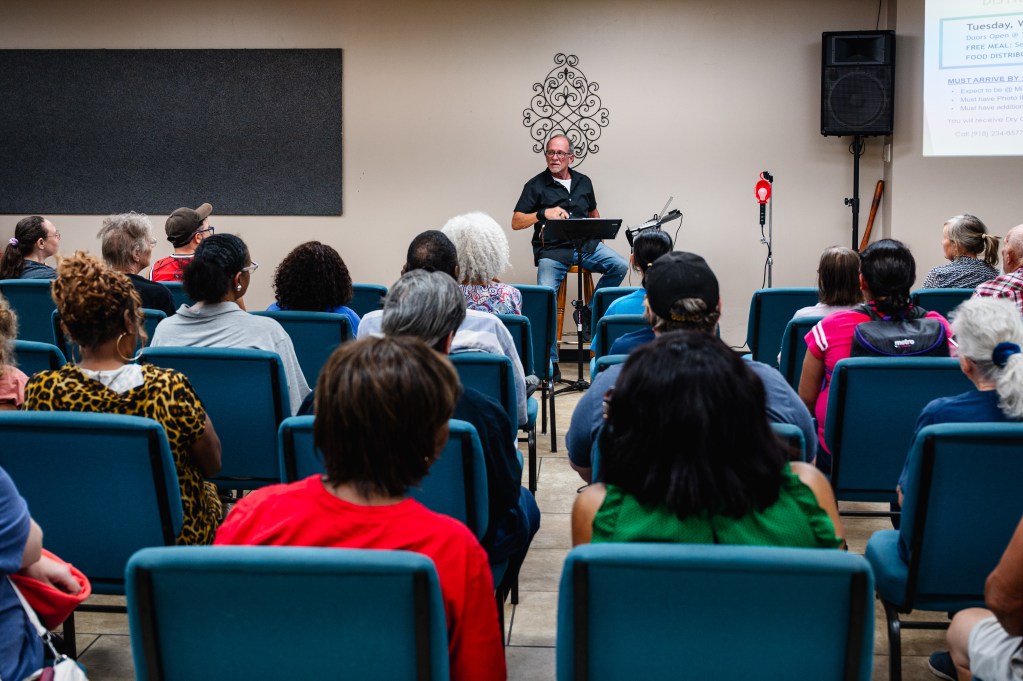
Pastor Al Poncel speaks before shopping begins at Loaves & Fishes in east Tulsa Sept. 23, 2026. 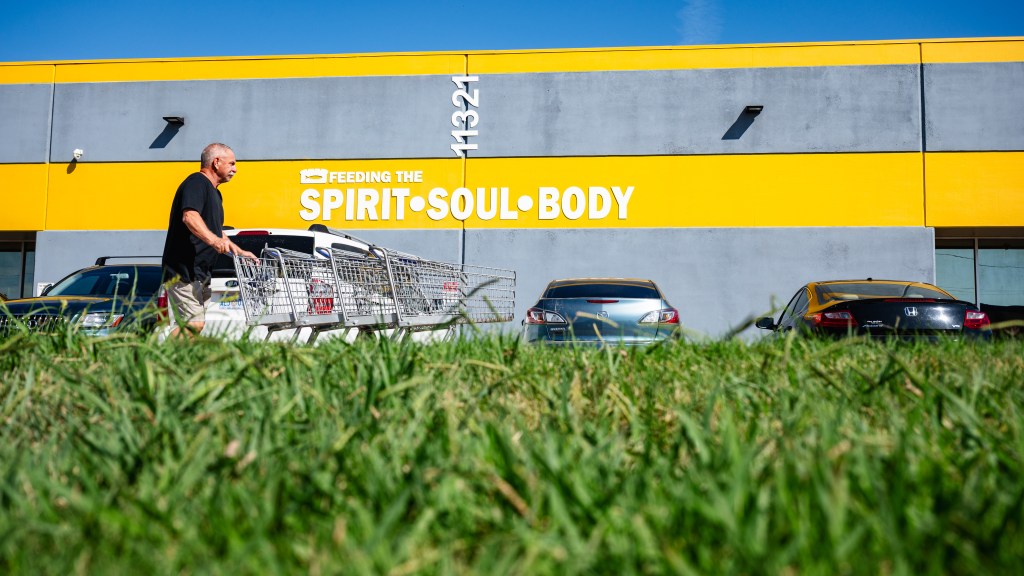
A volunteer helps bring carts back inside at Loaves & Fishes Sept. 23, 2026. The east Tulsa ministry provides about 400 servings of groceries a month to the community. 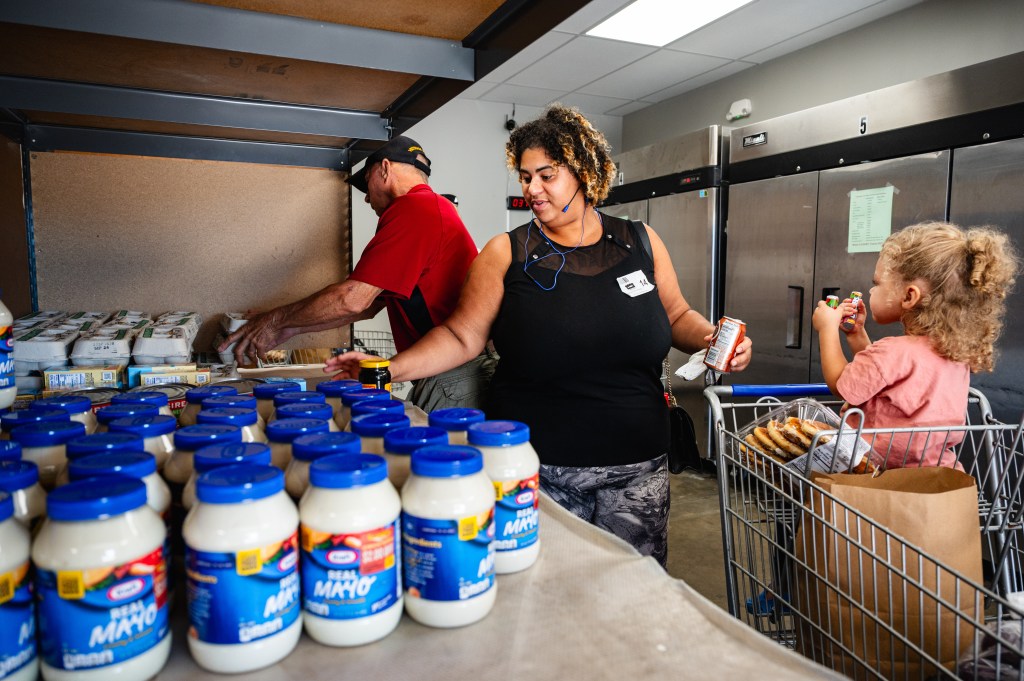
Families pick up food during a Sept. 23, 2026, distribution event at Loaves & Fishes in east Tulsa.
On a hot August morning, a pregnant woman arrived at Loaves & Fishes after walking from her apartment.
“She showed up here and I said, ‘you walked a long way.’ She goes, ‘I have nothing to eat in my house,’ and I thought to myself I have never had nothing in my house. I had stuff I didn’t want to eat. But I don’t think I ever had nothing,” said Poncel, the pastor and executive director of the ministry.
The woman is representative of the people the nonprofit sees every week, Poncel said with tears in his eyes — people who want to raise their kids and want to have a good family.
Located at 11321 E. 19th St., Loaves & Fishes distributes food Tuesdays, Wednesdays and Saturdays starting at 10 a.m. No pre-registration is required.
The ministry provides about 400 servings of groceries a month to the community. They typically serve an average of 60 to 70 families on Saturdays.
Their main audience includes families with a place to stay, including low-income families, the elderly and people on fixed incomes. Sometimes they receive people fresh out of prison in halfway houses or rehab houses.
Loaves & Fishes doesn’t see as many donated meats as before the pandemic. That means more money spent purchasing those products, Poncel said.
“It’s great when people donate groceries, that’s a huge help, because then I don’t have to buy any,” he said. “And, that’s a big deal.”
The ministry hasn’t seen much of a big change as far as people needing groceries over the last two years as inflation has affected Tulsans’ cost of living, he said. But rising costs of food and necessities have impacted the people they serve.
“There’s the gas prices that kind of hurt people,” he said. “Food stamps have changed a little bit, so I think that’s changed a few things. I guess I really can’t say I’ve seen that big a change as far as people needing groceries. It’s pretty much the standard folks.”
This article was produced as part of a partnership between the Tulsa Flyer and La Semana, a Tulsa-based bilingual Spanish-English newspaper serving Latino communities in Oklahoma.
News decisions at the Tulsa Flyer are made independently of our board members and financial supporters. Read more about our editorial independence policy here.