

Every call from inside an Oklahoma prison begins with a warning.
“This call is not private. This call will be recorded and may be monitored.”
Then comes the instruction: Press one to accept the call.
Those calls can offer a glimpse into a part of prison life most Oklahomans rarely see: how people eat.
The stories are not simply about whether prison food tastes good. They are about hunger, money, family, work and dignity. They are about what happens when a meal is undercooked, when commissary money runs out, when the dining hall becomes so chaotic that someone chooses not to eat, when ramen noodles become currency.
They are also about what food can represent.
A job on a prison farm can offer a sense of freedom. A meal bought by a family member, during visiting hours, can become an expression of love. And access to food can become a form of control.
Oklahoma has nearly 24,000 people incarcerated in its state prison system. It also has one of the highest incarceration rates in the country, ranking fourth nationally.
For thousands of people — and the families connected to them — what happens at mealtime is part of everyday life.
‘It’s undercooked, you know, on a good day’
At Mabel Bassett Correctional Center in McLoud, Abby was waiting for an officer to open her cell door when she called. She was speaking through the prison’s tablet system, using Wi-Fi that could be unpredictable.
She had something else on her mind: food.
“I know there’s people that don’t have food,” she said. “And so it feels wrong to be like, ‘Well, I’m not eating that.’”
But sometimes she doesn’t eat. She described meals that smelled bad, looked wrong or appeared undercooked.
“There has, like, been times — like both meals today — I mean, I just chose not to eat,” she said.
Abby is working toward a dog grooming certification while incarcerated. When asked how she would describe the food, she reached for an unlikely comparison.
“It smells like really, really bad dog food to me.”
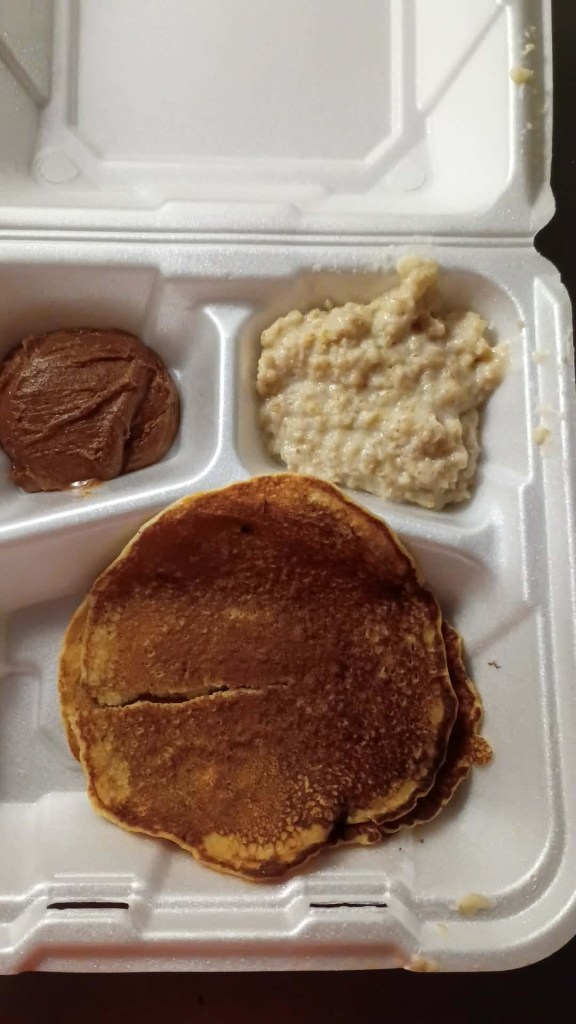
An incarcerated individual inside an Oklahoma state prison shared this photo and stated, “That was breakfast. I think it is supposed to be peanut butter.” 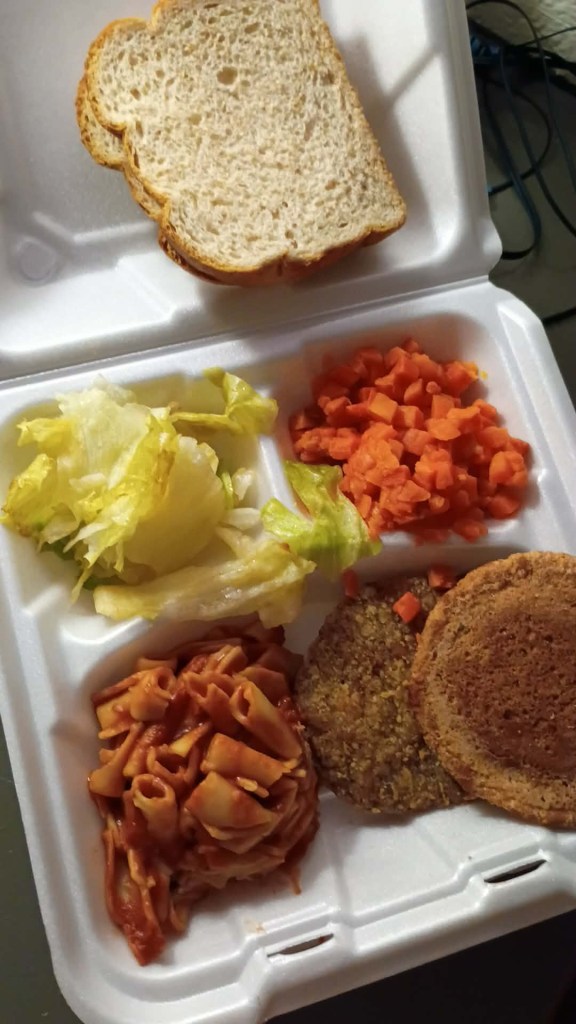
An incarcerated individual inside an Oklahoma state prison shared this photo and stated, “I don’t eat it ’cause of the smell. It smells soured.” 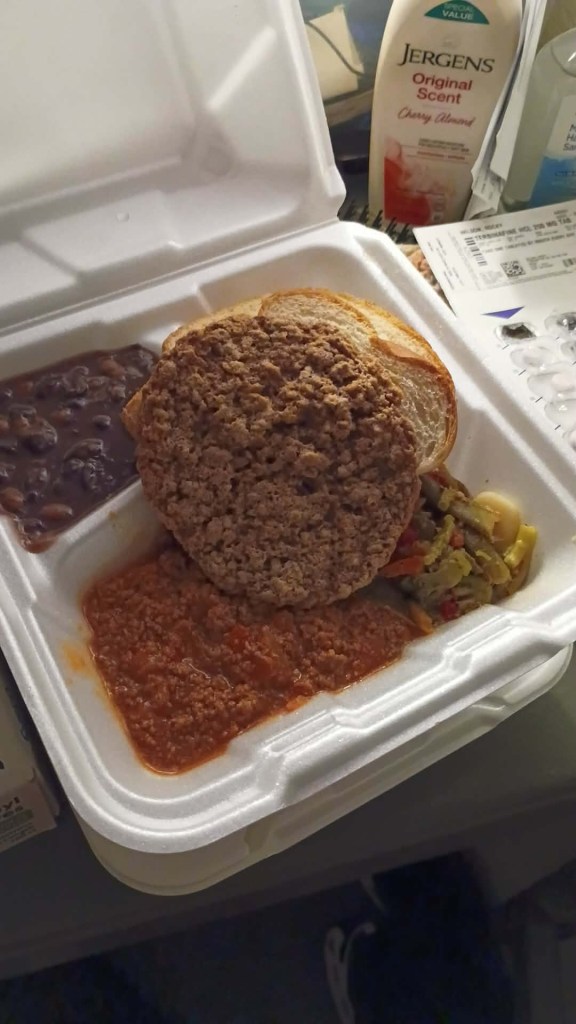
An incarcerated individual inside an Oklahoma state prison shared this photo of a lunch and stated, “[I ended up eating] the cookie. I won’t touch it even if I got no food.”
She specifically criticized the chicken bulk used in prison meals, describing meat that could be hard, crunchy or pink in the middle. Potatoes, she said, could be served undercooked, while noodles were sometimes cooked until they lost their shape.
During the nine or ten months she had been at Mabel Bassett, Abby said she had lost 35 pounds.
At Howard McLeod Correctional Center, in Atoka, Trevor McManus described the meals in similarly stark terms.
The biscuits, he said, have little taste. The bread doesn’t resemble a normal roll. He described the food generally as “low-grade.”
He also described an episode he believed was food poisoning after eating at the prison.
“I woke up. I felt sick,” he said. “Went to the bathroom. And, as you can tell, it was — it was food poisoning.”
Marco, who called from Allen Gamble Correctional Center in Holdenville, put the problem more bluntly.
“Food is terrible in DOC,” he said.
But for Marco, the problem isn’t simply what is served. It is what happens when the meal is all a person has.
“If you couldn’t afford commissary,” he said, “you would be, like, 100 pounds.”
The second food system
For many incarcerated people, the prison commissary functions as a second food system.
Wanda Bertram, communications strategist with the Prison Policy Initiative think tank, compared prison commissaries to the “company store” in a company town — a place where workers depend on the same system that employs them for basic necessities.
Incarcerated people use commissaries to purchase snacks, hygiene products, over-the-counter medications, clothing and other items that supplement what the prison provides.
Food is a major part of that economy. But the money has to come from somewhere.
At Mabel Bassett, Abby estimates her family sends her about $100 a month. Roughly half goes toward food.
With commissary money, she said, there is considerably more variety: chips, sweets, coffee, soda, Kool-Aid, noodles, rice and different kinds of meat.
Still, even with that support, she said she is often hungry by the end of the week.
And not everyone has family members who can send money.
When Abby first arrived at Mabel Bassett, her family wasn’t able to provide as much support.
She remembers what happened when the food in her locker ran out.
“I would just choose not to eat a lot of times,” she said. “If I didn’t have anything in my locker, then I wouldn’t eat.”
The dining hall was supposed to be the alternative. Sometimes, it wasn’t.
When the dining hall becomes a barrier
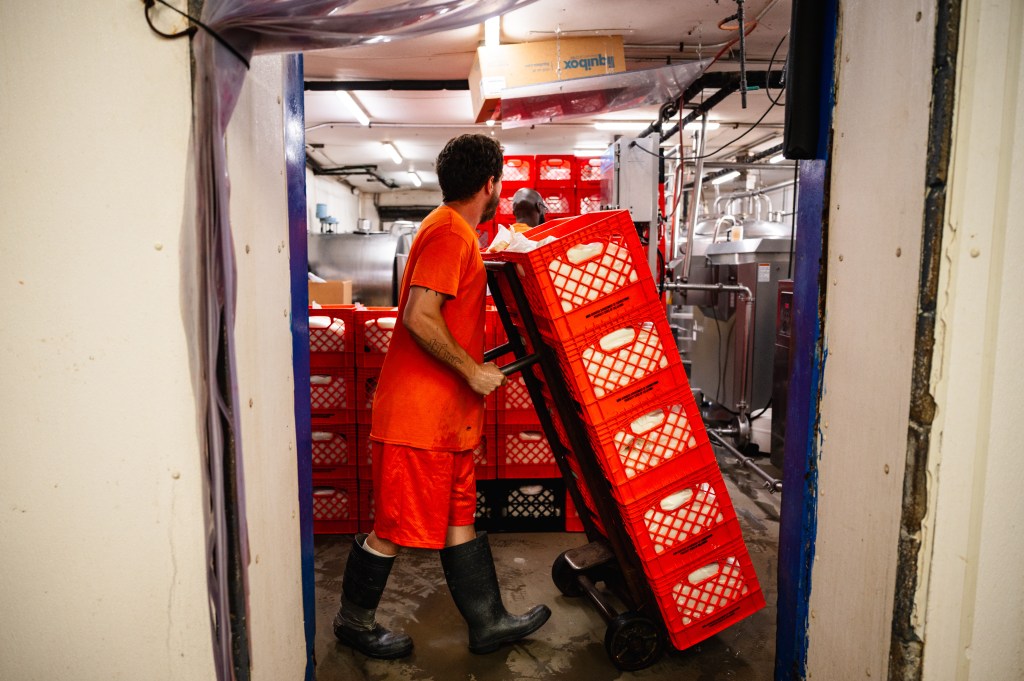
On one particularly hot Oklahoma day, Abby said the temperature reached 109 degrees. Hundreds of incarcerated people were lined up outside the dining hall. She estimated the line at 300 or 400 people. They could wait 45 minutes to an hour in the heat just to get a tray.
Inside, she said, the environment could become loud and tense. People were hot. People were irritated. Fights sometimes broke out.
For Abby, the dining hall could become so overwhelming that she simply wouldn’t go.
“I choose not to go by myself,” she said. “I just feel better when I’m around people that I’m comfortable with.”
If she couldn’t find someone to go with her — or if the line was too long — she might skip the meal.
Eventually, she found people who encouraged her to return.
She described that process as overcoming fear and anxiety.
“It can be, like, demoralizing,” she said.
At Howard McLeod, Trevor described a different constraint: time.
Asked about food service conditions there, the Department of Corrections said that “staff have not received any complaints from inmates about the quality, quantity or schedule of meals served. Nor have they observed any deficiencies.”
But Trevor said people are sometimes given about 10 minutes for the entire process of getting through chow.
“Ten minutes to eat and be done.”
Then come the warnings:
“You got four minutes!”
“You got three minutes!”
The pressure isn’t always measured in minutes. At Mabel Bassett, commissary orders happen once a week. As the weekend approaches, Abby said, people begin looking for noodles.
Department of Corrections records cited in the broadcast show that Mabel Bassett’s commissary sold more than 71,000 packages of one variety of beef ramen alone during fiscal year 2026.
By the end of the week, some people have food left. Others don’t. And food becomes something that can be traded.
When food becomes currency
Inside prison, food can function as money.
Abby described what she called a “two-for-one store.”
Someone who has food now may give another person a package of noodles when they are out. When the recipient receives their next commissary order, they repay the debt with two packages.
Other people find different ways to earn.
Abby taught herself eyebrow threading. She also began drawing birthday banners, portraits and other artwork for people inside.
These skills can be exchanged for money or food.
She also acknowledged a darker economy.
“There is some prostitution,” she said. “I mean, that’s the real fact of it.”
Her explanation was simple: people need to eat, and people have other needs and habits to support.
In a place where access to food depends partly on money, food becomes intertwined with the informal economy of prison life.
A different kind of food system
Not everyone working inside an Oklahoma prison spends the day behind a wall or in a dining hall.
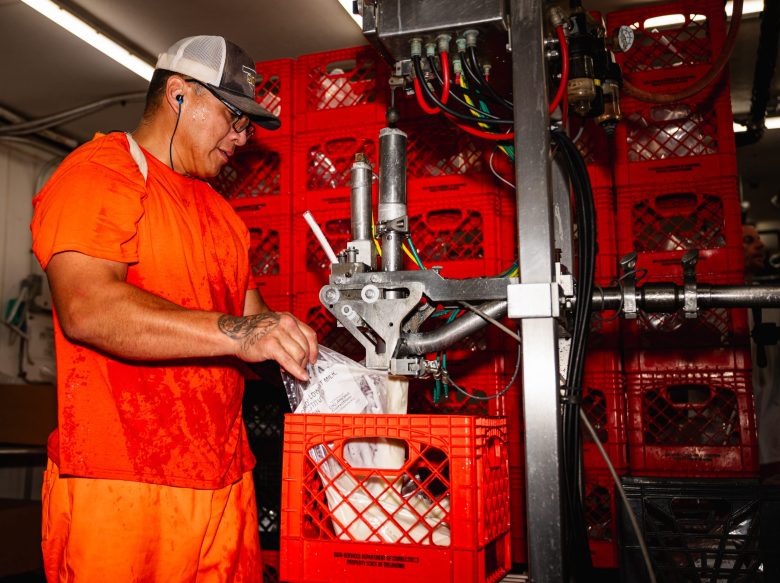
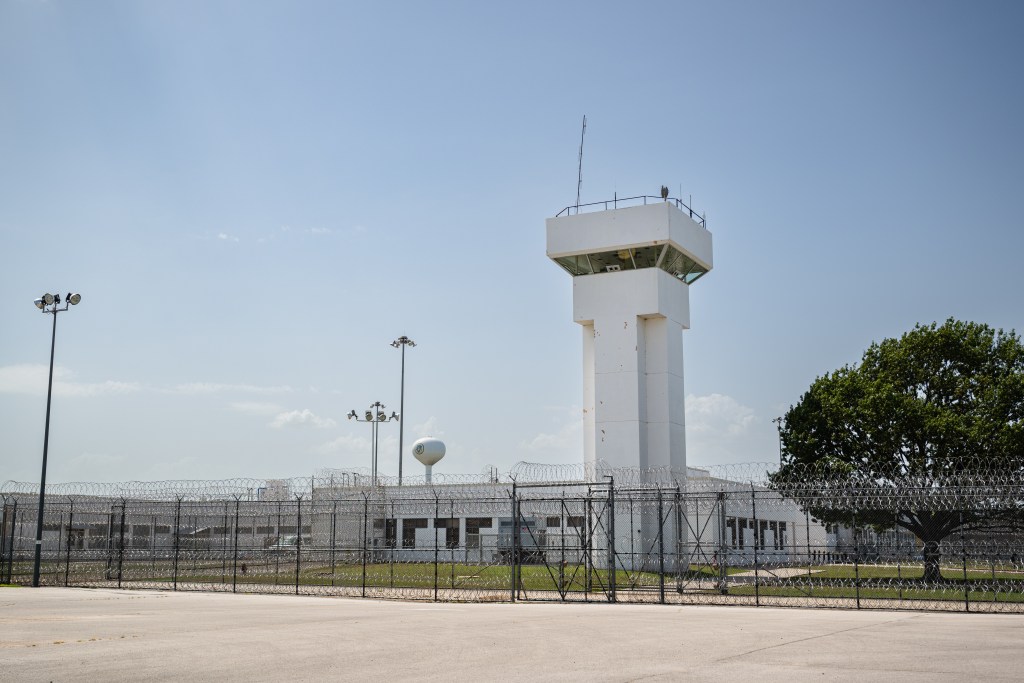
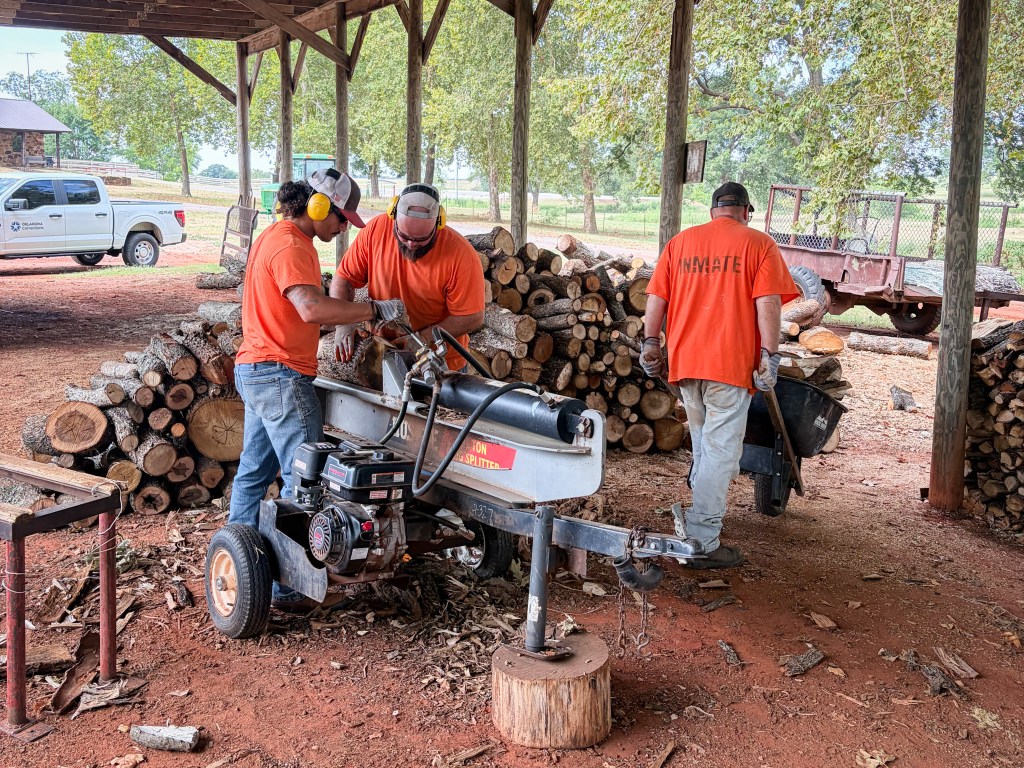
At the Lexington Assessment and Reception Center, incarcerated men work on the Department of Corrections’ Agri-Services operation. They cut trees, split wood, care for livestock and work with cattle and goats.
Kevin Davis described the work as hard but meaningful.
“You get a good, hard day’s work out here,” he said. “You’re able to sleep when you get back to the unit a little bit better.”
For the men interviewed, the farm provided something difficult to find elsewhere inside prison: distance from the facility.
They could walk into a pasture and lose sight of the fences and buildings.
“You don’t have the facility, and all the guards, and all the other noise and everything,” one worker said. “It’s almost like being in the real world, and going to a real job.”
Another described it simply: “It’s sanity out here.”
For Dylan Bowlin, the work also brought memories of home.
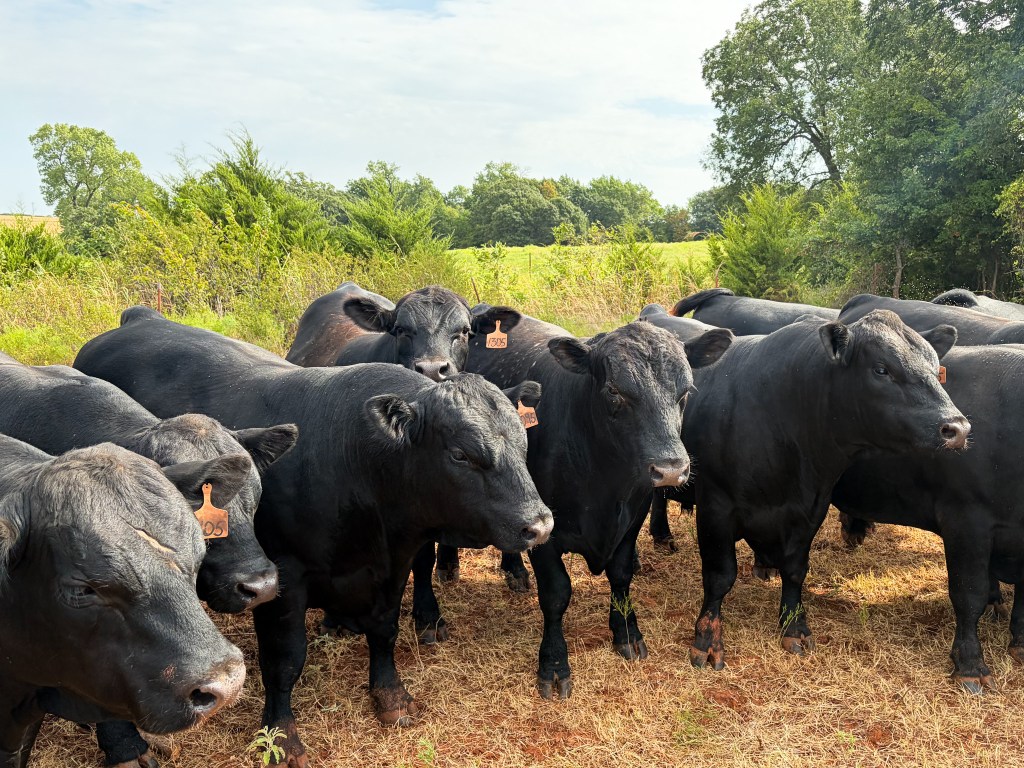
“I grew up with cows,” he said. “This is like—it really reminds me of home.”
The physicality of the work can also affect the body.
Kevin said he weighed 285 pounds when he began working at the farm. Three months later, he weighed 235.
But he saw the work as more than exercise. He saw it as preparation for life after prison. A person leaving prison needs a schedule, a job and experience working toward something, he said.
“You want to be pretty prepared for the world — it’s changing constantly.”
Jason Johnson offered another reminder of the people behind the prison walls.
“We’re people just like everybody else,” he said. “We’ve made mistakes.”
“But, you know, we’re still human beings. We’re still grown men trying to do better.”
The business of prison agriculture
The Agri-Services operation extends far beyond one farm.
According to the Department of Corrections, the division manages more than 19,000 acres across Oklahoma, including cattle operations, food-processing facilities, a dairy operation and food-distribution warehouses.
Tyler Dean, administrator of the division, described Agri-Services as self-sustaining.
The operation once received appropriated funding, but changes in the early 2000s moved it toward a business model. Today, Dean said, it does not receive taxpayer appropriations.
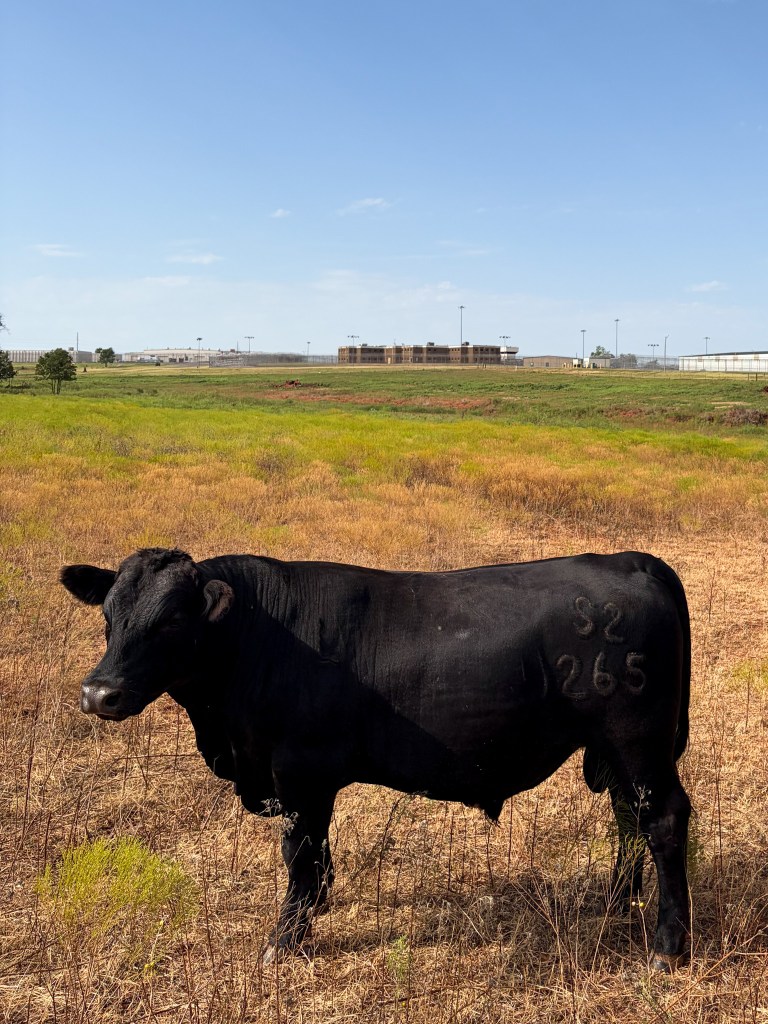
The cattle operation at Lexington includes about 100 cows. The cattle are raised as an income source rather than specifically for incarcerated people to eat.
That distinction is striking in a story about prison food: the system may raise cattle, process food and operate gardens, while the people inside continue to describe meals as inadequate.
Dean explained that the beef raised through the operation is sold, with the revenue helping support the system. The department can then purchase products such as hamburger meat, chicken and other food items.
The operation also includes gardens at some facilities, which department spokesperson Lance West said have been used to supplement prison menus.
But the relationship between what the department produces and what incarcerated people actually eat is changing.
Enter Aramark
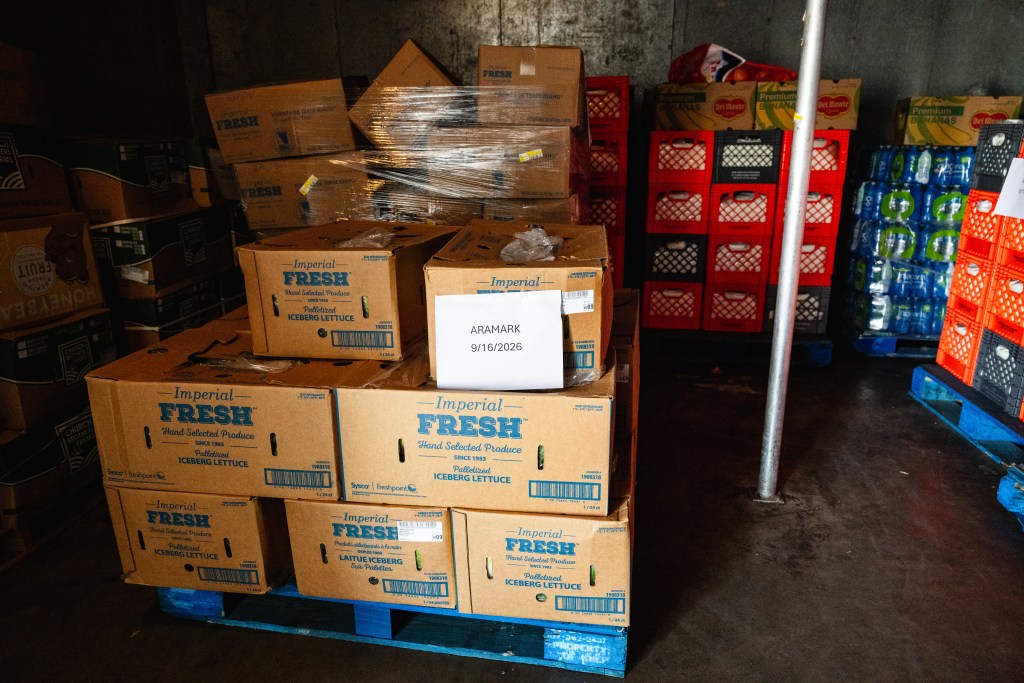
In April, the Oklahoma Department of Corrections announced that Aramark would become the new food service provider for the state’s prison system.
The change replaced a system in which the state provided prison meals itself.
The department said the new contract would expand menus beyond the chicken bulk that had been the primary protein for more than a decade and provide more options for people with particular dietary needs.
The change also came with an additional cost.
The department said the contract would cost about $3 million more per year, while maintaining that the increase would be covered without additional state funding.
For incarcerated people who have eaten under both systems, the results have been mixed.
Trevor said some things under Aramark were better. Some were worse.
“The food still felt like low-grade food,” he said. Beans appeared frequently. Vegetables were served. Sometimes there was cake or a cookie.
But meat could still be pink. Milk, he said, sometimes seemed close to souring.
Jessi Silverman, deputy director at the advocacy organization Center for Science in the Public Interest, has broader concerns about privatized prison food.
Silverman was the lead author of a May report examining privatized food service in prisons and jails. She said the organization found meals that fell short of nutrition recommendations, including limited fruits and vegetables and high levels of sodium and refined carbohydrates.
The report also documented food safety concerns, including improper storage, contaminated meals and spoiled food.
Silverman described an economic tension inherent in privatization: a public institution operating its own food service generally seeks to break even. A private contractor must generate a profit. That, she said, creates pressure to reduce costs.
The Oklahoma Department of Corrections has acknowledged that food has consistently ranked near the bottom in surveys of incarcerated people since the agency began conducting them in 2023.
Outsourcing food service, the department has said, would allow correctional staff to spend less time managing kitchens and more time focused on safety, security and rehabilitation.
It also acknowledged several recent food service problems at Mabel Bassett.
Officials said Aramark employees had identified an undercooked meal before serving it and prepared a replacement.
A late food delivery resulted in a substitute meal.
Scheduling conflicts have occasionally delayed food service.
“Staff address concerns as they arise,” the department emphasized, “and the facility continues working to provide a positive dining experience and encourage participation in scheduled meals.”
At Mabel Bassett, Abby has noticed at least one practical difference.
Lunch is now grab-and-go.
Meals come in clamshell containers that people can take back to their rooms or to a table.
For her, that part is “honestly kind of nice.”
But she also described tension between Aramark employees and incarcerated kitchen workers.
“Aramark has their own issues,” Abby said, “but they don’t want to stay here because the staff doesn’t manage the inmates—they don’t have control over the inmates. And they can’t keep food in the kitchen.”
Pizzas disappeared, according to Abby. Chicken-fried steaks vanished. And efforts to pursue charges over the thefts quickly fell apart, she recalled.
“I think they’re frustrated,” she explained, referring to Aramark employees, “because nobody’s pursuing that. Nobody’s pressing the issue. The inmates are very disrespectful to them, and some of them might not have a great attitude, either.”
She believed the situation had “kind of hit a boiling point” — one that “could boil over.”
Food as connection
The debate over prison food can easily become a debate about menus, contracts, costs and calories.
But for people living inside, food can represent something much larger.
At Dick Conner Correctional Center in Hominy, Andrew Williams described living through Oklahoma’s summer heat without air conditioning in his housing unit. He said the temperature inside his cell had reached more than 100 degrees.
At Howard McLeod, Trevor said the housing unit where he lives also lacks air conditioning. He recalled a temperature reading of 108 degrees inside.The heat changes his relationship with food.
“When I’m hot, just like you—when I’m hot, I don’t want to eat,” he said.
Then there is visitation. For incarcerated people, sharing a meal with family can offer a connection to the outside world.
When Andrew’s sister, Tonya, drove from Chickasha to visit him on his birthday in August, she brought $40 in quarters. The drive took roughly two and a half hours.
But not all of the vending machines were working.
Andrew could not use the machines himself under prison visitation rules. His family had to buy the food for him.
The hamburger machine was out of order. Eventually, a chicken sandwich became lunch.
“They heat it up. They bring it to you,” he said. “It’s like they’re cooking you a meal in the kitchen.”
Later that morning, Tonya made a makeshift snack mix from Cheetos, Cheez-Its and peanut M&M’s, spreading the food across pieces of brown paper towel.
That was the extent of the celebration. Andrew’s birthday care package, ordered through an approved Department of Corrections vendor, never arrived.
Food as control
Heile Gantan-Keo, a program manager with Impact Justice focused on prison nutrition, described food in prisons in broader terms.
“Food is a form of control, right?” she said.
Food can be helpful. It can be rehabilitative. But in carceral settings, she said, food can also become a way to influence behavior, relationships and actions.
The result is an experience in which hunger and food insecurity can exist even when food is technically available.
The question isn’t simply whether there is enough food. It is whether the food is safe. Whether it is healthy. Whether people can access it. And whether it supports their wellbeing.
If you can connect with someone inside, they might have answers to these questions.
But Securus calls last just 20 minutes.
You might be in the middle of a story when the automated voice interrupts with a time warning.
And then, one minute later: “The caller has hung up.”