Tulsans will decide Nov. 3 whether to raise the lodging tax for the first time in more than four decades.
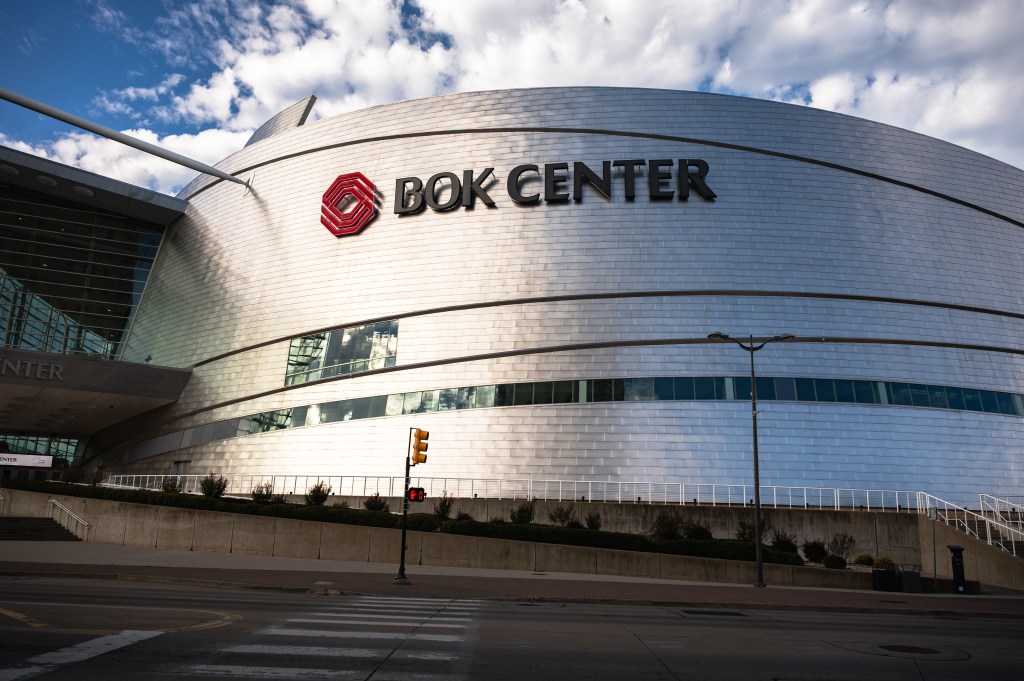
The proposal would increase the tax on short-term rentals like hotels, motels and Airbnbs from 5% to 9.9%. The increased revenue would help pay for maintenance upgrades at the city-owned BOK Center and the Arvest Convention Center, as well as municipal tourism and marketing efforts.
Keller Taylor, vice president of Oak View Group — the company that manages the venues — revealed some of the slated improvements at the BOK Center during an Oct. 19 media event. They include:
- an improved roof;
- upgraded bathrooms and seats;
- new scoreboard with updated technology;
- updated production offices, dressing rooms and locker rooms;
- updated suites on the premium level; and
- a new restaurant on the premium level able to accommodate more than 100 guests.
Taylor says the convention center improvements would focus on upgrading meeting space.
“We’re looking at bringing those to today’s standard in terms of (audio/video), but the carpet and the paint, the airwalls have not been updated since the ‘80s,” Taylor said.
The tax applies to rental properties with five or more rooms. Tulsans last voted to increase the lodging tax in 1984.
At the current 5% rate, Tulsa is on track to generate $10.4 million in lodging tax revenue in 2026. At a 9.9% rate, the tax would generate $20.6 million.
Renee McKenney, president of Tulsa Regional Tourism and senior vice president at the Tulsa Regional Chamber, said the vote is “crucial” for the city’s tourism infrastructure.
“Tourism is a major economic engine in the city, supporting more than 16,000 jobs citywide, and an investment into Tulsa’s tourism infrastructure without requiring Tulsans to pay more in taxes is crucial to set the city up for success in the years and decades to come,” McKenney said.
Who will the increased tax impact most?
Local leaders often frame the lodging tax as a “visitor tax” to sell the fact that Tulsans are not paying it, unless they are taking a staycation at a short-term rental or hotel.

However, Josh Sanders, director of outreach and engagement at the Tulsa Day Center, says “a large number of folks” live in hotels across the city.
Sanders, who runs the center’s emergency transitional housing program, says the homelessness nonprofit places anywhere from 50 to 60 people in hotel rooms during extreme weather situations. If the tax increase is approved, he estimates the price of rooms will increase about $50 a month, “depending on the hotel.”
“It’s not going to have a big effect on us financially on that side, but where we are concerned is with a number of folks who do pay for hotels on their own,” Sanders said.
He says a $50 increase may not be that “substantial” to people living in short-term rentals, but that Tulsa Day Center staff have discussed the potential of more people seeking services toward the end of the month if the increase is approved.
“When the time comes — if the time comes — we’ll see how much it actually has an effect,” Sanders said. “We may be worried about nothing.”
If approved, the tax increase would take effect Jan. 1, 2027. Early voting runs from Oct. 28-31, with Election Day set for Nov. 3. Find more information about your ballot on our voter guide.
News decisions at the Tulsa Flyer are made independently of our board members and financial supporters. Read more about our editorial independence policy here.