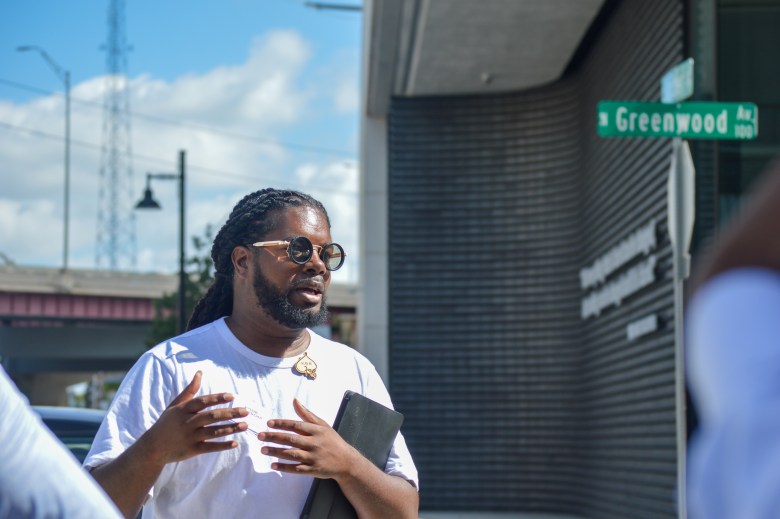
As hundreds of visitors descend on Tulsa for the Aspen Ideas: Economy conference, Black Wall Street historian Kode Ransom is giving them a glimpse of Greenwood’s history.
Ransom offered two tours of the historic neighborhood Tuesday to teach people about the history of the 1921 Race Massacre, tribal sovereignty and some of the neighborhood’s most prominent business owners, like Dreamland Theater owner Loula Williams.
The Eagle talked to attendees about what they learned about the city’s past and how they were feeling after the tour.
Harold Pettigrew: ‘This is the reason why I came’
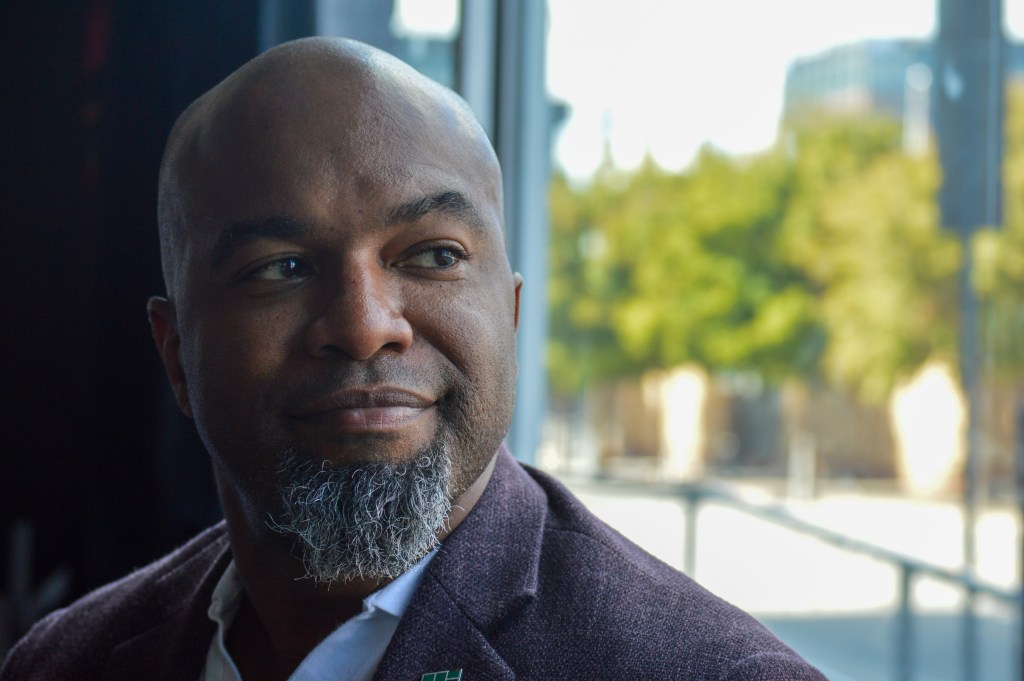
Harold Pettigrew had seen previous depictions of the Tulsa Race Massacre on the HBO show “Watchmen.” Visiting from D.C., he said the tour was especially impactful for him because one of his own relatives was killed in 1912 in North Carolina by “Klan-affiliated folks who wanted his land.” Pettigrew just visited the area last week.
Before the Ideas Festival, he “had done some personal study” about Black Wall Street and Greenwood.
Pettigrew said the tour was “an emotional experience. You think through what people built from either dreams or necessity, and to have it ripped away … it’s against the American ideals of being able to be in a place and pursue opportunity, do all the things that are right, and then because of how you look, that hatred could drive Americans to commit acts against Americans.”
When you walk through Greenwood, plaques cover the sidewalk showing where the destroyed businesses used to be.
“It’s tragic. Each of those plaques, they represent a dream, an ambition, a family, a story,” he continued. “It’s impressive also just seeing the optimism of what rebuilding is, where things are now and making sure that that wasn’t the end of the story … This is the reason why I came, to see this, to be here, to lay eyes on this part of history.”
Raymi Echavarria Fernandez: ‘It’s so real what was built’

Raymi Echavarria Fernandez told The Eagle she first learned about Black Wall Street in a Black women’s history course as an undergraduate student at Hunter College in New York.
“I did not hear about it or at least I don’t recall hearing about it in the regular U.S. history classes even in college,” she said.
“Being here, it’s so real what was built, what was destroyed, and what was rebuilt,” she said after the tour. “I really appreciated our tour guide’s grandmother’s wisdom being sprinkled through because the people who were here and who were experiencing it had the best and most insight.”
A lot of ancestral knowledge is lost in the way that Americans talk about history, Echavarria Fernandez said.
“I would love for Black Wall Street to flourish all over the country,” she said. “I’m hopeful that we can find ways to do that.”
Gordon Armstrong: ‘That drive, desire and mindset survive the tragedy’
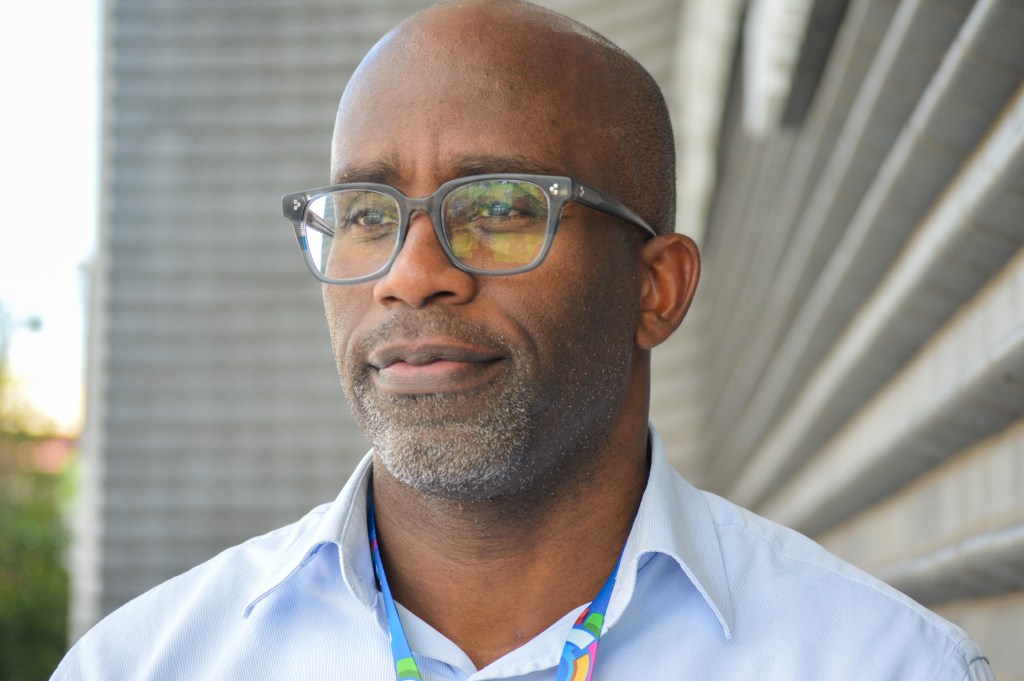
Gordon Armstrong told The Eagle he “definitely knew about the massacre” and knew that Greenwood was “one of the wealthier communities in the country at that point.” He appreciated getting more insight into how the community rebuilt and was more prosperous after the events of 1921.
Armstrong said he was both sad and disappointed learning the details of how the Greenwood community was destroyed in 1921 but marveled at people’s determination to rebuild.
“It was interesting to think that a bunch of people survived in the basement of that church,” he said, referring to Vernon AME. “When (Ransom) showed pictures, everything else looked like it was destroyed and somehow it’s like God’s hand touching you. Right where the people were hiding is fine, but everything else was destroyed around it which is actually very interesting.”
“I guess if you know history enough a lot of what you hear doesn’t surprise you,” he continued. “It’s new information but you’ve seen this, you read a different version of this story a million times … like all the nuance and games that have allowed for Black people’s wealth to be taken and all this maneuvering that guarantees folks don’t get back what’s theirs.”
Ultimately, Armstrong said “it was good to do this tour to get a sense of the rich history of this place.”
“Last night I was at an event where a lot of Black folks were developers looking to build stuff,” Armstrong said. “So it’s good to see that drive, desire and mindset survive the tragedy.”
The Oklahoma Eagle and Tulsa Flyer are a local media partner for Aspen Ideas: Economy. Our staff is engaged in several conference sessions, including a roundtable discussion and a panel hosted by CEO Ziva Branstetter.
The Oklahoma Eagle and Tulsa Flyer are a local media partner for Aspen Ideas: Economy. Our staff is engaged in several conference sessions, including a roundtable discussion and a panel hosted by CEO Ziva Branstetter.