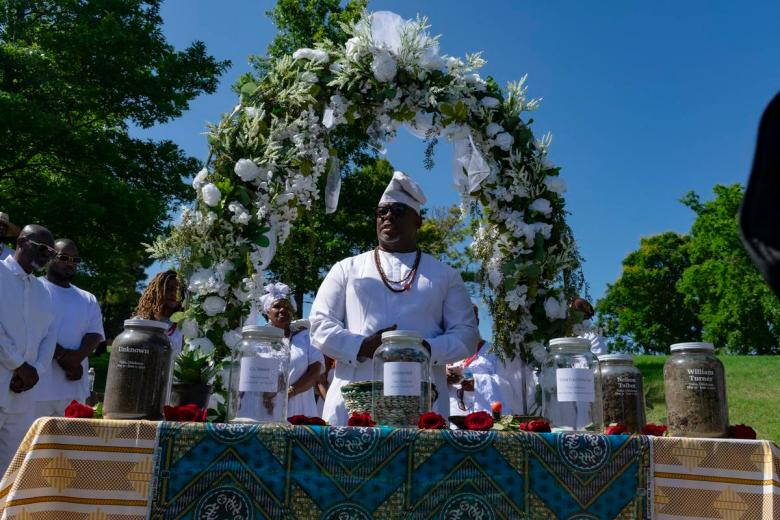
This year’s Black Wall Street Legacy Festival brought thousands of people to the Greenwood District for panel discussions, historical tours and musical performances by artists like Fantasia.
With the crowds gone and the vendors packing up on Sunday morning, reflection and remembrance for those lost in the 1921 Tulsa Race Massacre — and the people who helped rebuild — took center stage.
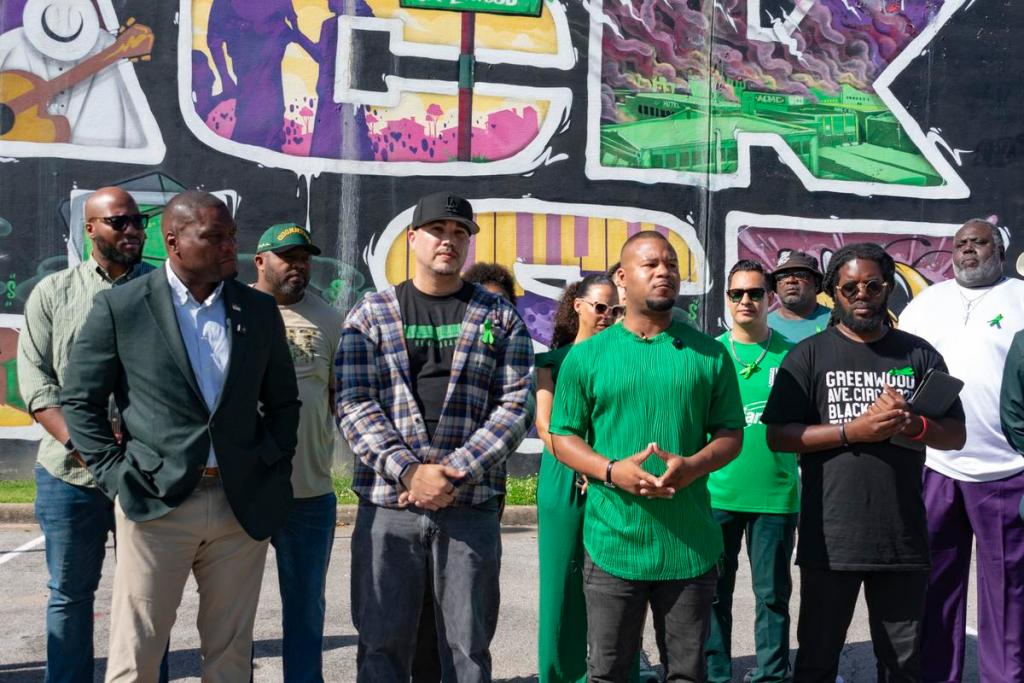
Tony Williams, known affectionately as Mr. Greenwood, led a vigil near the Black Wall Street mural across from Vernon A.M.E. Church. He was joined by a small group, including Mayor Monroe Nichols, with many wearing green to represent the historic area.
About 30 minutes later, Tiffany Crutcher, Chief Egunwale Amusan and members of the Tulsa African Ancestral Society hosted a soil collection ceremony at Standpipe Hill near John Hope Franklin Boulevard. The site overlooks what was the former Greenwood community.
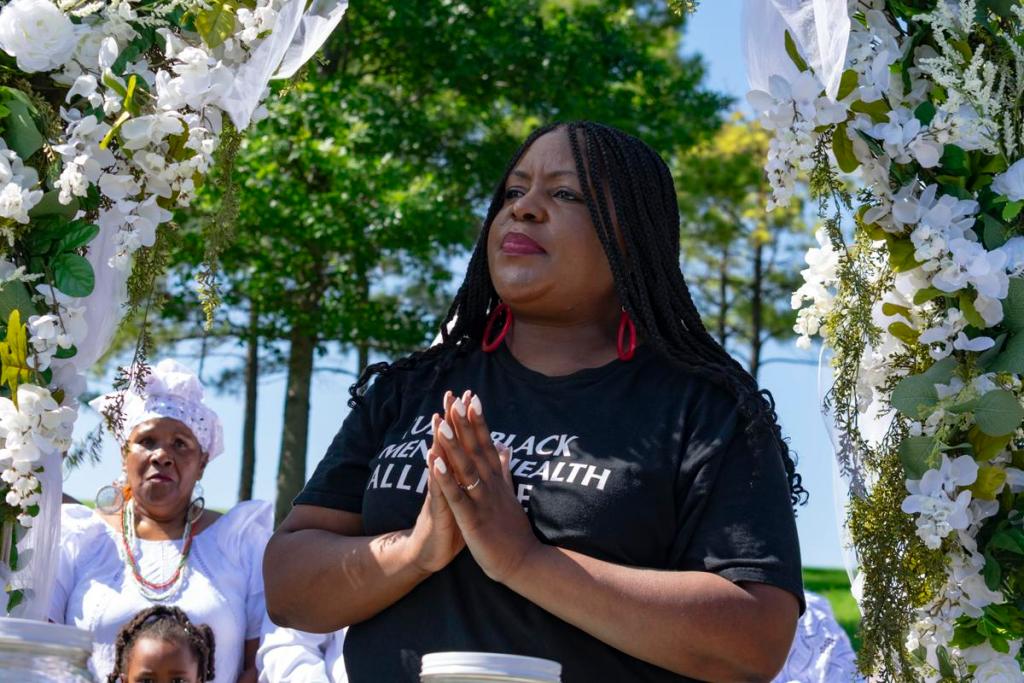
As drumming and singing filled the Sunday morning silence, they began the ceremony.
“In this moment we remember the lives lost in Greenwood, both that terrible time in 1921 and also in the long shadow it cast over a community for decades,” Crutcher, founder and executive director of the Terence Crutcher Foundation, said. “We stand now — over 100 years later — as testimony to both the tragedy and resiliency of this community which has risen more than once from the ashes.”
The containers were labeled with the names of massacre victim C.L. Daniel and Mother Viola Fletcher, one of the last living survivors who passed away in November at 111.
The ceremony signified a pledge to honor their memory with “our commitments to truth, to restoration, to reparations and, finally, reconciliation,” Crutcher said.
Another empty jar represented the victims whose names remain unknown. In an effort to identify more victims, Nichols has continued mass grave excavations at Oaklawn Cemetery as part of his larger Road to Repair initiative.
Amusan, a descendant of four survivors, performed the ritual of pouring libation to the north, south, east and west “for all those whose names have been forgotten, for all those who have never been given proper tribute, a proper burial.”
With each motion, members of the African Ancestral Society affirmed: Aṣẹ, or so shall it be.
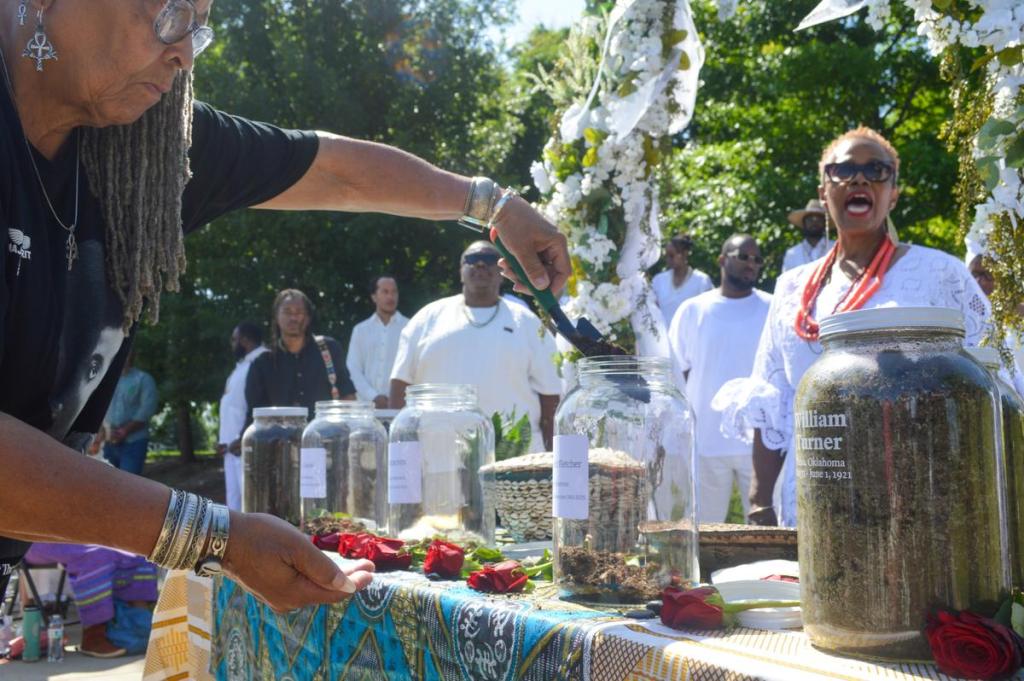
Longtime north Tulsa activist Mama Joyce Smith-Williams pours soil into a jar during a May 31, 2026, ceremony in remembrance of Mother Viola Fletcher, a massacre survivor who died in 2025 at age 111. Credit: Shaunicy Muhammad / The Oklahoma Eagle 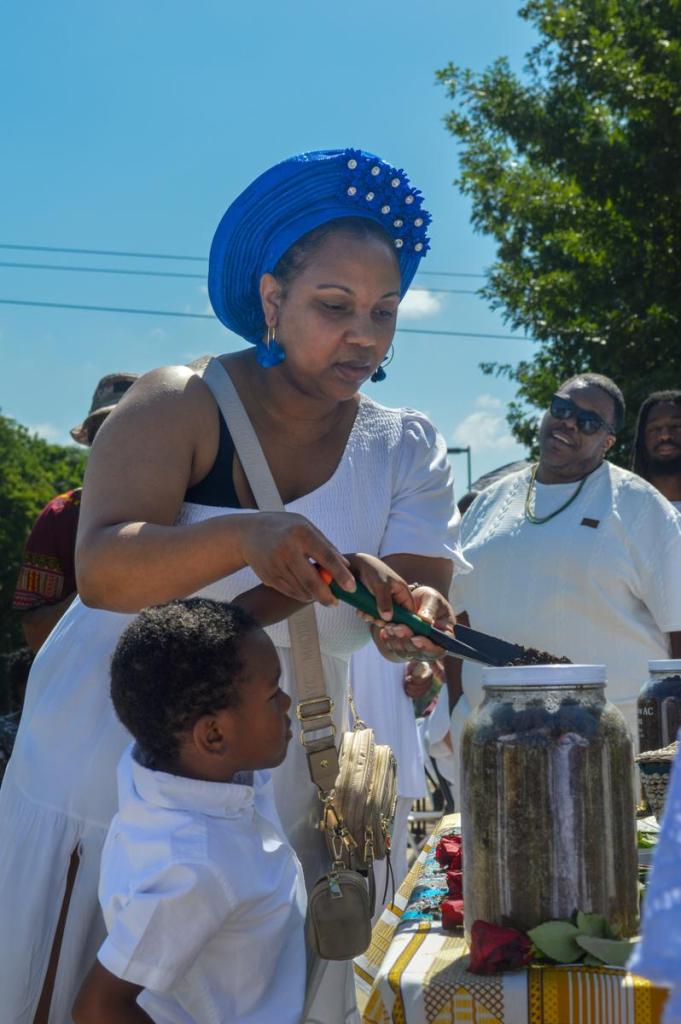
A woman and child pour soil into a jar at a May 31, 2026, ceremony honoring victims and survivors of the 1921 Race Massacre. Credit: Shaunicy Muhammad / The Oklahoma Eagle 
Members of the Tulsa African Ancestral Society sing during a soil collection ceremony on May 31, 2026.
He memorialized Daniel, an Army veteran from Georgia who served in World War I. Researchers identified Daniel’s remains in a mass grave in 2024 as they excavated the city’s oldest ceremony.
Members of the African Ancestral Society, each dressed in white, formed a single line. One by one, they kneeled in front of the table, scooped handfuls of soil and released it into the jars designated for Daniel, Fletcher and the unknown victims.
As they did, others joined in singing, chanting, dancing and scooping soil until the jars were nearly full.
Crutcher promised to keep Fletcher’s memory alive and continue the fight for justice, including reparations.
“As we mourn her passing, we also make a promise — one rooted in blood, memory and duty. We will keep fighting where she had to stop,” Crutcher said. “We will honor her legacy in the ways she deserved and we will remain steadfast every single day until justice reaches every family still waiting. Rest well, Mother Fletcher. We will carry your light forward with love and purpose.”