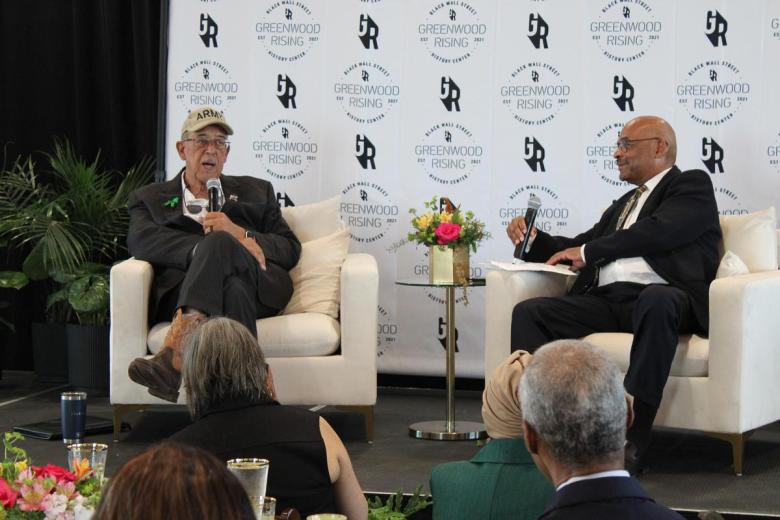
Coming on the heels of the Black Wall Street Legacy Festival, Greenwood Rising hosted a luncheon Monday to celebrate its fifth anniversary.
The museum opened in 2021, as the nation turned its eyes toward Tulsa to mark 100 years since a white mob destroyed Greenwood in one of the worst episodes of racist violence in U.S. history.
Held at The Vista at 21, the discussion was moderated by Gary Lee, executive editor of The Oklahoma Eagle and Tulsa Flyer, and featured former Lt. Gen. Russel Honoré.
Honoré is a 37-year Army veteran credited for being essential in coordinating military relief efforts after Hurricane Katrina.
Despite Katrina being a natural disaster, he said the lessons learned from it were similar to ones learned from the massacre: being resilient through community building. He acknowledged the two events contrasted in how much government assistance was provided to victims.
“When you look at the rebirth and resilience after the (massacre), it was people doing things themselves, not in collaboration with grants from the government, and in some cases the government was pushing back on some of the ancestors,” Honoré said.
When asked his thoughts on the NAACP calling on athletes to boycott southern states that are altering voting rights, Honoré told Lee that encouraging young people to vote would yield better results.


He used his home state of Louisiana as an example of a state with a lack of voter engagement. Only 61% of eligible Louisiana voters went to the ballot box for the 2024 general election — the 11th-lowest percentage in the U.S.
Oklahoma placed second to last with only 53% of eligible voters.
“Our ancestors … have died for us to write the vote, going back 250 years ago,” Honoré said. “We can’t accept young people being disengaged for what our ancestors have done collectively for the right to vote … too many have sacrificed too much.”
Greenwood Rising preserves and displays the entire history of the Historic Greenwood District from its establishment, destruction and rebuilding. The museum was funded primarily by the 1921 Tulsa Race Massacre Centennial Commission, which raised $20 million toward its construction and start-up.
Ismael Lele is a Report for America corps member and writes about business in Tulsa for The Oklahoma Eagle. Your donation to match our Report for America grant helps keep him writing stories like this one; please consider making a tax-deductible gift of any amount today by visiting this link.