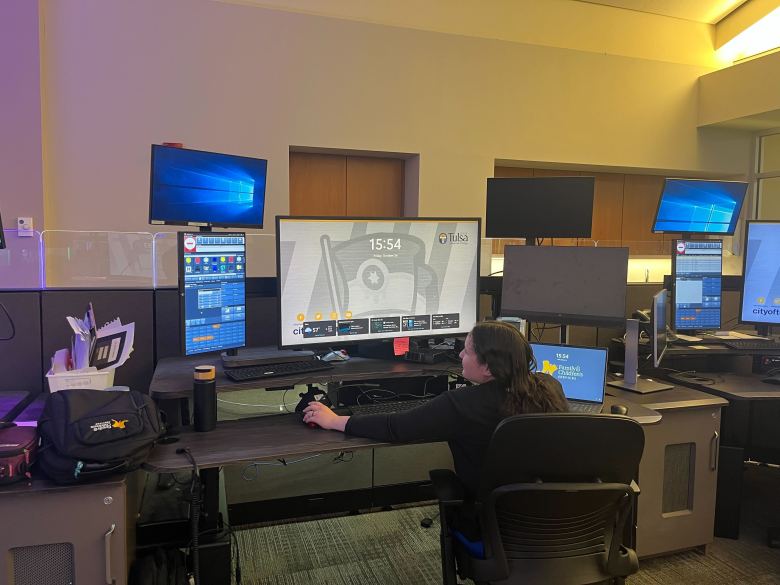
Tulsa police have historically been the first — and sometimes ill-equipped — responders to every mental health crisis called in to 911. That all changed in March, when mental health experts were placed at the 911 center around the clock, freeing up police to prioritize public safety calls and saving taxpayers money in the process.
On any given day, around 90 staffers man the phones at the city’s 911 center, including a team of clinicians with Community Outreach Psychiatric Emergency Services (COPES). Depending on the call, they respond to crises in the field and make sure those in need have the right care in the days to come.
“We realized it’s a different group of individuals that are typically calling into the 911 system than are calling our crisis line,” said Amanda Bradley, vice president of crisis services at the nonprofit health clinic Family & Children’s Services. “So, there’s a huge gap in us being able to meet the services of those within our community. What can we do differently?”
While the COPES team has operated a crisis call line at FCS for years, TPD and FCS partnered to embed mental health clinicians in the 911 center around the clock to create a co-responder diversion program. After launching in March, the program is helping Tulsans in crisis and saving taxpayer dollars by diverting traditional first responders from mental health-related calls.

Of the 4,144 calls handled by COPES at the 911 center from March to September, nearly 3,680 of them were diverted, according to the 911 Dispatch Monthly Dashboard. This means that nearly 89% of the calls were managed entirely by COPES without dispatching police, fire or ambulance services.
By handling mental health-related calls itself, the COPES team has saved almost $109,000 for the police department, about $13,000 for the fire department and more than $3,000 for EMSA from March to September, according to the dashboard. In that same time frame, the COPES team has saved more than 2,000 dispatch hours for police, fire and EMSA units.
“The data is showing great results for us to be able to provide a better response for our community, as well as getting the first responders on calls that they should be responding to,” Bradley said.
Officer Andre Baul, a spokesman for the Tulsa Police Department, said the COPES team has provided relief for officers.
“Over the years, COPES has been absolutely phenomenal,” Baul said. “It helps the public in a way that is different than just seeing two cops show up at their door.”
Goal: ‘Remove unnecessary police interactions’
The First Responders Advisory Council (FRAC) — a group that includes TPD, the Tulsa Fire Department, the COPES team at Family & Children’s Services and the 911 center — began meeting in 2023 to figure out how each organization’s services fit together to create a comprehensive crisis response system.
Facilitated by Healthy Minds Policy Initiative, a nonprofit organization that publishes research on mental health and substance use in the state, the advisory council recognized the need for a co-responder diversion system.
Audra Brulc, the community initiatives manager at Healthy Minds Policy Initiative who leads the advisory council, said the goal is to minimize interactions between law enforcement and those experiencing mental health crises.
“The overarching goal of this type of alternative response or co-responder diversion program is really to just remove unnecessary police interactions,” Brulc said. “That was something that we (wanted) coming from our field, and Tulsa police had also expressed to us that they really did not want this to fall on them when they were not the best-suited response.”

Programs that reduce the department’s call load are always beneficial, but the COPES team is not meant to replace police, Baul said.
“It’s something that helps us in our day-to-day routine. It helps with alleviating some of the things that go out,” Baul said. “At the end of the day, we still have officers that are highly trained. We put our officers through an extensive training program when it comes to mental health. That’s not to say that these programs don’t help. They’re not here to replace us. They’re here to supplement us.”
By handling the mental health call load, Baul said COPES and its various response teams allow officers to stay ready for public safety threats.
“I was in the field when this new program went into effect. There is something to see a mental health call on the screen, and then see COPES is going to take care of the call,” Baul said. “You’re like, ‘OK, good, I have a burglary in progress right here.’”
A helping hand after a mental health crisis
After someone experiences a mental health crisis and calls 911 for help, the COPES team deploys a post-crisis navigator to follow up.
Krista Lewis, chief program officer for adult mental health medical and crisis services at Family & Children’s Services, said navigators are important for determining each person’s individual needs.
“Do they need food, clothing, shelter? Do they need a chair ramp built at their home? Do they need to be connected to medical or dental?” Lewis said. “We’re going to follow up and we’re going to have a conversation about what needs are present and how we can help meet those needs throughout the community.”
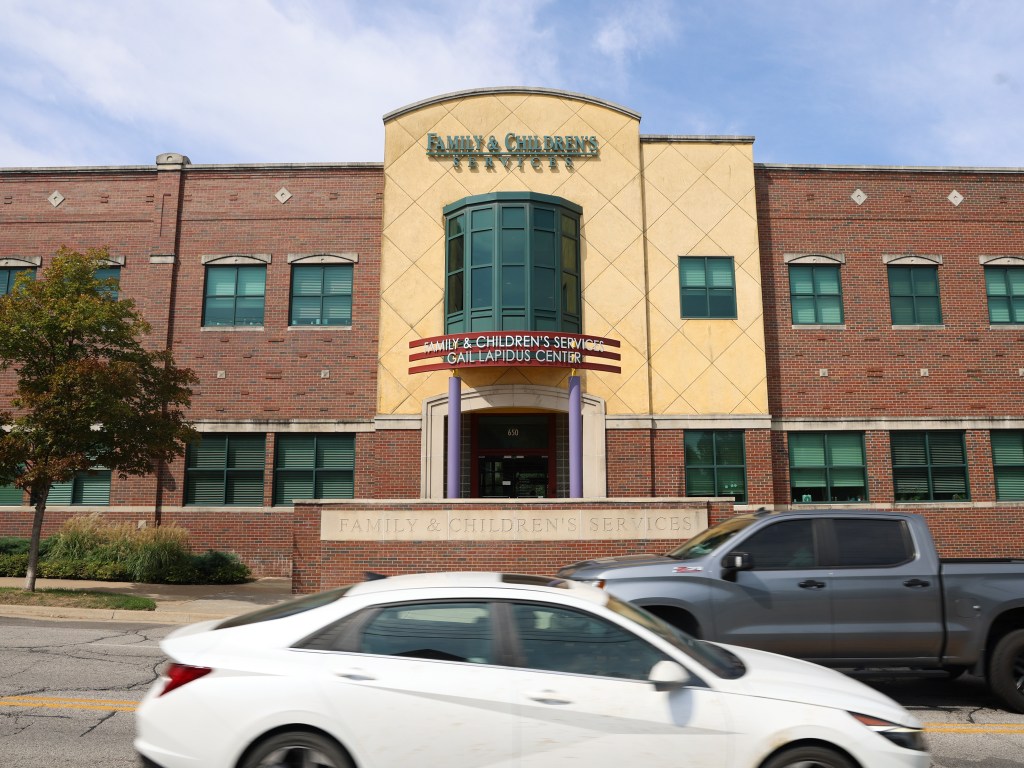
Lewis said she hopes post-crisis navigators will help prevent future crises for Tulsans.
“We’ve moved from a one-and-done environment to a follow-up,” Lewis said. “Now that you’re stabilized and out of crisis, what can we do to help you meet the needs that you have?”
Following up with people post-crisis is extremely important to ensuring patients continue to access services, Brulc said.
“Evidence and conventional wisdom in the mental health field shows that by continuing to engage with people for a certain amount of time and helping people get on track to receiving follow-up and continued care — that’s really how you stop crisis events from occurring again,” Brulc said.
While Tulsa-area mental health providers are excited for this new partnership and its early outcomes, the road map for success was set years ago. Prior to the COVID-19 pandemic, Lewis said she joined representatives from Family & Children’s Services, TPD and the 911 center for a visit to Houston after Harris County leaders embedded clinicians within their 911 center.
“I think part of what we’re proudest of and most excited about is this is definitely the culmination of a lot of work that was happening for several years,” Brulc said. “It is a newer initiative, but this is something that these partners have been committed to for a really long time. It’s been gratifying to see.”
News decisions at the Tulsa Flyer are made independently of our board members and financial supporters. Read more about our editorial independence policy here.