

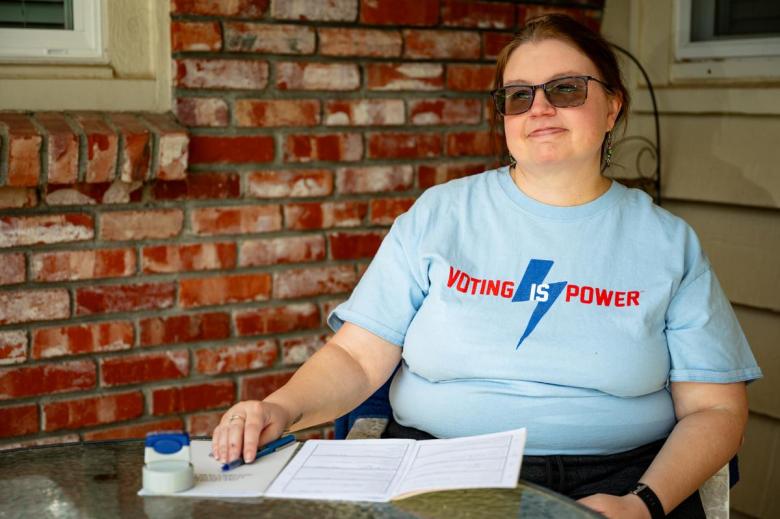
The following story is taken from the larger podcast listenable above.
Emily DelGrosso expected a routine visit.
A Tulsa resident and commissioned Oklahoma notary, she walked into a local bank in 2024 carrying her absentee ballot and a valid photo ID, expecting the same process she had guided dozens of other voters through herself. Instead, she watched nearly every rule of notarization unfold in reverse.
An employee — not the commissioned notary — took her identification into a back office. Her ID disappeared from view before eventually being returned. She was instructed to sign her absentee ballot without the notary present. Only afterward did the notary emerge, stamp the document and scrutinize DelGrosso’s signature.
The notary insisted something was wrong.
DelGrosso typically signs her name “Em Del,” omitting the final syllables of her last name. It is the signature she uses regularly and consistently. But the notary disagreed.
“Well, this isn’t your signature,” she told DelGrosso.
Although the notary had never witnessed the signature being made — a fundamental requirement of notarization — she instructed DelGrosso to sign again using her full surname.
For DelGrosso, the experience was alarming, not because she questioned the value of notarization, but because she understood exactly how it is supposed to work.
“In the most simple terms,” she said, “a notary just ensures that the person signing a document is who they say they are.”
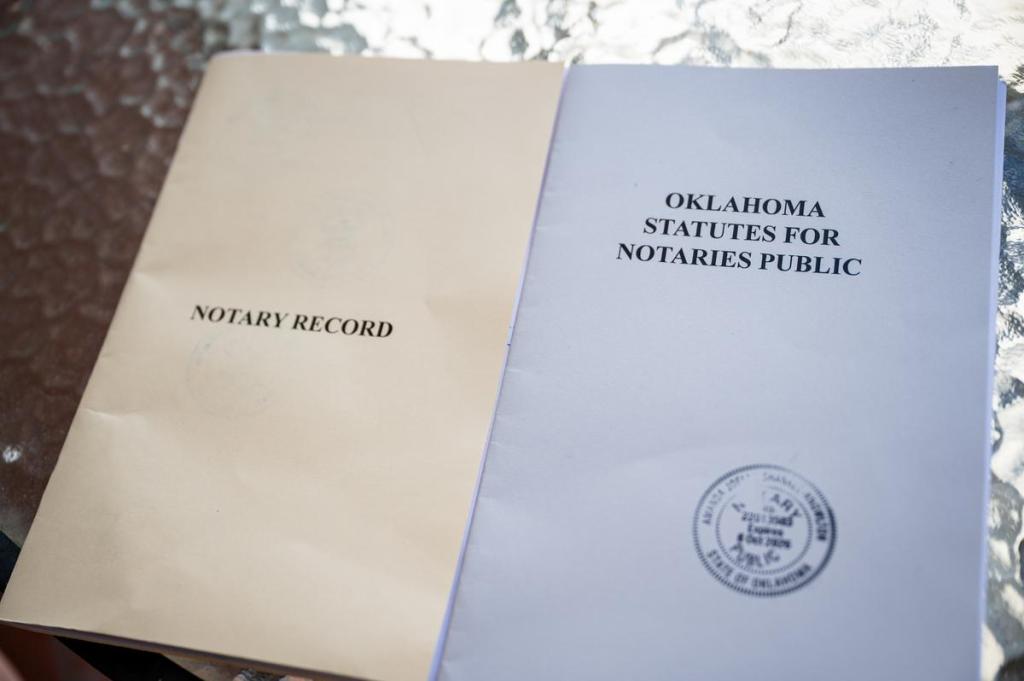
The responsibility is straightforward. A notary verifies a signer’s identity using valid identification, watches the person sign the document, completes the required certification and affixes an official seal. The process is designed to deter fraud while creating confidence that documents have been executed properly.
But in this case, nearly every safeguard failed.
What happened next frustrated DelGrosso even more.
She spent months trying to determine who was responsible for overseeing notaries in Oklahoma. She contacted state agencies, searched for answers and at one point was even advised to file a police report.
“I got sent on a wild, wild goose chase that never ended,” she recalled.
The responding officers were equally puzzled.
“They were like, ‘I don’t know why you’re telling me. This isn’t our problem.'”
Years later, she still wonders what happens when notaries fail to follow the law.
“As far as making sure that notaries are doing things properly,” she said, “I have outstanding questions about that.”
Those questions reach far beyond one Tulsa bank.
For most Oklahoma voters who cast absentee ballots, notarization is not optional. Before a ballot can be mailed to county election officials, the voter must appear before a commissioned notary, present identification and sign the absentee ballot affidavit in the notary’s presence. Oklahoma remains one of only a handful of states to require notarization for absentee voting, making an already less-common voting method more complicated than in much of the country.
Supporters say the requirement protects election integrity by helping verify voter identity. Critics argue it creates another obstacle for voters who are elderly, disabled, homebound, working multiple jobs or living in rural communities where notaries may be difficult to access.
For DelGrosso, however, the issue is not whether notarization should exist. She believes it can serve an important purpose — if it is done correctly.
She knows the process well.
By day, DelGrosso works in human services. Becoming a notary was another way, she says, to serve her community while encouraging civic participation.
Her work ranges from notarizing powers of attorney and insurance paperwork to car titles and surrogacy agreements. During election seasons, absentee ballots become another regular part of her schedule.
Unlike many notaries who work from banks or law offices, DelGrosso travels to meet voters where they are. She regularly drives throughout Tulsa, Owasso and Collinsville, meeting people in homes, libraries and other convenient locations.
Before every appointment, she reminds voters of two simple requirements: Bring a valid government-issued photo ID and do not sign the ballot envelope before she arrives.
That second instruction surprises many people.
“A lot of people don’t realize you have to sign whatever it is you’re signing in front of the notary,” DelGrosso explained. “Bringing it already signed — and an ID — isn’t helpful to me.”
The process itself is designed to protect voter privacy.
Voters complete their ballot in private before sealing it inside a ballot envelope. That sealed envelope is then placed inside another envelope containing the affidavit that must be notarized. DelGrosso never sees how anyone voted. Her role begins and ends with verifying identity, witnessing the signature, completing the notarial certificate and returning the sealed ballot to the voter for mailing or hand delivery.
“I’m not collecting anybody’s ballots,” she said.

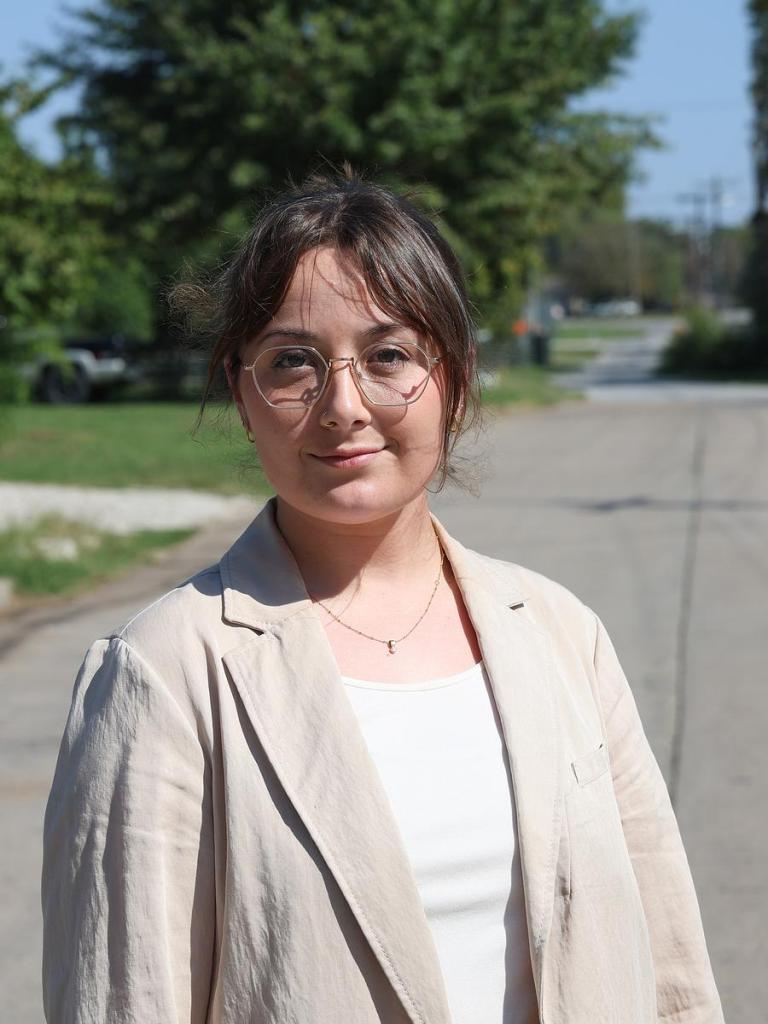
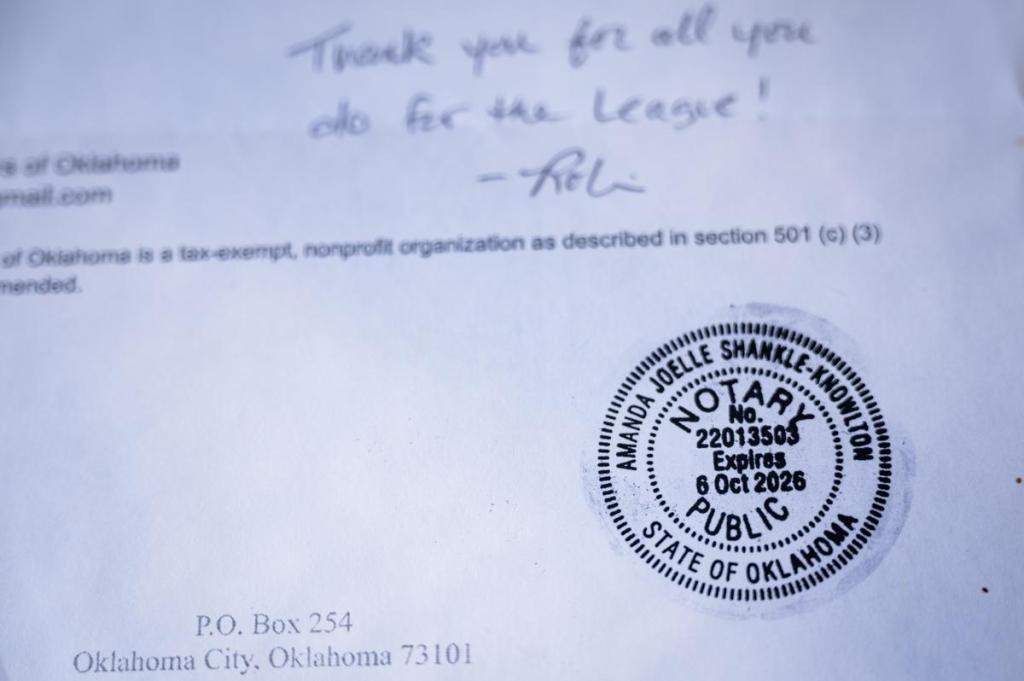
Amanda Shankle-Knowlton understands that responsibility as well.
She became a notary in 2022 after volunteering with ACTION, a Tulsa community organizing group that helped voters navigate absentee voting during the COVID-19 pandemic. At a time when many Oklahomans wanted to avoid crowded polling places, volunteers organized outdoor, drive-thru notarization events so voters could safely complete the state’s absentee ballot requirements.
The experience revealed a problem she had never considered.
“If you are going to vote absentee,” she said, “that’s one of the steps. And people don’t always know how to get something notarized.”
Shankle-Knowlton decided to become another resource.
“I wanted to get the notary seal so that I could be an extra person in Tulsa that could just do that for people.”
Like DelGrosso, Shankle-Knowlton follows a straightforward routine. Verify identification. Match the voter to the ID. Watch the voter sign. Complete the notarization. The procedure is simple. The larger system, however, is not.
Every registered Oklahoma voter is eligible to vote absentee. But before Election Day arrives, voters must request a ballot no later than 15 days before the election. Applications must be submitted each calendar year, even for voters who regularly vote absentee. Once the ballot arrives, most voters must locate a commissioned notary before sealing and mailing it back to their county election board.
On paper, the process appears straightforward.
In practice, many Oklahoma voters discover that casting a ballot from home requires navigating a system filled with deadlines, paperwork and one additional requirement that few other states still impose.
When voting from home isn’t simple
For Margaret Eagler, absentee voting isn’t a matter of convenience. It’s a necessity.
Living in Tulsa, Eagler and her husband have long relied on voting by mail because of serious health conditions that make standing in line at a polling place difficult — and sometimes impossible.
“I have autoimmune diseases,” Eagler said. “I’m on medications that suppress my immune system, and I have cancer that has me on oral chemotherapy.”
Her husband’s challenges stretch back even further. He contracted polio as a child in the late 1950s, a disease whose effects have shaped his life for decades.

“He had significant disabilities as a result of the polio,” Eagler said. “But for many years, he did everything. He worked on cars. He went to college. He took care of me when I was too sick to take care of myself. He carried our babies because of my health condition. He was just a go-getter.”
Then came a series of illnesses that dramatically changed his independence.
COVID-19 diminished his mobility. Influenza A left him even weaker, forcing him to begin using a wheelchair. After developing sepsis, he lost the ability to walk altogether.
As their health declined, absentee voting became one of the few practical ways for the couple to participate in elections. But in Oklahoma, voting from home still requires leaving home — or persuading someone else to come to you.
Every absentee ballot must be signed in front of a commissioned notary, who verifies the voter’s identity before completing the affidavit attached to the ballot envelope.
For voters like the Eaglers, finding that notary can become the hardest part of casting a ballot.
“There was one election where he was too sick to have somebody come over to notarize,” Eagler recalled. “And then one where we just couldn’t find anybody that we could afford.”
At the time, mobile notary services were beginning to appear, but the cost put them out of reach.
“The ones that I called wanted 60, $75,” she said with a laugh that quickly faded into frustration. “So much for fair and free elections.”
Finding a notary became a project in itself.
She searched Google, combed through Facebook and called one notary after another.
“I think I called six before I finally gave up.”
The Oklahoma Secretary of State maintains an online directory of commissioned notaries, but many voters don’t know it exists. Even when they do, locating someone who is available, willing to travel and affordable can take hours.
“It would’ve been nice if I could have kept calling until I found somebody,” Eagler said. “But I was working full-time. It’s time-consuming.”
For notaries like DelGrosso, those stories are exactly why she offers mobile appointments.
Working full-time in human services, DelGrosso schedules absentee ballot notarizations during evenings and weekends to meet voters where they are.
Appointments begin with a conversation over email or social media to coordinate a time and location. Oklahoma law prohibits notaries from charging a fee to notarize an absentee ballot itself, but DelGrosso charges a modest $15 travel fee to cover the cost of driving to voters’ homes.
Even that policy, she discovered, isn’t clearly explained.
“I actually looked before our meeting today to see if I could find a source saying travel notaries in Oklahoma are allowed to charge travel fees — but not for the absentee ballot notarization,” DelGrosso said. “I’d even contacted the local election board a few years ago to make sure that was the case. But I still can’t find clear-cut information anywhere.”
For many voters, the absentee voting process itself can be confusing long before a notary ever arrives. Shankle-Knowlton says problems often start with requesting the ballot.
“Depending on how you registered to vote — whether you used your driver’s license or your Social Security number — you may not be able to request an absentee ballot online,” she explained. “Basically, you have to re-register.”
Then comes the packet itself. Inside are multiple envelopes, several instruction sheets and a sequence that must be followed precisely. For first-time absentee voters, the process can feel overwhelming.
“People seem to generally, unless they’re really familiar with the process, get overwhelmed,” DelGrosso said.
Occasionally she arrives at an appointment to find the entire packet spread across a kitchen table.
“They’ll just say, ‘I don’t even know where to start. Tell me how to do it.'”
Eagler understands that feeling.
“I’m not fond of the process of voting by mail,” she said. “They make it as complicated as they can — even without having to get notarized.”
She paused, trying to remember each step.
“I don’t remember everything you have to have,” she said. “But it was more work than going and standing in line to vote.”
For someone with a master’s degree, she added, the paperwork was still difficult to navigate.
Those complexities have real consequences. A missed signature. An incomplete affidavit. A date entered incorrectly. Small clerical mistakes can prevent a legally cast ballot from ever being counted.
Shankle-Knowlton remembers reading about common reasons absentee ballots are rejected. One frequent problem is a mismatch between the date the voter signs the affidavit and the date recorded by the notary.
“The notary has to notice that,” she said. “If it’s wrong, you’ve got to get it corrected.”
If the dates don’t match, the ballot can be rejected.

State Sen. Mary Boren, D-Norman, says those errors account for a significant share of discarded absentee ballots.
“If someone signs their ballot on April 2, but the notary signs it April 13, it’s kicked out,” Boren explained.
Unlike many states, Oklahoma does not offer voters an opportunity to correct — or “cure” — many absentee ballot mistakes after Election Day.
“If your absentee ballot is thrown out,” Boren said, “there’s no notice until after the election. There’s no way to come back and vote in person or request another ballot.”
The contrast with in-person voting is striking.
“If you spoil a ballot at the polling place,” she said, “they just hand you another one.”
Election data underscore how often those mistakes occur.
In Tulsa County alone, more than 1,000 absentee ballots — or over 5% of those returned during the 2024 general election — were rejected. Roughly one-quarter were discarded because the notary’s signature date did not match the voter’s. Another quarter were rejected because the affidavit was incomplete.
For Eagler, those numbers reflect a system that asks too much of voters who are already facing significant obstacles.
“I think it bars far more people from voting than actual fraud takes place,” she said. “Maybe I’m biased because it’s affected my household. But I know I’m not the only one.”

A system built on security
Oklahoma election officials describe notarization as one of the state’s strongest protections against election fraud.
In a written response to questions from Focus: Black Oklahoma, the Oklahoma State Election Board said the state’s election security laws “have been enacted in response to actual fraud or other criminal activity related to elections.”
The statement characterized notarization as the “gold standard” for verifying the identity of absentee voters, arguing that the requirement helps maintain confidence in elections while allowing any registered voter to request a mail ballot without providing a reason.
Oklahoma election officials also emphasized that voters should never be charged a fee to have an absentee ballot notarized. State law prohibits notaries from collecting payment for notarizing absentee ballot affidavits, and the election board called such charges illegal.
That emphasis on election security has shaped Oklahoma law for decades.
In 2010, a small election in Adair County, on the northeastern border of Arkansas, became one of the state’s most widely discussed absentee voting controversies.
The election itself — a race for a Cave Springs Public Schools board seat — attracted little attention outside the county. But during the canvass, election officials discovered that two absentee voters had also cast ballots in person.
The duplicate votes did not affect the outcome of the election, but the investigation led authorities to Darryl Cates, a 73-year-old notary from Westville.
Cates was charged with two counts of false affidavit in voting registration and two counts of false notarization of absentee ballots. He was released on a $5,000 bond. When The Daily Oklahoman attempted to contact him, family members said he had moved away without leaving forwarding information.
The case prompted lawmakers to reconsider the role notaries play in Oklahoma elections.
Two years later, the Legislature passed Senate Bill 1466, authored by then-State Sen. John Ford, R-Bartlesville, and several colleagues.
The law imposed a new limit on notaries who handle absentee ballots. Unless they receive written approval from their county election board, notaries may notarize no more than 20 absentee ballot affidavits during an election cycle.
The restriction addressed practices uncovered during the Adair County investigation, where Cates had notarized unusually large numbers of absentee ballots: 77 in one election and 265 in another.
Yet notarization itself was hardly new.
Oklahoma has required absentee ballots to be witnessed by a notary or court clerk for generations.
The state first authorized voting by mail in 1938, requiring absentee voters to appear before a clerk or notary to verify their identity before returning a ballot.
Even earlier absentee voting systems relied on sworn affidavits witnessed by public officials.
As absentee voting expanded throughout the 20th century, the verification process remained largely unchanged.
In 1991, lawmakers opened absentee voting to all registered Oklahoma voters without requiring a reason. Although eligibility broadened dramatically, the notarization requirement stayed in place.
By 2004, the Tulsa World described Oklahoma as having “one of the most stringent” absentee voting systems in the nation.
Pandemic brings new policy — and surge in absentee voting
The only interruption in those policies came during the COVID-19 pandemic.
In May 2020, the Oklahoma Supreme Court ruled that requiring voters to obtain notarization during a declared public health emergency placed an unconstitutional burden on citizens trying to protect their health.
Writing for the majority, Chief Justice Noma Gurich ordered the election board to accept alternative methods of identity verification while the emergency remained in effect.

The practical impact was immediate. Absentee voting surged.
In Oklahoma County alone, nearly 38,000 absentee ballots were returned during the June 2020 primary — roughly twice the number typically received during a primary election.
Despite the dramatic increase, Oklahoma County Election Board Secretary Doug Sanderson told KFOR-TV that officials found no evidence of voter fraud.
“We didn’t find anything,” Sanderson said. “Any violations of the law, we would always turn over to the district attorney’s office. And we didn’t find any.”
The temporary policy lasted only weeks. Three days after the Supreme Court’s decision, Gov. Kevin Stitt signed Senate Bill 210, restoring the notarization requirement beginning in 2021.
Not everyone supported the move. Former State Sen. George Young, D-Oklahoma City, voted against the legislation.
“It just didn’t make a whole lot of sense to me,” Young said. “Why were we hindering people from exercising their constitutional right?”
Boren also opposed the bill, arguing the pandemic demonstrated absentee voting could function safely without requiring every voter to locate a notary.
“It didn’t seem like notarization was providing more security,” Boren said. “It was more of a barrier than a security mechanism.”

Election law scholars echo that concern.
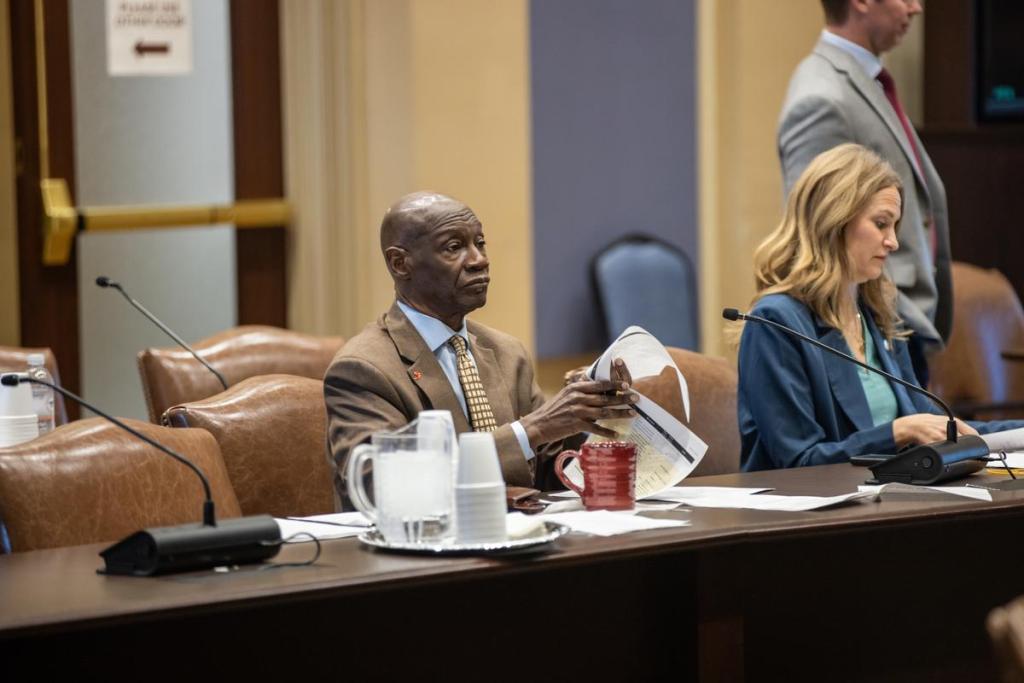
Andrew Garber, serves as counsel for the left-leaning Brennan Center for Justice’s Voting Rights and Election Program at New York University’s School of Law. He says notarization requirements impose significant burdens while addressing little documented risk.
“Notarization requirements for mail ballots are definitely a significant hurdle to a lot of voters,” Garber said.
He argues that decades of election administration and post-election audits have found no evidence of widespread fraud involving absentee voting.
“Ultimately,” he said, “it’s a solution in search of a problem.”
State election officials disagree.
The Oklahoma State Election Board noted that the temporary suspension of notarization occurred only because of the unprecedented public health emergency.
According to the board, the alternative verification procedures “were never intended to permanently replace existing election security laws.”
‘A maze of maze-producing mazes’
The disagreement reflects a broader philosophical divide that extends beyond absentee ballots.
Supporters of Oklahoma’s election laws view notarization, voter identification requirements and other verification measures as reasonable safeguards that strengthen public confidence in elections.
Ford, who helped write both the absentee ballot legislation and Oklahoma’s voter identification law, said voters overwhelmingly endorsed that approach.
“The citizens of Oklahoma spoke loud and clear,” Ford said after voters approved State Question 746 in 2010. “They wanted to maintain the integrity of our voting system while placing reasonable protections on voting.”
Ford argued those protections do not prevent eligible citizens from voting. Critics see the same laws differently.
Young says Oklahoma has never experienced the kind of widespread voter fraud that would justify additional barriers to voting.
“We’ve never had a problem,” he said. “We’ve not had any discrepancies. We’ve not had any overwhelming problem you can talk about.”
Garber says that trend applies to the rest of the country.
“There is no evidence of widespread voter fraud in American elections,” he said. “Audits occur after every election. Election officials have systems in place before, during and after voting to protect election integrity.”
What concerns him, instead, is the political impact of repeated claims about election fraud. Those claims, he said, have fueled legislation across the country that makes voting more difficult while addressing problems that rarely occur.
For some observers, the debate over notarization is about more than paperwork.
Anu Sharma, a political anthropologist at Wesleyan University, views requirements like notarization as part of the way governments shape citizens’ interactions with public institutions.
Each additional step may appear minor on its own, she said. Together they can create meaningful obstacles for people with fewer resources.
“What if you don’t have transportation?” Sharma asked. “What if you don’t have time? What if you don’t know what documents a notary requires — or how to find that information?”
Those questions, she said, rarely affect every voter equally.
Policies that seem routine to middle-class voters with flexible work schedules, reliable transportation and easy access to financial institutions may become significant barriers for people who lack those advantages.
“There are class and racial implications,” Sharma said. “It makes it more difficult for certain citizens to exercise this right.”
For Sharma, the system resembles what she called “a maze of maze-producing mazes” — a bureaucracy in which every additional requirement can leave voters searching for answers without knowing where accountability ultimately lies.
Hard-won lessons from the polls
Rae Weese is among the Oklahoma voters who helps others navigate the state’s election system. She spoke with us from her screened-in back porch. “That’s what sold me on my house,” she said, pausing as jets from the nearby Tulsa airport passed overhead.
Weese keeps Oklahoma voter registration application forms in her car, handing them out to anyone who needs them, no matter what barriers they face.
“I have met people that said, ‘I want to vote, but I can’t read.’ And we’d help them fill out their voter registration,” Weese said.
Weese votes absentee because she travels often.
“I don’t have a problem with getting my vote notarized, but I know that might limit a lot of people,” she said. “I would be willing to expand early voting. I just don’t want to see it restricted more than it is.”
Her commitment to voting began in childhood.
“I lived about half a block from my elementary school,” she recalled, “and that’s back when your polling places were in the schools.”
“In the early ‘60s — because I’m 72 — I’d walk to school, and my mother would be working as a poll worker. I grew up watching my mom do poll work, and going in the little curtained alcoves with them to vote.”
Her civic engagement extended beyond elections. She attended protests against the Vietnam War with her brother, a veteran, who “came home totally changed.”
“I’ve been on street corners ever since,” Weese said. “Whether it’s women’s rights, or immigrants’ rights or Black Lives Matter.”
In recent decades, Weese has volunteered as a Democratic poll watcher.
“Each party can post a vetted poll watcher,” she said. “So you just stand there for a certain number of hours, and simply watch the voters and the precinct officials, and make sure that there’s no campaigning, or anybody coercing anyone.”
Weese said she never saw anything. She also observed ballot recounts.
“At each table, you have a Republican and a Democrat watching. Nothing was ever a big deal. When they’re counting votes, and doing recounts — it’s just so above board and transparent that it impressed me,” she added.
After decades as a voter, volunteer, protester, poll watcher and recount observer, Weese offers a hard-won assessment of Oklahoma’s elections: “I think we’ve got one of the better systems in the country. We always have.”
Listen to a deeper examination and full story here.