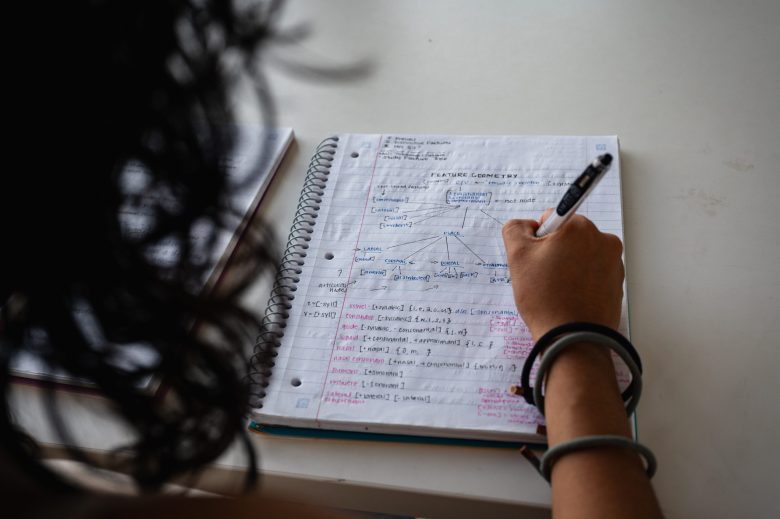
Maria Reynolds knew she’d have to work twice as hard as her classmates because she is living in the U.S. without legal status. She kept her grades up to apply for scholarships because she could not receive federal aid or loans.
This fall, Reynolds would have been a senior at the University of Oklahoma, where she was on track to graduate with a social sciences degree. Her real name is not being used in this story because of deportation fears.
Reynolds knew from age 8 she did not have legal residency status, yet always planned to get her college degree. It was her American dream.
“I’m not a bad person,” Reynolds said. “I’m not a criminal like how they portray me … because of that, I also knew that I had to work double or triple to kind of redeem myself or make a name for myself.”
In August 2025, the U.S. Department of Justice sued Oklahoma for offering in-state tuition to students without legal status in the U.S. The following month, the Oklahoma State Regents for Higher Education voted to revoke its policy allowing for the lower tuition rate. In the past year, the changes have shifted how Tulsa’s immigrant community views education and opportunities that come with it.
About 400 students in Oklahoma were affected, according to Angela Caddell, associate vice chancellor for communications for the state regents. She said it is unknown whether this includes students in the Deferred Action for Childhood Arrivals (DACA) program, which allows people who entered the country illegally as children to obtain work permits and avoid deportation.
Within two weeks of the August decision, Reynolds had to decide whether to drop out or pay out-of-state tuition, roughly $33,000 for the year. She ultimately found the cost was too high.
The rule change is now part of state law. Gov. Kevin Stitt signed Senate Bill 1633 May 13 to end in-state tuition for undocumented students and put the tuition rate into state statute.
“I believe our policies should reflect the rule of law and align with our nation’s immigration policies. This legislation makes it clear that in-state tuition benefits are reserved for legal residents while codifying procedures our universities already follow,” said Sen. Brenda Stanley, a Midwest City Republican who authored the legislation.
Raised in Tulsa, stripped of the benefits
Reynolds was 3 months old when she moved to the U.S. from Mexico with her parents. They started in California, then moved to Tulsa.
“I’m raised here,” she said. “I don’t say born, but I do say raised in Tulsa. Tulsa is the only place I really know. I went to school here. My high school was in Tulsa.”
In fifth grade, Reynolds set a goal to go to college after encouragement from a teacher. She became the first in her family to attend a four-year university.
Before the tuition rate changes took effect, a student in the country illegally could access in-state rates if they met certain requirements, including graduating from an Oklahoma high school and living in the state for at least two years with a legal guardian or parent. Students signed an affidavit stating they would seek citizenship as soon as eligible.
“They took my waivers away. They took my scholarships,” Reynolds said. “They took everything.”
Being forced to leave school affected her family as well, who took pride in her academic achievements.

“Now, taking that away from them too, that was a disappointment,” Reynolds said. “And I was fearing that disappointment from my parents and my family in general.”
Oklahoma has an estimated 98,000 residents living in the U.S. illegally, according to the most recent data maintained by the American Immigration Council. Of the 400 enrolled in higher education, it is unclear how many remained after the tuition change.
The Flyer requested enrollment information of students without legal status from public universities across Oklahoma before and after the August 2025 change. Before last year, the state board of regents classified students without legal status as “undocumented.” Now, they are classified simply as “out-of-state.”
The University of Oklahoma and Oklahoma State University did not provide undocumented student enrollment information. OSU confirmed two undocumented students last year paid in-state tuition before the change.
Tulsa Community College reported 210 undocumented students in 2024 and 196 in the spring last year. In the fall of 2025, just as the new tuition rate went into place, the enrollment fell to 134 undocumented students.
TCC officials say they are no longer tracking immigration status, classifying those students as paying non-resident rates.
Some undocumented students who grew up in Oklahoma may be moving out-of-state to afford college, says Gabriela Ramirez-Perez, immigration analyst at the Oklahoma Policy Institute, a think tank based out of Tulsa.
“Hence, taking all of the investments that Oklahoma put into them during elementary school, middle school and high school out of the state,” Ramirez-Perez said.
Advocates and economists at odds over the real impact
Oklahoma was the third of 24 states, along with the nation’s capital city, sued by the Trump administration to end in-state tuition for students living in the country illegally after Texas and Kentucky. Only Minnesota has won in court.
“No more placing illegal aliens over American citizens on this Department of Justice’s watch,” stated Associate Attorney General Stanley E. Woodward, Jr, in a DOJ press release. “We have now sued every state across our Nation that has a state law or regulation granting illegal aliens in-state tuition. We look forward to favorable court rulings and will continue to deliver on President Trump’s promise: illegal aliens will not receive benefits denied to American citizens.”
Previously, the Oklahoma Legislature introduced bills to change the tuition rate. Efforts were unsuccessful until the DOJ stepped in and Attorney General Genter Drummond offered to end the practice within weeks. Drummond said he supported Trump’s move to “ensure that benefits intended for American citizens are protected.”
“We were disappointed that this positive policy that Oklahoma had on the books for almost 20 years had suddenly ended due to a federal decision,” Ramirez-Perez said.
Higher education is tied to future earnings, health outcomes and tax contributions, she said.

“Not to mention that Oklahoma often faces workforce shortages and needs as many educated individuals as they can, and some of these students could help fill some of those gaps,” Ramirez-Perez said. “But ending in state tuition basically means that all of those benefits that graduates saw, that Oklahoma saw would disappear.”
OU economics professor Tyler Ransom said the state is unlikely to feel the impact of potentially losing those 400 students from higher education.
“In general, I think people overestimate the impact on the state economy of a particularly small group of people,” Ransom said. “I don’t see a reason to believe that this particular issue is going to have a negative impact on Oklahoma’s economy.”
The tuition change reveals a shift of higher education being a privilege rather than a right, Ramirez-Perez said, pointing to a Florida ban on any undocumented student from enrolling in a public university.
“You have to prove that you deserve to access education instead of seeing it as the basis of society,” Ramirez-Perez said.
More barriers, less motivation
High school educators are seeing students without legal status struggle with career planning.
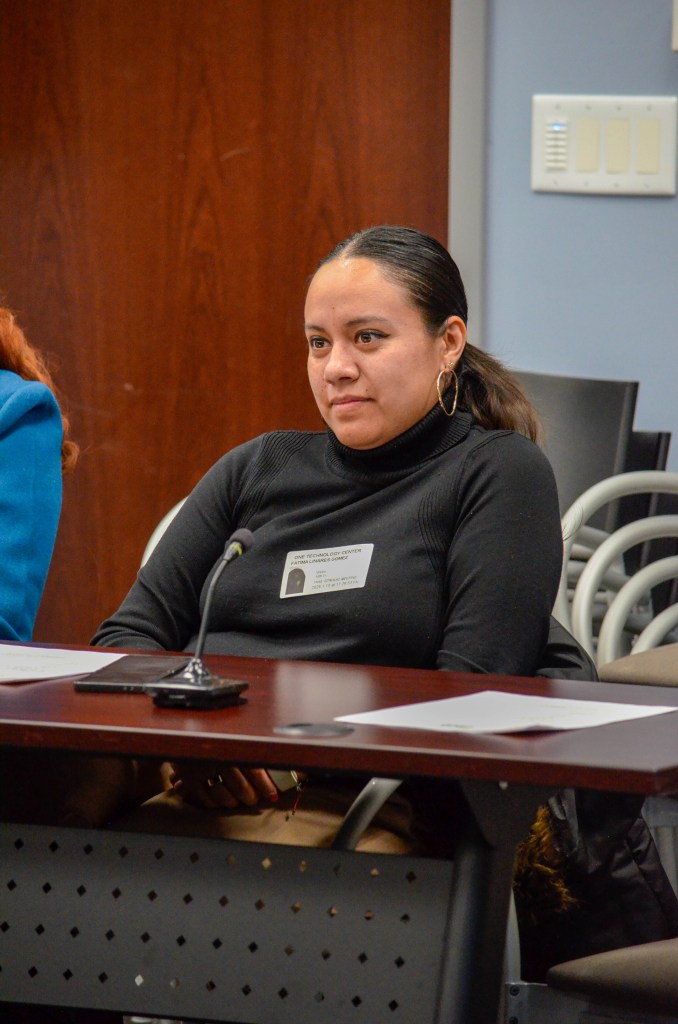
Many are losing academic motivation. And a growing number of U.S. citizen students with undocumented parents are avoiding the Free Application for Federal Student Aid, or FAFSA, due to changes asking for parental identifying information.
That’s according to Fatima Linares, an immigrant coordinator for Tulsa Public Schools. She explains the new law to families of undocumented students. Many say they no longer plan to attend college.
“This is the first time that I feel like I don’t have anything positive to say to the families to continue and not give up,” said Linares, who is also a member of the city’s Greater Tulsa Area Hispanic/Latinx Affairs Commission. “Before it was easier, it was doable.
“This time, I think it would be very selfish of us to say, ‘Oh, just try and try to come up with $100,000 for your kid to go to school.’ I think that would be very selfish of us to try to encourage that.”
Taylor Pride, a college and career adviser at TPS’ Will Rogers Middle and High School, said undocumented students are either inspired to seek higher education opportunities or hesitant to apply at all. He encourages students to apply for available opportunities, but he suggests they focus on what is within their control and manage their expectations. It also helps to share stories of alumni who have been in their shoes.
“I recognize that there’s a tension here because there’s only so much that we can control what we know,” he said. “I will say the need for resources particularly for (scholarships) for people who are not documented is incredibly high.”
Celinda Gómez, president of TCC’s Hispanic Student Association, said it feels like fewer Hispanic students are on campus out of fear of deportation of themselves or their parents. She helps them connect with lawmakers to get accurate information.
“I feel like students who are graduating from high school tend to go work for the family instead of working to pay off a class,” she said. “Honestly, some other students have expressed that their parents are worried for them, or they’re worried in general. I think it brings more comfort to speak to someone who knows a little bit about the law.”
‘Little sprinkle of hope’
While a college degree remains just out of reach for Reynolds, she is seeking other professional certifications. Small things, like her LinkedIn profile, had to be changed.
She’s back at her high school job as an outreach coordinator connecting the community to resources.
“I never thought I would make (those in higher education) uncomfortable,” she said.
She returned to Tulsa last fall after dropping out of OU. Finishing her degree isn’t off the table, but it will take her longer and more money.
“I do want to go back,” Reynolds said. “I still have that anticipation. I’m saving up for college. I still have that on the back burner. So that’s like my little sprinkle of hope that I have trailing every day with me.”
This article was produced as part of a partnership between the Tulsa Flyer and La Semana, a Tulsa-based bilingual Spanish-English newspaper serving Latino communities in Oklahoma.
News decisions at the Tulsa Flyer are made independently of our board members and financial supporters. Read more about our editorial independence policy here.