This story was updated at 10:25 a.m. July 30 with Attorney General Gentner Drummond’s request for the Department of Justice to halt its investigation into Broken Arrow’s zoning practices.
After nearly three decades living in Broken Arrow, Muhammad Calsy thought he had seen it all.
Sure, there were customers who walked into one of his three Tulsa convenience stores with something negative to say about immigrants or Islam. In the days after the 9/11 terrorist attacks, Calsy feared a wave of violence against Muslims — or people perceived to be — would hit him too.
But he can also remember the faces of those who visited to say things like: “Man, we know what happened. It’s not you guys. You didn’t have anything to do with it.” A white customer volunteered to stay with Calsy, a Kuwaiti immigrant of Pakistani descent, behind the counter and ensure the business was protected through its midnight closure. They remain friends.
Those memories came to mind as he scrolled through social media last winter, reading comments responding to the Islamic Society of Tulsa’s plans to build a new mosque and commercial complex minutes from Calsy’s home.
Several accused Muslims of trying to “take over” Broken Arrow and push Christians out. Others cited fear of terrorism and Sharia law. Many raised concerns about deadlock on a two-lane road and the impact of rapid development on the state’s fourth-largest city.
Calsy and fellow Tulsa-area Muslims have awaited the mosque’s construction since 2014 when the Islamic Society purchased 15 acres along South Olive Avenue just south of the Creek Turnpike. He found himself “extremely, personally amazed” by the outrage.


“They’ve opened a new Home Depot, new Walmarts, new everything else. But just when it comes to mosque, people have all types of questions,” Calsy said. “This much hatred, we still have it over here? We have never seen it — it’s behind the scenes.”
Thousands of communications obtained and reviewed by the Flyer reveal Broken Arrow city councilors were inundated with hundreds of emails about the project in late December and early January. Councilors eventually voted 4-1 against the proposal, which previously earned narrow approval from planning commissioners.
Shortly after, the Islamic Society signaled it was exploring legal challenges to the decision. In July, the Department of Justice informed the city of its own investigation for potential violations of the Religious Land Use and Institutionalized Persons Act. The 2000 law prohibits discrimination against religious groups in zoning decisions.
Amid a social media frenzy fueled by conservative influencers across Oklahoma, Broken Arrow councilors said their eyes were focused solely on land use concerns.
Mayor Debra Wimpee said the property and the road in front of it was not prepared for commercial use or a place of assembly. Lisa Ford pointed to traffic congestion and potential water quality impact. Justin Green cited drainage, flooding and infrastructure issues. David Pickel found it was not compatible with the city’s comprehensive plan. Johnnie Parks, the sole yes vote, agreed with the planning commission’s recommendation.
While most of their private communications echoed these concerns, the Flyer’s review shows at least two elected officials who cast votes against the Islamic Society’s application agreed with anti-Islamic sentiment expressed in their inboxes.
In a Dec. 18 email — the day of the Broken Arrow Planning Commission meeting — one person emailed Wimpee asking her to deny the Islamic Society’s rezoning request:
“You will be deciding on the zoning request submitted by the Islamic Center of Tulsa in tonight’s meeting. We strongly ask that you deny this request. Every country in Europe, once Muslims reached over 2% of the population, they started acting violent. We are not discriminating against them as people, we just do not want them setting up shop in our neighborhood.”
About 90 minutes later, Wimpee replied saying she had “the very same concerns.”
“Praying the planning commission finds a way to deny. Our Constitution clearly states they legally can apply for a rezoning of that land that they own. I’m also hoping Thursday’s planning commission meeting is flooded with residents asking the commission to deny,” Wimpee stated.
In a Dec. 29 email to Ford, a resident opposing the mosque referenced concerns with the proposed project being in a floodplain, as well as potential sewer and traffic issues, before taking a different tone.
“Please wake up Broken Arrow leaders! Islamic Muslims come into a neighborhood quietly, then quickly move in many Muslims until they have a voting block to replace you. Then you have cities like Chicago. New York. and Minneapolis. It happens quickly when Christians honor a god who does not honor Jesus as the Son of the God of the Bible. Allah is not God, and his people do not honor Jesus as God’s son but as a prophet only,” the email reads. “Please revoke the rezone for the Islamic mosque. It is not a good plan for the City.”
Thirty minutes later, Ford thanked them for reaching out and said it had not yet received a council vote.
“I agree with everything that you pointed out,” Ford added.
City leaders, Islamic Society respond
Through a city spokesperson, Broken Arrow councilors, police leaders and City Manager Michael Spurgeon declined interview requests in June. Given the potential for “pending litigation” related to the zoning application, communications officer Lesa L. Jones wrote, city officials will not participate in interviews or provide additional comments on this matter.
“The City believes it is in its best interest to limit any statements to the extensive public record already available through prior public records responses,” Jones said. “We have no desire to create additional records or commentary that could be used in future proceedings.”
The Flyer followed up with 40-plus documents July 10, providing city officials with the opportunity to respond. City spokesman Aaron McColloch confirmed receipt of the message but did not offer replies to detailed questions. A week later, the city was informed of the federal investigation.
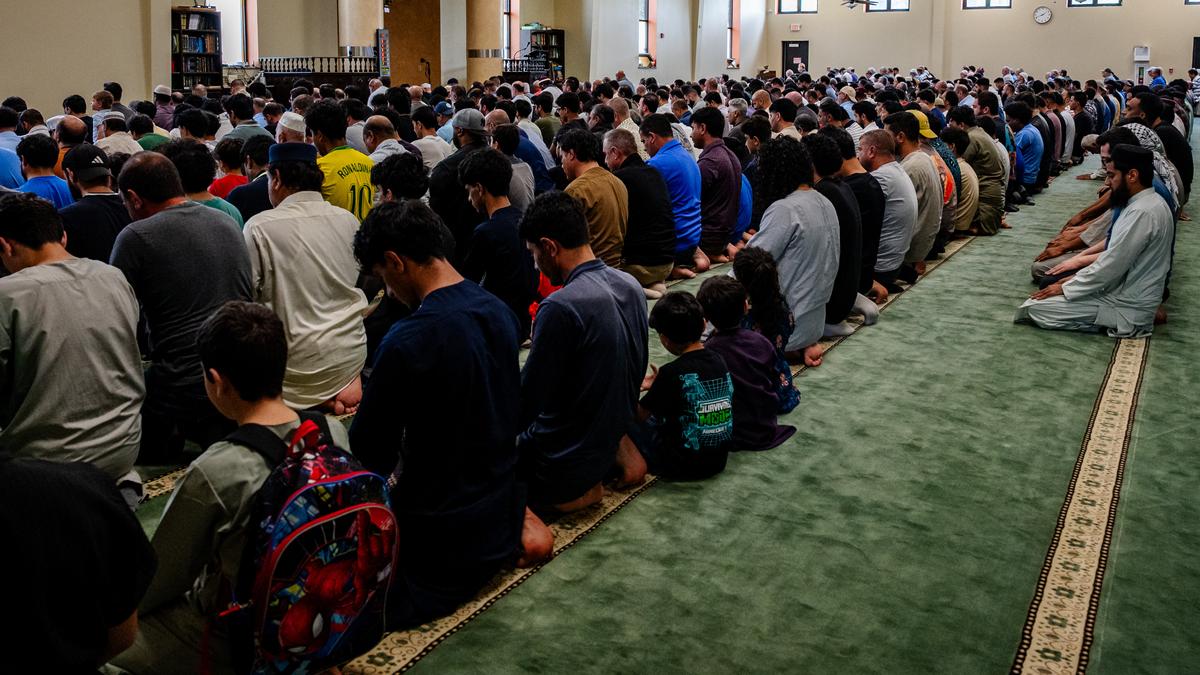
Members of the Broken Arrow Muslim community say a vocal minority opposed their long-standing vision to expand beyond the Islamic Society’s sole campus and provide prayer services to a Tulsa-area population they say has surged to about 20,000. The prejudiced beliefs of a few, they say, do not represent how most residents view the religion and the people who practice it.
But after viewing several communications between councilors and residents, Aslam Syed felt his hunch was confirmed: Wimpee and others came prepared to deny the application before hearing their case.
“Your internal biases, you can keep them outside the office where you serve,” said Syed, who serves as the Islamic Society’s lead coordinator for the Broken Arrow project. “And if it is this obvious that the mayor has no filter at all speaking about Islam and the people who are Muslims who are living in her own constituency, that speaks volumes about how Muslims should be feeling in Broken Arrow.”
Opposition, support and ‘Americans first’
Shortly after the Islamic Society of Tulsa’s application was placed on a December planning commission agenda, dozens of residents spoke out against the proposal. But that didn’t sway the commissioners who voted 3-2 in favor of the rezoning.
The approval triggered a new wave of opposition. Councilors fielded hundreds of emails from residents, a majority of whom expressed anger at the application moving forward. Several warned councilors of how voting in favor of the Islamic Society’s proposal would affect their chances of re-election.
Others were more supportive of the mosque campus — and increasingly worried about how Islamophobic sentiment was affecting the Muslim community in and around the city. Several were concerned about the rhetoric they heard at the Jan. 12 meeting.
“Standing in the line last night to enter the auditorium, I overheard many hateful, bigoted statements from BA individuals that were much more frightening, unsettling, and concerning to me than whether or not a mosque could be built on the proposed site,” a resident wrote to Parks Jan. 13.
During a Jan. 6 strategy meeting at The Property Event Center across the street from the proposed mosque site, Broken Arrow resident David Oldham encouraged hundreds opposing the zoning change to focus on what councilors were charged with considering: impacts on land use.
Regardless of whether residents were concerned with land use or religious differences, Oldham told the Flyer every worry about the mosque boils down to whether the Islamic Society would be “good neighbors.” Society leaders did not do enough outreach to the community prior to filing the application, he said.
“The problem with all sorts of various religions, not just Islam or anything like that, but when they act above the law and above their fellow countrymen, their fellow citizens, they are acting un-American, and therein lies the problem,” he said. “They need to be Americans first. They’re in America.”
Oldham said he would not be surprised if some councilors held similar anti-Islamic beliefs to some of their constituents. As part of its investigation, the DOJ requested communications between Oldham and city officials.
“Do I believe there was malfeasance? No. Do I believe that some of these city councilors may hold some of the views, the same beliefs as some of their constituents? Sure. That doesn’t mean that it still isn’t purely a land use dispute,” Oldham said. “Nor does it mean that I believe that there couldn’t be a mosque opened on a more appropriate piece of land within the city limits of Broken Arrow. I do not believe that.”
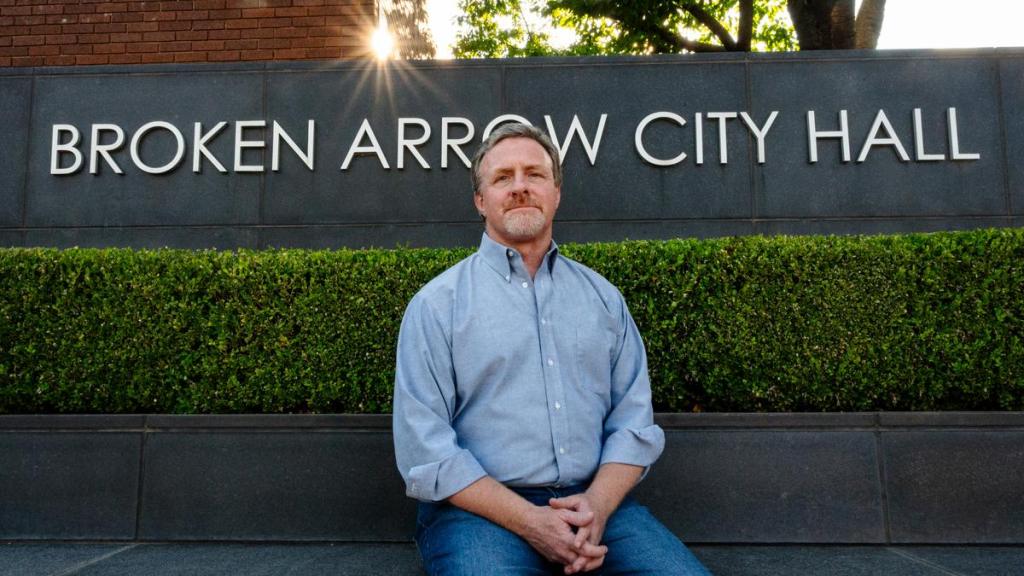
Pickel told a resident the council vote was based on the building itself and “did not have anything to do with religion.” He expressed openness to an alternative mosque site.
“My next-door neighbor is a Muslim that has an amazing family and I want nothing more than to provide them that opportunity in Broken Arrow,” Pickel wrote in a Jan. 13 email. “This unfortunately did not meet the requirements of the comprehensive plans as interpreted.”
Safety concerns, AG investigation upped the ante
Council proceedings were also clouded by concerns over safety for city officials and Islamic Society members as well as a brewing investigation opened by the Oklahoma attorney general’s office.
On Dec. 19, Erin Roark, a Tulsa city planner, emailed Rocky Henkel, Broken Arrow’s community development director, to inform him of a threatening call made to the Tulsa Planning Office. City officials forwarded the threat to Broken Arrow police.
“I picked up this call and the man on the other end said ‘Stop that mosque. Or we will cut the limbs off of anyone who voted for it’ and then hung up. Our office has alerted our City Hall security office and the Broken Arrow PD…”
City officials did not reply to the Flyer’s questions about specific threats and how they were handled by Broken Arrow police.
Muhammad Afzal, an Islamic Society board member, also reached out to Broken Arrow PD with his safety concerns the day before the Jan. 12 meeting. He said he felt reassured by the response.

“Because of the social media hype and the way the hearing was organized, of course, we received concerns from our community members,” Afzal said. “That was just a general concern I expressed to Capt. (Josh) McCoy, and he was very, very good and very cooperative.”
The stakes were high — and only getting higher. Attention surrounding the mosque proposal hit a fever pitch four days prior to the special council meeting, when Attorney General Genter Drummond announced an investigation into whether the mosque and commercial development complied with Oklahoma law and federal statute.
Drummond, a Republican candidate for governor, sought to examine funding sources for the development. He cited concerns that the land’s owner, the nonprofit North American Islamic Trust, had ties to the “radical Muslim Brotherhood.” President Donald Trump and Republican governors across the country have recently declared the Egypt-based Islamic political movement, which has several offshoot groups globally, a foreign terrorist organization.
The investigation caught city officials and the Islamic Society off guard, emails show, and drew a new round of headlines to the vote. Afzal said his organization has zero ties to the Muslim Brotherhood and never heard from the attorney general’s office about its inquiry. Contacted by the Flyer in July, Drummond’s office said it had no updates to offer on the case.
Shortly after this story was published, Drummond’s office asked Trump and U.S. Attorney General Todd Blanche to halt the DOJ’s investigation into Broken Arrow. He called the inquiry an example of federal overreach.
“Oklahomans will not stand by while federal officials misuse a civil-rights statute to strong-arm our cities into land-use outcomes they would not otherwise choose, or to chill the right of citizens to speak about the character and future of their communities,” Drummond’s letter reads.

Attendees at a special Broken Arrow City Council meeting on a proposed Islamic mosque pass through security Jan. 12, 2026. 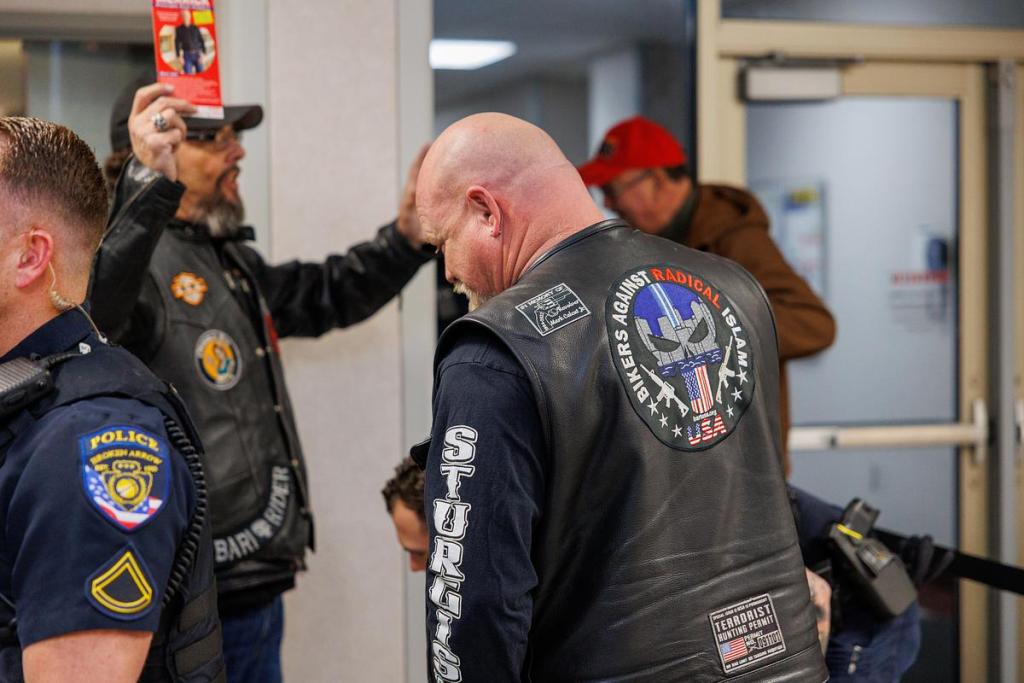
Attendees at a special Broken Arrow City Council meeting on a proposed Islamic mosque pass through security Jan. 12, 2026. 
Supporters and opponents of the Broken Arrow mosque proposal listen during a hours-long Jan. 12, 2026, special council meeting at Northeastern State University-Broken Arrow. 
Broken Arrow Mayor Debra Wimpee, center, listens during a special Jan. 12, 2026, council meeting focused on an application to build a mosque and commercial complex. Councilors voted 4-1 to deny. 
A woman speaks in support of the Islamic Society of Tulsa’s proposal to build a mosque in Broken Arrow during a special Jan. 12, 2026, City Council meeting.
With social media exploding around the proposal, more than 1,000 people showed up to the Jan. 12 special meeting at Northeastern State University’s Broken Arrow campus, including Republican gubernatorial candidates, state lawmakers, Islamic Society members and anti-Islamic biker gangs.
Before casting his vote, Green said councilors base their decisions on “things that are practical and logical.”
“Our job is to look at each case the same way we do any other development that comes,” Green said. “We are not here to discuss freedom of religion. We’re not here to discuss which religion is right, which religion is wrong. We are here to look at this case on the merits and the facts that have been presented to us.”

After nearly four hours of public comment, councilors voted 4-1 against the project. Parks cast the lone vote in favor, writing to a resident Jan. 13 that “it was the right thing to do” and followed the planning commission’s recommendation.
In the moments after the decision, Nayab Ijaz was confused. A leader of The University of Tulsa Muslim Student Association and longtime Broken Arrow resident, she had voiced support for the mosque in an email to Ford. She wondered: Was the vote really based on “practical means” or something else?
Now, after reading through communications surrounding the decision, Ijaz feels let down by city officials.
“I truly believed that if they’re saying that it’s on a practical basis, that they would honor that, even though I had my own suspicions, considering how vague the council was at the end about their reasons for denying it,” Ijaz said. “It’s just sad to see that despite me wanting to give them the benefit of the doubt, it really might have been based on that bias.”
Islamic Society still wants a mosque. What’s next?
Following the January decision — and even before — Islamic Society leaders made clear their intent to explore legal options. The next month, the mosque threw open its doors to the public for an open house and welcomed hundreds inside. Until the investigation announcement in late July though, mosque leaders were largely silent on the project, leaving some to wonder what comes next for the property on Olive Avenue.
The Islamic Society paused its decision throughout the month of Ramadan that started in mid-March, representatives told the Flyer. Leadership transitions on its board slowed next steps even further. Plans to build a mosque on that property, be it through litigation or another rezoning effort, remain the same, Afzal said.
The society’s board cheered the DOJ’s decision to open an investigation. Under federal law, the society could bring a lawsuit of its own. Leaders haven’t made a final decision on which path to take, Afzal told the Flyer June 30, but will review council communications to “help us navigate our approach.”
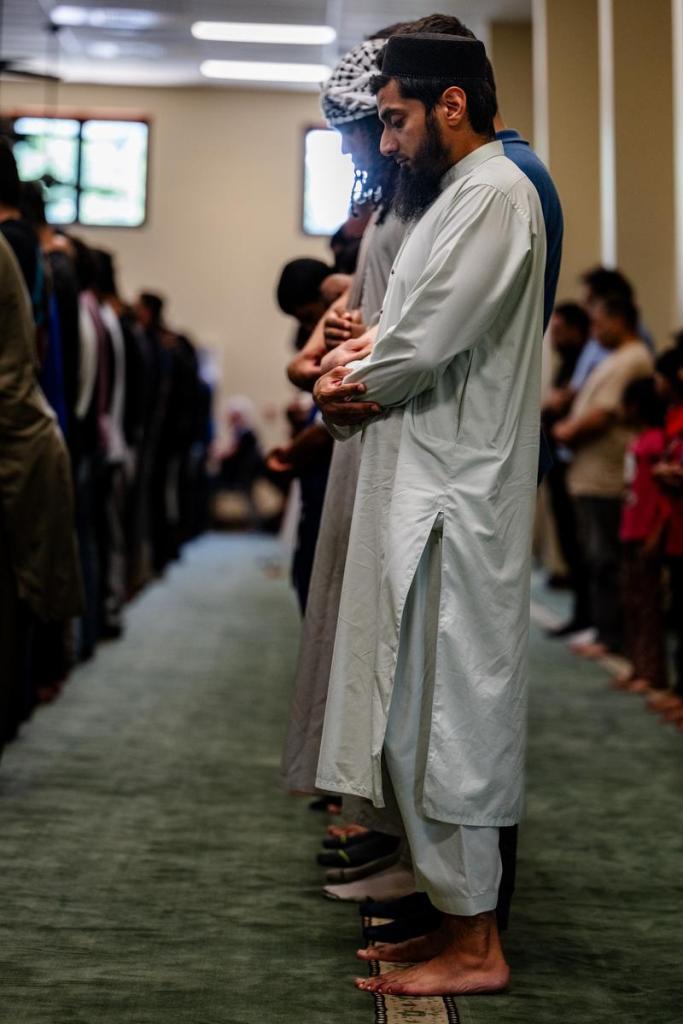
“We are committed to the project, again, based on necessity,” Afzal said. “We have a good number of residents who really need a mosque and they have to travel to Tulsa to pray, and we need a place for Friday prayer. We have several other professionals who would love to move to that area if they have a worship place.”




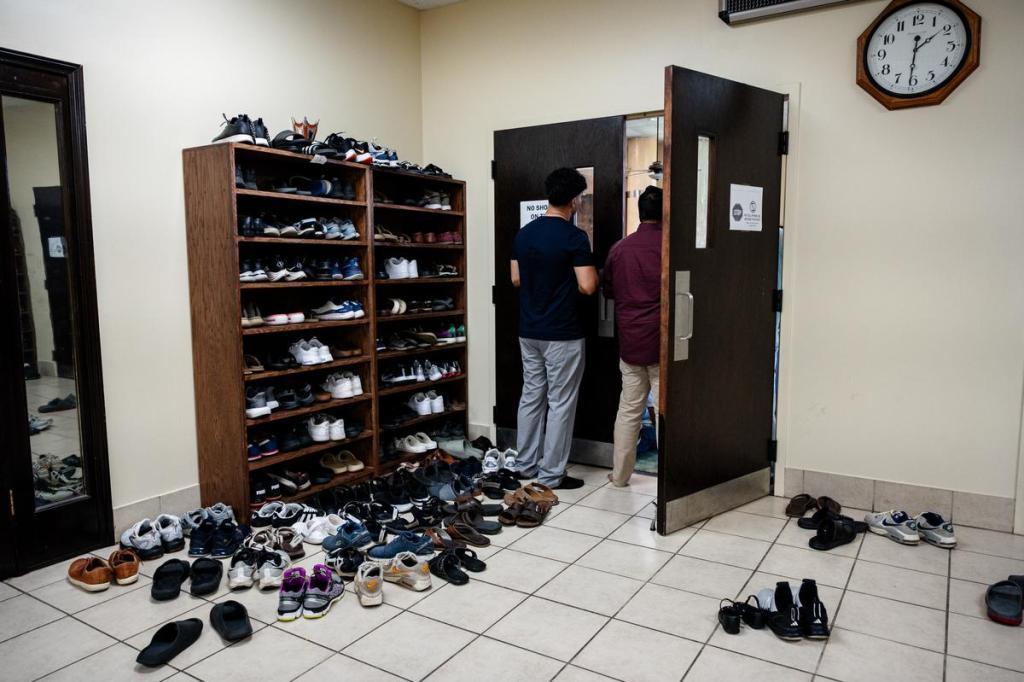

The legal path to proving religious discrimination could prove tricky, according to John Vile, a First Amendment expert, political science professor and dean of the University Honors College at Middle Tennessee State University. Courts are inconsistent regarding their willingness to accept off-the-record statements from elected officials as sentiments of a specific vote or decision, he said prior to the opening of the DOJ investigation.
“Judges are often unwilling to determine legislative intent based simply on what legislators said during debate, especially if it’s difficult to know whether they represented the majority view or not,” Vile told the Flyer by email.
Vile would want to know if similar commercial or religious projects in Broken Arrow were treated differently during the zoning process. Federal investigators have requested rezoning and permit applications for properties near the proposed mosque, including Walnut Grove Church and The Property Event Center.
If the Islamic Society could show the decision to deny zoning was a result of religious animus, Vile said, “I think there is a very good chance that it will be overturned.”
Syed of the Islamic Society argues a housing project down the road earned approval without fanfare.

“The kind of issues that the city council brought up or voted down on us, if you apply the same principles on every project, you cannot have any project going on over there,” Syed said.
After the DOJ’s inquiry was made public, Oldham said he expects investigators to discover there’s “nothing there, there.”
“Even if councilors shared some of the whacko views — let’s put it that way, let’s take it to the objectively extreme — even if they shared some of the whacko views, that does not mean that their denial was only for those views,” he told the Flyer prior to the investigation announcement. “That’s what it would take to win in court … And there are so many legitimate reasons to vote against them, that they’ve got no case.”
New political landscape for Muslims
By the time the Islamic Society would be eligible to file a new rezoning request in January, a new governor will be at the helm amid a nationwide effort by Republican lawmakers to halt Muslim organizations from developing properties by designating them as terrorist organizations — what Sheridan Church pastor and former congressional candidate Jackson Lahmeyer called the “Texas playbook.”
Among the supporters of that playbook is Mike Mazzei, who faces Drummond in the Aug. 25 GOP gubernatorial primary runoff. At an “Islam Unveiled” event held inside his church in February, Lahmeyer welcomed Mazzei on stage.
Mazzei vowed to ban Sharia, or Islamic, law; sign executive orders to designate the Muslim Brotherhood and Muslim advocacy group Council on American-Islamic Relations as foreign terrorist organizations; and mandate training for every law enforcement officer in Oklahoma to teach them how to identify Sharia violence, abuse of women and children and “the violation of age of consent laws.”
“Oklahoma’s next governor must be someone who takes this threat seriously,” Mazzei said. “We don’t need a governor who says he has a Christian worldview. We need a governor who will govern with a Christian worldview.”
Mazzei reiterated those positions in a July 23 statement to the Flyer. Drummond’s campaign did not respond to a request for comment on policy actions he would take regarding Islamic organizations or his view on the Broken Arrow application.
Back at the Feb. 10 event, Lahmeyer led a round of applause for Wimpee, who sat in the audience, for denying the mosque proposal. But, he warned attendees, there will come a point where Muslims will “wise up” and purchase land that officials can’t “find a technicality to deny it for.”
“They’re gonna buy a piece of property that will work, that you can’t say, ‘oh, there was bad sewage,’” Lahmeyer said, adding: “Our next governor must do this, or they’re gonna find a piece of land that is suitable. They’re going to build it, and there’s nothing you can do about it.”
Not all Muslim organizations in Oklahoma have run into the same obstacles as the Broken Arrow project. Norman City Council unanimously approved a request to expand the city’s sole mosque in May. The application earned a single protest letter from a non-resident, officials said, and no one spoke in opposition.
Answering the call
Still, Calsy and his family can feel the temperature rising on anti-Islamic rhetoric, both in Oklahoma and nationally. They have seen political ads carrying an essential message: If you don’t like Muslims, vote for us.
“I pay less taxes, OK, that’s fine. I pay less rent, that’s fine. They can walk over me. But I pay like everybody else. We pay each and every penny,” Calsy said. “Why are we left behind? These are our questions.”
Typically, though, the antagonism is not present in their daily lives. His 16-year-old daughter, Hiba, is an incoming junior at Broken Arrow Early College Academy. She began wearing a hijab early last year. As the only Muslim in her grade, she’s never heard hateful comments from the people around her.
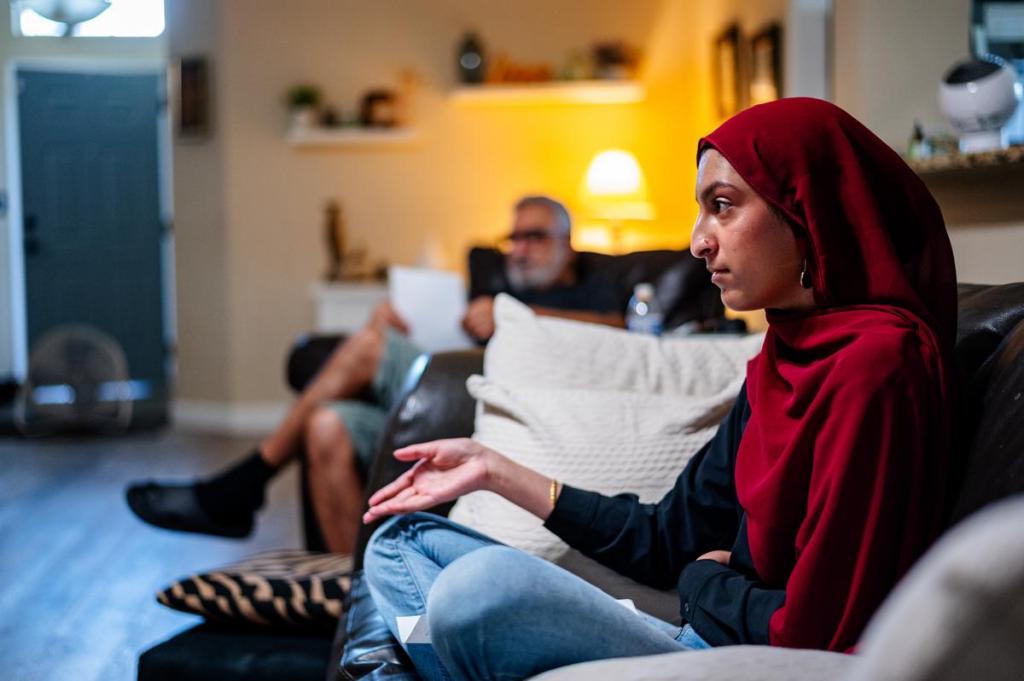
That hasn’t changed since the council decision — and neither has Hiba’s desire to attend prayer services closer to home. The round trip to the Tulsa mosque lasts about an hour, or about three times as long as it takes to actually pray. She has faith the Islamic Society’s vision will come to fruition.
“You’re saying it’s unconstitutional for the freedom of religion to build a place of worship that can silence Christians and Jews. We’re not looking to silence Christians and Jews. A lot of our friends are Christians and Jews,” Hiba Calsy said. “We’re just looking to worship.”
For her father, the negativity was a wake-up call. Muhammad Calsy feels a responsibility to answer it.
“I need to let other people know who we are, rather than just only us, you know, open the garage door, walk right in, that’s it,” he said. “Let them know who you are, who the Muslims are. It’s not Muslim-slash-terrorist or something. It’s something different.”
Who reported this story?
General assignment reporter Joe Tomlinson is a Tulsa native who graduated from Booker T. Washington High School in 2017. He began covering the Islamic Society of Tulsa’s mosque proposal in Broken Arrow last winter. Story editor Haley Samsel moved to Tulsa last June after reporting on the environment and, occasionally, faith institutions in Fort Worth, Texas. She’s originally from the Dallas suburb of Plano and has long been drawn to writing about people and the power of belief.
News decisions at the Tulsa Flyer are made independently of our board members and financial supporters. Read more about our editorial independence policy here.