Political donors hope their campaign contributions hoist politicians to victory. However, politics produces a lot of losers, and those donations can ultimately end up in a nonprofit’s coffers or even the state’s general fund.
Between the races for Oklahoma’s 1st Congressional District and the governor’s seat, candidates who did not advance past June’s primary election collectively still have more than $1 million on hand. For example, former House Speaker Charles McCall has $748,000 left over from his governor’s run, and pastor Jackson Lahmeyer has about $186,000 remaining in his campaign account.
It raises the question: With only one winner in each race, where does all that money wind up?
If a candidate does not move past the primary election, they may pay off campaign debts or office-holder expenditures if they held an elected office. At the state level, any remaining funds are called “surplus funds.”

Typically, candidates will keep the dream alive and transfer surplus funds to a future campaign for the same-level office. However, according to the Oklahoma Ethics Commission, surplus funds may also be:
- donated to a charitable organization registered as a 501(c)(3) nonprofit organization;
- returned to contributors so long as a contributor does not receive more money than contributed in the most recent election;
- contributed to a political party committee up to $25,000 in total;
- used to purchase items to give to a 501(c)(3) fundraiser auction;
- donated to the state or local government following provisions; and
- retained by the candidate for exploratory activities.
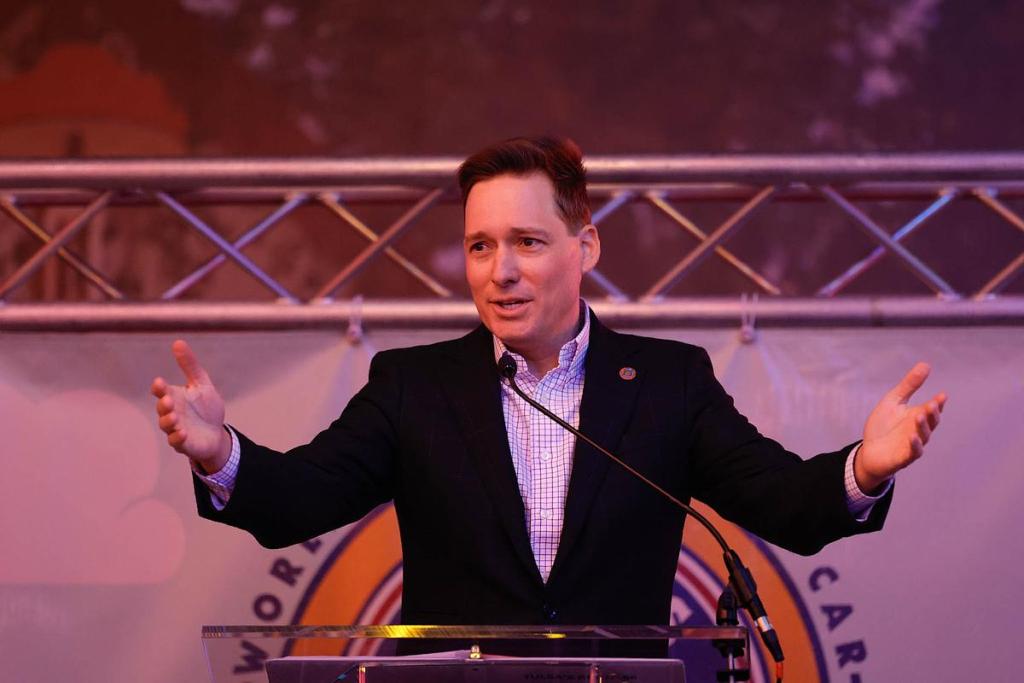
It is fairly common for outgoing politicians to donate their surplus funds to a charity. Lt. Gov. Matt Pinnell, who plans to join Oral Roberts University when his term is up, donated $50,000 in surplus funds to the Tulsa Ballet and the Oklahoma Route 66 Centennial Fund in 2025.
After 12 years in the statehouse, former Republican state Rep. Weldon Watson donated about $35,700 in surplus funds to the Oklahoma State Senate Historical Preservation Fund in 2018.
In 2019, former Gov. Mary Fallin donated about $12,000 in surplus funds to TEEM Ministry — a nonprofit dedicated to breaking the cycles of poverty and incarceration — and the Oklahoma Israel Exchange, which fosters the relationship between Oklahoma and Israel.
Tulsa City Councilor Carol Bush represented House District 70 from 2016 to 2022. After she left the legislature, Bush donated more than $90,000 in surplus funds to nearly 30 different nonprofits, ranging from $250 to $5,000. Recipients include the Family Safety Center, Parent Child Center of Tulsa, Tulsa Police Officers’ Memorial Fund, Tulsa Firefighters Benevolent Fund, the Pencil Box and the SB 1631 Holocaust Legislation Coalition.

Some politicians have chosen to donate funds back to the state. Rob Standridge, a Republican who was term-limited out of Norman’s Senate District 15 in 2024, donated about $27,800 in surplus funds to the state of Oklahoma. His wife, Lisa Standridge, succeeded him in the seat.
Emily Virgin, a Democratic legislator in Norman who served as the Oklahoma House minority leader from 2018 to 2022, donated about $5,500 to the state of Oklahoma in 2023.
Numerous candidates over the years have donated surplus funds to their state political party. Among other expenditures, Kay Floyd — who served 10 years in the Oklahoma Senate and six as minority leader — donated $15,750 in surplus funds to the Democratic Party of Oklahoma in 2018.
At the federal level, permissible uses of excess campaign funds include:
- donations to charitable organizations, unless the candidate receives compensation from the organization before the organization has expended the entire amount donated for purposes unrelated to the candidate’s personal benefit;
- unlimited transfers to any national, state or local political party committee;
- donations to state and local candidates, pursuant to state law; and
- any other lawful purpose, unless such use is personal.
News decisions at the Tulsa Flyer are made independently of our board members and financial supporters. Read more about our editorial independence policy here.