


A few years after its mainstream boom, pickleball is still one of the fastest-growing sports in America. Here in Tulsa, the city’s investment into providing more places to play has helped the sport maintain its relevance.
Tulsa ranked 10th in the U.S. among the 100 most populous cities for pickleball courts per capita, according to a new report from the nonprofit conservation organization Trust for Public Lands.
Matt Mauldin considers himself an avid player and helps organize games and tournaments around the city. He said isn’t really surprised Tulsa ranks so high.
“One thing that I hear constantly traveling to surrounding states and other places is you’re really lucky to live in a city where you have courts available,” Mauldin said. “Tulsa has done a really good job of fostering a parks and recreation program that not only caters to pickleball, they cater to a lot of different sports.”
The investment has come at the tune of nearly $5 million. Under Mayor G.T. Bynum, the city spent $4.8 million in Improve Our Tulsa funds to build 32 new pickleball courts.
When city staff requested community feedback about what people wanted from their nearby parks, the consistent response was more courts, said Anna America, Tulsa’s parks director. America said they’ve even tried to install some in communities that might not have been early adopters during the COVID boom.
“We didn’t get as much requests from pickleball, frankly, from north Tulsa,” she said. “I think what happens sometimes is a community isn’t exposed to a sport because they don’t have the facilities.”
That can prevent people from future opportunities, America said. While it’s not an NCAA-sanctioned sport, many schools have club level and competitive teams.
“There could be scholarships and things and you don’t want a certain community to be left out of that because they weren’t exposed to it,” she said.
She said the city still plans to provide what people want — for north Tulsa, it tends to be basketball courts — while also making sure residents have the “places and the spaces to do new things.”
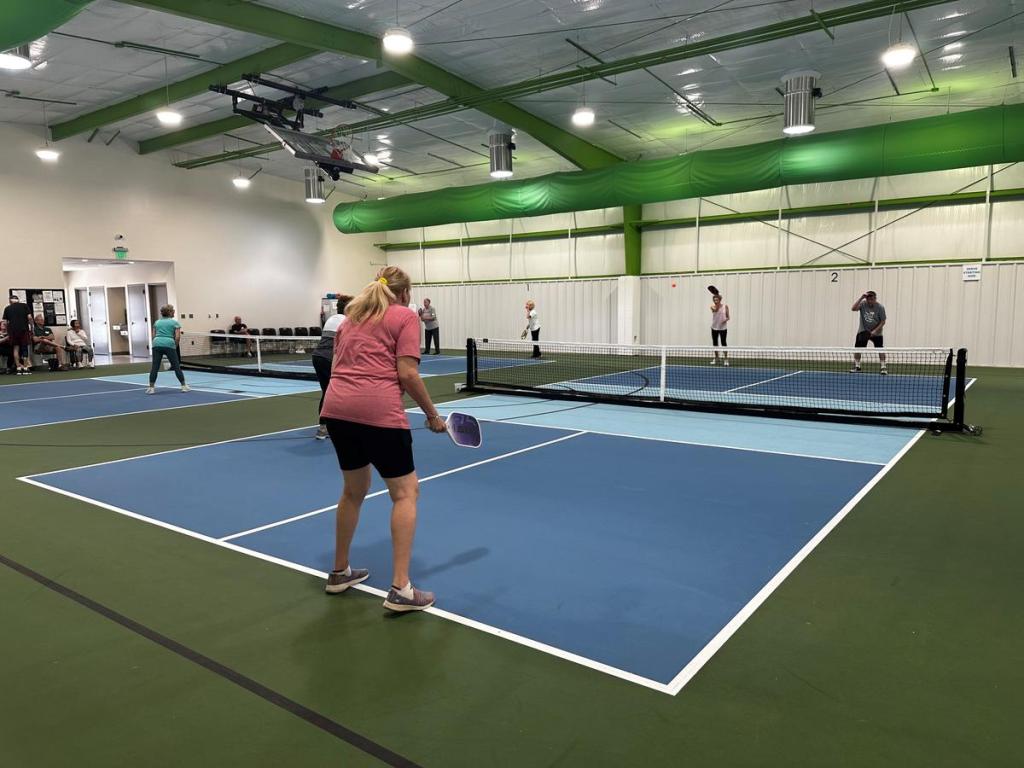
The ubiquity of courts isn’t just at free outdoor locations, either. Lauren Zeligson with LIFE Senior Services said the sport is one of the most popular activities at their Roma Berry center in large part because it’s free.
“Some folks that are retired are on a very limited income and they don’t have a ton of extra money to spend on reserving courts,” Zeligson said. “So I feel like this opens a doorway to an affordable way for seniors and community members to stay active.”
She said the senior center has even formed a pickleball committee and posted rules to help keep the games flowing.
While the national court growth has slowed, the Greater Tulsa Pickleball Facebook group has ballooned to more than 9,000 members. Mauldin said he doesn’t expect pickleball’s popularity to be as astronomical as in years past. But he isn’t concerned about its future in the city.
“I think pickleball is sticky,” he said. “It’s an addicting hobby … it’s extremely easy to learn, and it’s really easy to play. I do think the growth will continue to slow, but I think that the hobby in itself, the sport in itself will continue to be a mainstay out there.”
