


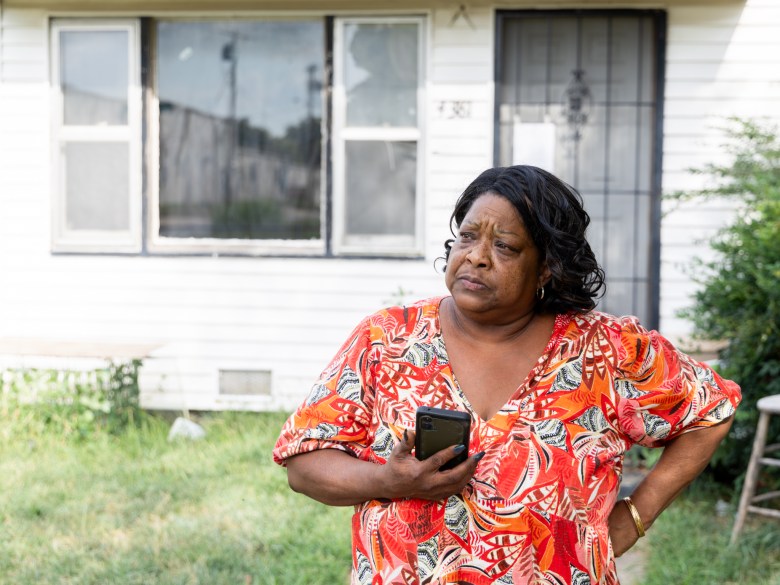
When Bridgett Smith moved from Sacramento to Tulsa last December, her goal was to be closer to her family. Ten months later, she and her 13-year-old niece were sleeping on the street and staying in shelters.
Smith, 59, cares for her 13-year-old niece. She came to Oklahoma after spending more than a decade in California.
“My son (has) five kids and one on the way, and plus I just had heart surgery, so I wanted to be closer to my grandchildren so we can make memories,” Smith told The Eagle.
Shortly after arriving, a friend connected Smith with Valisa Watson, who owned an empty house in north Tulsa’s Suburban Acres neighborhood.
“She asked me, could she pay me rent, can she rent my house?” Watson said. “I thought it was a win-win.”
Smith moved in January, agreeing to pay $1,000 a month. But she said her $1,500 a month Social Security benefits in California dropped to $800 after she reported her move.
To make ends meet, she said she pulls from her savings and does odd jobs like braiding hair for neighborhood kids. A limited public transportation system in Tulsa has also made it hard for Smith, who says she’s disabled.
“I have back problems. They want to do surgery on my back so I can’t walk too far,” she told The Eagle. To get to her doctor’s appointments, she relies on on-demand services through her insurance and Morton Health Services.
Local journalism matters.
Your support helps The Oklahoma Eagle report on housing, tenant rights and the issues affecting Tulsa communities. Donate today to support this work.
Behind on rent payments with no hot water
Then both Smith’s finances and the condition of Watson’s house began to deteriorate.
When Smith first moved in, the electricity was “pay-as-you-go,” but she said that soon became too expensive.
“We need to figure out something because I can’t pay every week,” Smith texted Watson early this summer, adding, “I don’t have money like that.”
She added the living conditions worsened, and her grievances are plentiful: The dishwasher didn’t work; the garbage disposal went out and the hot water tank was leaking. “We haven’t had hot water for a month,” she said in late August.

The left faucet is turned on, but no hot water flows out on the home Bridgett Smith was renting on Aug. 27, 2026. Smith said she did not have hot water since the spring. Credit: Tim Landes / Tulsa Flyer 
The ceiling inside one of the three bedrooms in the north Tulsa home Bridgett Smith rented had exposed wires and holes in it. Credit: Tim Landes / Tulsa Flyer 
A window is boarded up in the house Bridgett Smith rented in north Tulsa on Aug. 27, 2026. Credit: Tim Landes / Tulsa Flyer
As Smith contacted her about issues, Watson said she worked to get them fixed as quickly as she could, often sending her handyman to the house.
“She messed up the garbage disposal,” Watson told The Eagle. “The pipes totally blew apart from under the sink. I’ve had to come in and repair other stuff for her. … As soon as I could get it done, I got it done.”
Then in May, Watson said Smith waited until the 15th to make a rent payment, but it was only $500. When June arrived, Watson said she got another $500.
“I guess she was at first thinking I was going to put it toward June but I was like no, this is finishing off May’s payment,” Watson said, adding she didn’t collect anything for June and that’s when she called Smith to figure out what was going on.
“I said, ‘What are you gonna do?’ And she’s crying on the phone. I said, ‘Girl, I got bills and stuff, too. I want to cry, too. I’m a single person trying to make it in … the world of today myself.’”
The payments never came, Watson said. By August, Smith had contacted the Tulsa Health Department about conditions at the house.
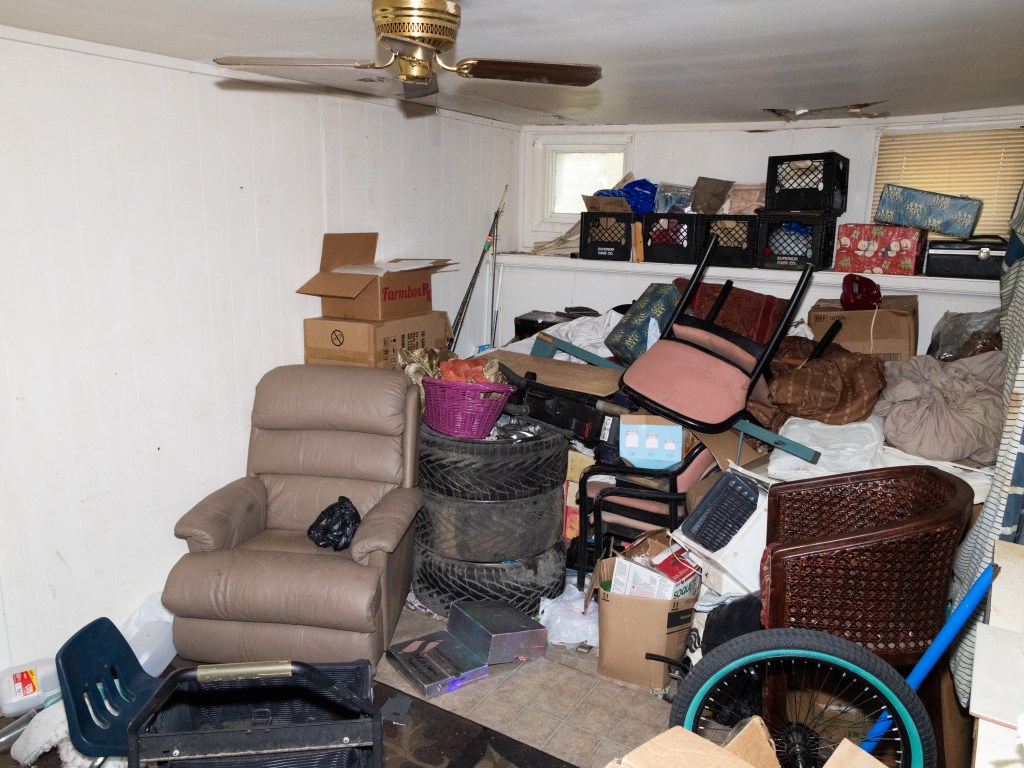

An Aug. 10 inspection notice posted on the door of the Suburban Acres house cited plumbing and mechanical problems and declared it an “unsafe and dangerous structure.”
“Hot water tank in disrepair, windows do not function (nailed shut), no smoke detectors,” the notice read.
Four days later, with Smith three months behind on rent, Watson served her with a five-day notice to pay or vacate.
Tenants vs. landlords
In the state of Oklahoma, tenant rights “are practically non-existent when it comes to the conditions of the unit.”
That’s according to Eric Hallett, an attorney with Legal Aid Services of Oklahoma that specializes in tenant’s rights.
“We have very specific statutes that say what the landlord must do, including providing a habitable unit and making repairs. But there is nothing in our law that the tenant can use to enforce those rights,” he said.
He warned tenants cannot withhold payment.
“If you stop paying rent, you have to move out,” Hallett explained. “If you don’t move out, then you continue to owe the rent, even though the landlord hasn’t provided what you are paying for.”
That’s been Watson’s primary point of frustration: that months passed with no rent and Smith didn’t leave. Watson and Smith never signed a lease listing payment terms or property rules — though Hallett says an oral agreement establishing a tenant/landlord relationship serves the same role.
“We (are) going on her fourth month of her not paying rent … She’s just been living there,” Watson said at the end of August.
Watson also argues some of the problems she was cited for — such as the hot water tank — would’ve never been an issue if Smith had moved out earlier.

“I’m not trying to be a slumlord. She knew the house had issues when she moved in. I was working on it,” Watson emphasized.
She said she has tried to help tenants before and felt burned by the process.
“(My family) says, ‘Mama, you got a big heart,’” she said. “So they fuss at me about it because they say I’m always trying to help somebody, and I’m always stuck with the bill.”
Oklahoma law gives tenants little leverage when they say landlords don’t make repairs.
“I tell tenants all the time, let’s call the health department … because those agencies will tell the landlord to make repairs, but there’s nothing in the law to protect the tenant from retaliation,” Hallett said. “So if you’re on a month-to-month lease or you owe even $1 of rent, that landlord can terminate your rental agreement and have you evicted.”
He said he always tells people to make sure they have somewhere else to live lined up before reporting conditions.
The City of Tulsa could soon extend a hand to low-income tenants — and landlords like Watson — caught in eviction proceedings. Councilors are expected to vote Wednesday on a resolution establishing an eviction prevention program providing city-backed legal assistance to both sides of the equation.
Lack of emergency housing
That aid isn’t currently available to Smith, who said finding an alternative living situation has proven difficult and confusing.
“I went into Tulsa Housing Authority and … they basically told me there’s nothing they can do for me,” she said in late August.
She said she was referred to the Salvation Army and Tulsa Day Center — two homeless shelters she hoped to avoid. But Smith said the problem feels bigger than her circumstances.
“I’ve noticed that if you don’t have a drug problem or an alcohol problem or some kind of mental issues … there’s no help for you,” she said about her experience.
Ginny Hensley, a spokesperson for THA, said because they have to follow federal housing guidelines, they aren’t designed to provide emergency housing.
“Admission to a THA property is based on availability of the needed bedroom size at the requested property, and for a Section 8 voucher, subject to HUD’s process for that program,”
Hensley said, referring to the federal Department of Housing and Urban Development. “The waitlist for THA properties ranges between six months to up to two years.”
Smith’s predicament is all too familiar for Mark Smith, CEO of Housing Solutions Tulsa.
“If someone’s received the notice to vacate or they can’t stay in their situation … we just see people under a lot of stress,” he said.
Tulsa offers an “incredible amount” of social services and people can get help navigating the system by contacting 211, he added.
Regrets on both sides
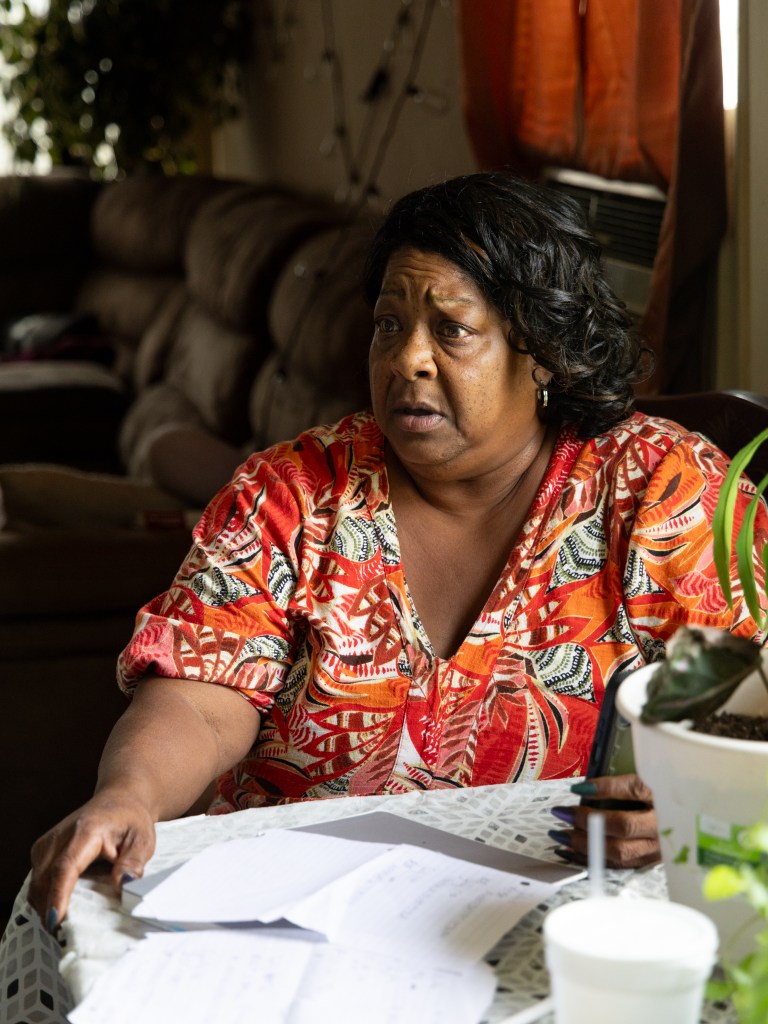
The Eagle reached out to Bridgett Smith on Sept. 10, a couple weeks after visiting her at Watson’s property. Since moving out, she bounced between the Day Center and the Salvation Army with her teenage niece.
She said they had to spend a night outside recently because the shelters were full.
“Y’all treat the homeless like trash on the streets,” Smith said.
And while her niece has struggled — including missing school — Smith said there’s a light at the end of the tunnel. After searching for months and spending a few nights in shelters, she said they’re finally getting a chance to move into transitional housing.
Thanks to the Salvation Army, she said her first month’s rent and deposit will be paid. She plans to stay for three months. What the future holds after that, she said, is unknown.
As for this situation, Watson wishes she never offered up her place.
“I do regret helping her,” she said. “I didn’t know she was gonna try to get over on me and take advantage of me.”
Smith also has regrets — especially when it comes to reaching out to the health department. She said she wishes she’d just stuck it out at Watson’s property.
“If I would’ve known this is how this would turn out, I would’ve kept my mouth shut,” she said. “I found out that Tulsa is strictly for the landlords. Tenants have nothing.”
