


Tulsans overwhelmingly like their neighbors, even though they rarely get together to solve a problem. Residents aren’t so confident about their city leaders and say they lack access to services such as mental health, afterschool activities and affordable housing.
Findings from the citywide survey conducted by City Auditor Nathan Pickard don’t show any bombshells. But it revealed enough differences among ZIP codes to warrant a further look, he says.
“This is going to be our baseline year and track trends in the years to come,” Pickard said. “This process is also about how we share information and allow people to act on it.”
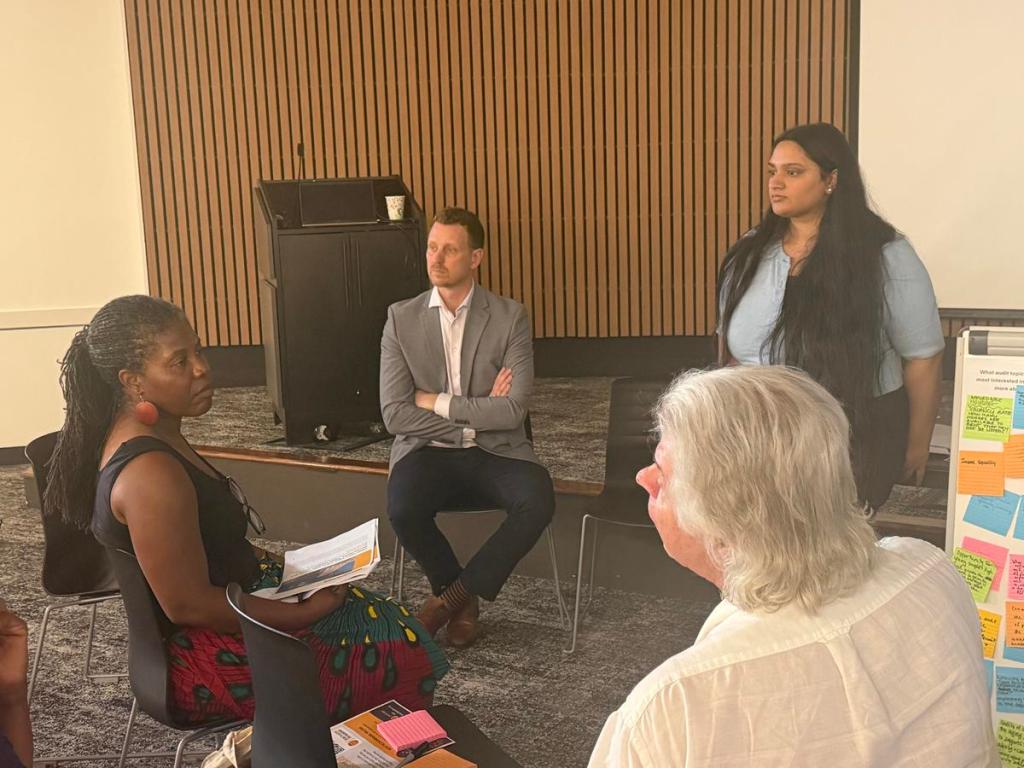
Results have been shared with elected city leaders and department heads. The public was given an explanation of findings Tuesday at Martin Regional Library with the opportunity to comment.
Some spoke about the need to make it easier to pay a utility bill, put meeting transcripts online and use “plain English” on municipal documents. Discussion also veered into how Tulsa can better leverage resources for more youth programming and services for stray animals.
Since Pickard took office in December 2024, he has shaped the department into more than legally required financial audits with expansions into performance audits of services and contracts. He drew no opponent in this year’s election and will begin his new four-year term in December.
High trust but little collaboration
Two points stuck out to Pickard: interactions between neighbors and confidence Tulsans have in their ability to make a community impact.
More than 85% of Tulsa residents say they trust their neighbors, but less than half said they worked with neighbors in the past year to fix something in their area.
“There is this big opportunity to look at how we can work together in our neighborhoods to solve problems,” Pickard said. “With these survey results, we’re now asking people if they see something in their area that is horrible or needs improvement, is it something neighbors can work as a group to solve, do they need city help or is it something only the city can fix, like roads?”


Nearly 60% of Tulsans say their actions do not make a difference in their community,
“When city leaders saw that, they were sad about the number,” Pickard said. “But, I think that there is a whole range of ideas on how we can talk about things differently — where it’s not about us doing for them but about how you can make an impact, you can make things happen.”
The biggest vote of confidence went to the Tulsa Fire Department, with 97% saying they have “a lot or some” trust in the department. City leaders finished lowest, with 61% giving a thumbs up.
Deputy City Auditor Mike Stout led the data collection and analysis. About 2,800 responses were received, and all but about 300 were from city of Tulsa ZIP codes. Highest responses came from north and midtown neighborhoods.
Stout said the survey doesn’t have the sophistication of a probability model. He called it a convenience sample, which is typically conducted when time and resources are limited.
“We cast as broad a net as possible and tracked where results were coming from,” Stout said. “We did outreach in parts of the community that were harder to reach.”
Like Pickard, the findings about high neighbor trust but low cooperation stood out to Stout.
“It has me thinking about how this data can be used to positively impact civic engagement … to figure out ways to increase opportunities for folks to come together,” Stout said. “Oklahoma has among the lowest levels of civic engagement and voter turnout in the country. How do we build on social capital to have cohesive, strong networks within communities to address problems?”
The results and comments from the public and city officials will determine which audits Pickard’s office will emphasize. Pending reports on homelessness and roads drew from last year’s survey results, he said.
For more information about city audits, visit tulsacityauditor.org.
News decisions at the Tulsa Flyer are made independently of our board members and financial supporters. Read more about our editorial independence policy here.