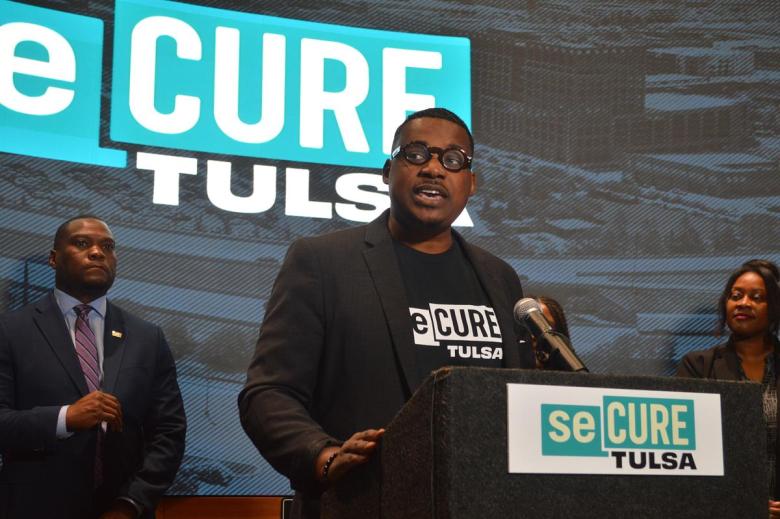
As violent crime trends down across Tulsa, a new initiative hopes to tackle persistent hotspots.
Organizers with My Brother’s Keeper Tulsa, Youth Services of Tulsa and the Terence Crutcher Foundation joined Mayor Monroe Nichols Tuesday for the relaunch of Secure Tulsa, a community-based violence intervention initiative.
Fueled by a $2 million grant from the Department of Justice, the initiative seeks to reduce gun-related violence through mentorship, increased access to mental health services and community engagement.
“Safety is the foundation for everything else we hope to achieve,” BerThaddaeus Bailey, managing director of My Brother’s Keeper Tulsa, said. “If our young people and their families are not safe, nothing else matters.”
One facet is enlisting the help of violence interrupters, known as credible messengers. These are trusted, non-law enforcement figures in the community who serve as mentors and conflict mediators.
“Outreach workers and violence interrupters at YST and Terence Crutcher Foundation are building relationships with individuals at the highest risk for violence, connecting them to education, workforce training, housing, mental health services and long-term support,” Bailey said.
Cities across the country, like Jackson, Mississippi and Baltimore, have similar programs. So far, four credible messengers have signed on for the Tulsa initiative and the group hopes to soon launch a referral program for at-risk youth to receive support.
Neighborhoods between 56th Street North and East Pine Street, along with the area between Martin Luther King Jr. Boulevard and Peoria Avenue, are the primary targets, Nichols said. Officials specifically chose these areas based on homicide and gun violence rates.
He acknowledged that north Tulsa neighborhoods are key targets, but cautioned it shouldn’t define the community negatively.
“It’s not a definition of the people who live there but it defines conditions that have been allowed to fester over time,” Nichols said.
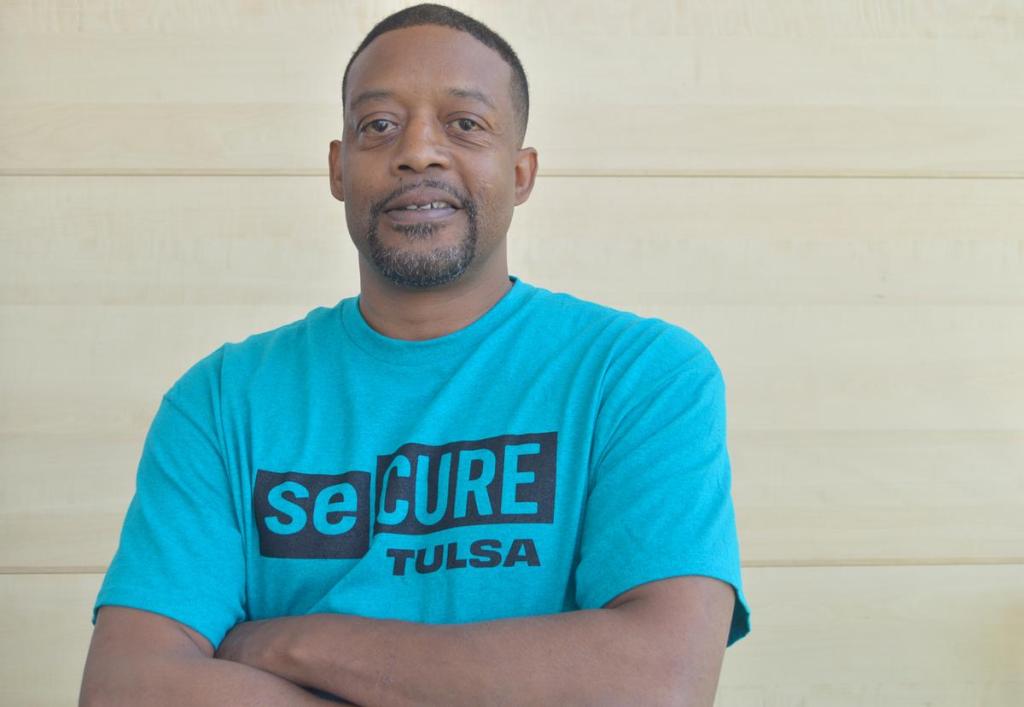
Changing narratives about north Tulsa and serving as a mentor is a mission Damian Rozell, a credible messenger for Secure Tulsa, takes seriously.
“I’m a grandfather. I’m able and willing,” he told The Eagle. “I’ve got the heart for it.”
Terence Crutcher Foundation CEO Tiffany Crutcher issued a call to action to other community members and faith leaders to step up.
“Open up your eyes and ask the question, ‘Do you know where your child is when the lights come on at night?’ Are you giving your time? Are you including our children and our young adults into the things that matter and offering them the best that Tulsa has to offer?” she said.
This is the latest move by the city to ensure kids and teens are staying safe. Last fall, city councilors voted to extend a youth curfew through October 2026. It prevents unaccompanied minors from being downtown from 9 p.m to 6 a.m. on Fridays and Saturdays.