Give back what you’ve been given so freely.
This is Estelle Turbyfill’s motto for her work as an intern at Operation Hope Prison Ministry. Before her current role, she was an inmate herself.
When Turbyfill was 13 years old, she killed a child while driving drunk. She went to prison for the first of what would become three stints behind bars.
She left prison for the last time in 2002. At age 52, she says she was freed from her “twisted mindset” of shame and helplessness.
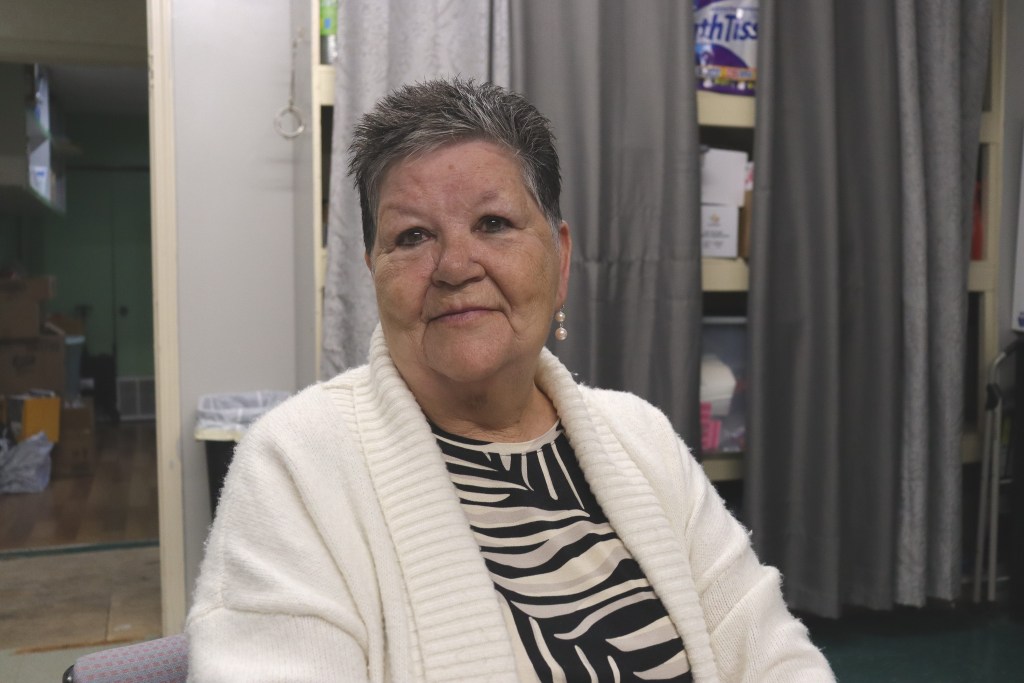
“It was stuffed so deep inside of me, I didn’t want it to come out (of) my mouth until I found prison ministry and someone gave me the courage to talk about it,” said Turbyfill, now 78. “Then the chains of bondage just melted off of me, and it was miraculous.”
Operation Hope is a Christian-based nonprofit in Tulsa helping incarcerated people reenter society. They provide nearly a dozen services, from handing out backpacks with clothes and food to obtaining identification documents. Other gaps, like housing, are filled by their partner organizations.
When someone leaves prison, it’s often with their clothes, $50 and maybe a bus pass. Todd Gessele, executive director of Operation Hope, wants the nonprofit to be the first place they go. There, clients meet people like Turbyfill, who aspires to be a mirror — reflecting a grounded faith in God and all the people who helped her before.
“Welcome home,” Turbyfill said. “You’re not just a number. We’re going to call you by your name, and we try to find out where we can help them get comfortable being inside of their own self.”
Inside the operation
In 2025, Gessele says Operation Hope helped more than 1,800 people, including about 850 formerly incarcerated Oklahomans along with their children and caregivers. After release, clients are equipped with a reentry plan, resources for starting a stable life and a backpack with underwear, jeans, chips, fruit snacks and more.
“A lot of people don’t understand reentry,” Gessele said. “They don’t understand how tough it is to come out with nothing and to get back on your feet.”

Snacks for backpacks at Operation Hope Prison Ministry, Monday, April 20, 2026. Operation Hope Prison Ministry, 739 North Denver Ave., is a faith-based nonprofit helping people who were incarcerated. 
Clothes for backpacks at Operation Hope Prison Ministry, Monday, April 20, 2026. Operation Hope Prison Ministry, 739 North Denver Ave., is a faith-based nonprofit helping people who were incarcerated.
Operation Hope pays for clients to acquire birth certificates and other identification documents, which they often need to find a job, open bank accounts and find housing. They help people get free or low-cost phones at Assist Wireless. They also pay for bus tickets, bicycles, clothes, tools and shoes for work.
Through a car club program funded by donors, Operation Hope guarantees car loans at 4.3% interest rates with First Pryority Bank.
Clients are referred to another program for anything else they may need, Gessele says. Housing is one of the things Operation Hope doesn’t cover, although they’ve provided emergency housing before. Gessele once drove to Vinita, Oklahoma, to help a client at risk of going back to jail check into a hotel that night.
Gessele, who joined recently, says he’s there to scale the operation. That work starts with an Urban Survival Guide, a one-stop shop for all kinds of resources in the Tulsa area. It includes information about enrolling in SoonerCare or finding a shower.
“If we can’t give hope, we’re going to shut the door,” Gessele said. “So I’m in this to scale it or fail it.”
Inspiring others to hope
Turbyfill hated God for taking away so many close people in her life: her mom, dad, grandma, grandpa and second husband. She turned that relationship around after finding prison ministry. She says she uses her faith to inspire others at Operation Hope.
“My fear just kept me burying myself all the time,” Turbyfill said. “So I was lost in it until somebody mirrored something different.”

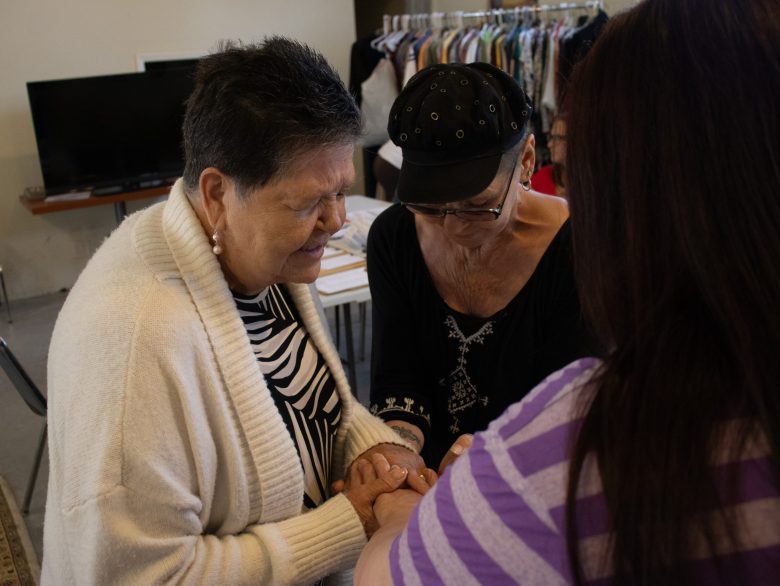
Prayer is at the heart of Operation Hope Prison Ministry. Before work, ministry staff ask God to be the very best they can. They also lay hands over all who walk through their doors.
People have to be broken to be blessed, Turbyfill says, admitting she loathed herself after the deadly incident that first sent her to prison. But after she found prison ministry, Turbyfill got back into painting, with the young victim in mind. It’s intense, emotional and healing, she says.
While she’s been out of prison for years, she’s still working through parts of a 12-step recovery program and finds comfort in helping others through their reentry journeys.
Find more information about Operation Hope Prison Ministry by calling (918) 599-0663 or (918) 869-9860, visiting in person at 739 N. Denver Ave. or clicking here.
News decisions at the Tulsa Flyer are made independently of our board members and financial supporters. Read more about our editorial independence policy here.