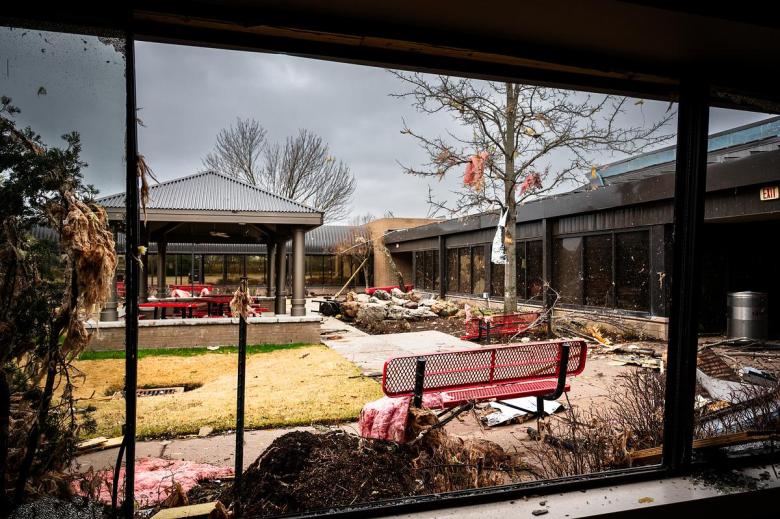
Weather is on top of mind for Oklahomans this time of year as April and May are historically the months for producing the highest amount and most violent tornadoes.
Since tornadoes can strike quickly — late evening thunderstorms can produce one — having a plan for what you will do and where you will go well is necessary.
What sirens actually mean
As weather prediction models become more accurate, so are our warning systems, according to Bill Smiley, director of Tulsa County Emergency Management.
Previously, sirens blared through the entire county when a radar detected rotation and a possible tornado, Smiley said. But that’s changed.
Today, the warning system automatically triggers sirens in the direct path of the storm. Smiley said if you’re in an area where sirens sound, you’re in the path of the storm and should seek shelter.
Fun fact: Sirens were not designed to be heard inside. If you’re in your house you may not hear it.
“The whole siren system was specifically designed for outdoors,” he said. “You’ve got to use one of the other social media platforms or have weather radio or something like that” if you’re indoors.
You can add weather alerts to your smartphone, follow the National Weather Service or local TV stations. KOTV, KTUL, KJRH and Fox 23 all offer weather apps.
Smiley also recommends Tulsa Ready — an app developed by Tulsa’s emergency management.
The difference between a watch and a warning
A watch means weather conditions are favorable for producing a tornado. A warning means a rotation has been detected by radar and you should seek shelter immediately.
By the time sirens sound it’s too late to safely travel to another location for cover.
Forecasting technology is steadily improving, according to Tulsa’s lead meteorologist Steve Piltz, with Tulsa’s National Weather Service office.
“Our ability to forecast storms is better. The ability to detect is better,” he said, adding that the goal is to get more information out to the public before the warning is actually triggered. “We do some of that now mostly internally, between emergency managers and meteorologists, but you’ll start to see more of that in the public realm too, as time goes on.”
He said usually, “it’s about 12 minutes from the warning to the first damage.” But Piltz noted that larger locations — like the BOK Center or nursing homes — need more time to react.
Make a plan
The Oklahoma Voluntary Organizations in Active Disasters (OKVOAD) will hold a weather expo in Tulsa on May 30, from 11 a.m. to 2 p.m. at the Salvation Army Tulsa Area Command Center.
Experts will be on hand to talk about how to better prepare for severe weather and other emergencies. They will have checklists and resources to handle the emotional impact and property damage after a storm.
OKVOAD volunteer Christa Figgins keeps a “go bag” with medicines, important papers, snacks, water and extra shoes ready for emergencies. She recommends everybody have one year round.
“You kind of have to stay weather aware when you move to Oklahoma, especially in the spring, but … we’ve had EF4 tornadoes in December,” Figgins said.
Plan where you will go
Decide on your shelter location ahead of time. Getting underground in a basement or tornado shelter is advised but when that’s not possible, head to an interior room without windows or under a staircase.
Experts warn that you should not leave once the siren sounds, and to not drive after the rain starts.
Even as the technology has improved, forecasts can still be wrong but it’s better to be safe than sorry.
“Accept that some days will look bad and then not produce severe impacts, and still take precautions,” Figgins said.
Practice your plan
Do family tornado drills so nobody freezes when sirens or alerts activate, Figgins said.
Walk through it. Make sure your bag is ready and stocked with all you will need for at least 48 hours after the store. Make sure you have flashlights, batteries and a weather radio or app to watch for updates.
Plan for people in your life like kids, parents and pets and decide where you will meet if you’re separated. If your decision is to shelter in another location, you need to leave hours before the storm is expected. Also, make sure everyone is on the same page.