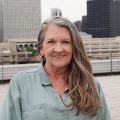
Eight years into its existence, Tulsa Remote has hit a milestone: welcoming 4,000 people to the city.
The program started in 2018 as an attempt by the George Kaiser Family Foundation to put Tulsa on the map. What ensued was a work relocation program that attracted national attention, said Justin Harlan, executive director of Experience Tulsa, the nonprofit that oversees Tulsa Remote.
Harlan said the early definition of a “remote worker” was virtually anyone who can live wherever they want and do their job. But that scope has been refined over time.
“I think we’ve gotten a bit more prescribed in terms of what is a true remote job that’s additive to the economy here,” Harlan said.
In its first year, Tulsa Remote welcomed a group of 70 people. Then, 2020 arrived.
“Once the pandemic happened, there were far more people that we could target, and so we really capitalized that opportunity for the city,” he said.
That’s when entrepreneur Cymone Davis moved to Tulsa. She was already familiar with the city but said the program was a vehicle for her to begin working toward her mission to lift up Black towns across the country and establish a Black boarding school.
“They helped me in the development of my business,” Davis told The Eagle. “And as town manager of Tullahassee, Tulsa Remote members helped fund a community cleanup that we hosted to show people Black joy instead of the Black trauma that was in the news at the time of the 1921 Tulsa Race Massacre centennial.”
Harlan said Tulsa Remote has “certainly slowed” since the COVID years but last year they welcomed “right around 500” people.
Harlan said GKFF took a risk to sponsor the program, trusting that people would stay if they could get them here.
“It was really kind of a bet that if we gave people that perk, that they’d stick around and the return on investment would pay itself off over time,” he said.
For every $1 spent on the program, the city has received an economic return of $4 through local spending, job creation and increased tax revenue, according to Tulsa Remote. Collectively, workers have delivered more than $878 million to Tulsa’s economy and have created more than 1,000 jobs, Harlan said.
But he says the true mark of success is 70% of all Tulsa remote workers continue to call the city home.
“I think early on, this was an effort to put Tulsa on the map for people that may not have otherwise given Tulsa a chance,” he said. “It often takes a little bit of more effort to get somebody to Tulsa, but once they’re here, they’re very likely to stay.”
The idea of Tulsa Remote wasn’t initially embraced by residents. There was fear of competition, resentment about having no similar program or financial assistance for locals and worry that it could contribute to rising housing costs.
Obum Ukabam was one of the first Tulsa Remoters. Being a part of the first wave, Ukabam said the group had more challenges integrating into the community. While Tulsa Remote rolled out the red carpet, they were received with skepticism locally.
“There was nobody who had any idea what it was going to be,” he said. ”We stood up and we said: ‘Hey, I’m more than just the person you brought in for $10,000.’”
Ukabam immediately immersed himself in supporting what others were doing in Tulsa, whether through local nonprofit groups or events.
“I just wanted to listen . ..and also learn my place, because I know coming in, you have to respect the territory,” Ukabam said.
Now, he works with students to develop opportunities in theater while teaching drama at Central High School.
Hundreds more Remoters like Ukabam are set to arrive soon. This year, Harlan said, the program will work to bring in another 550 people.
Disclosure: Tulsa Remote receives financial support from the George Kaiser Family Foundation. GKFF also provided financial support for The Oklahoma Eagle and Tulsa Flyer. News decisions are made independently of our board members and financial supporters. Read more about our editorial independence policy here.