


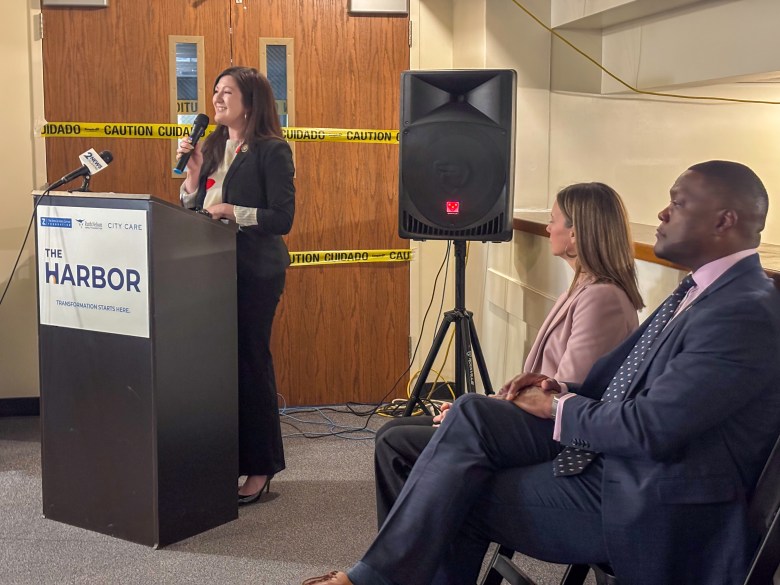
Tulsa officials and project leaders unveiled plans Tuesday for a $16 million dollar renovation to create a new low-barrier homeless shelter. Called The Harbor, it’ll be located at the former juvenile detention center in west Tulsa at 315 S. Gilcrease Museum Road. The announcement comes five months after the city purchased the building from Tulsa County for $500,000.
By December 2026, the 43,000-square-foot facility is expected to feature 23,000 square feet of shelter space. That includes 180 beds, 32 toilets, a day center, a commercial kitchen and a fully equipped kennel for 38 dogs.
Officials will decide on what to do with the remaining 20,000 square feet after one to two years of operating the shelter. An additional $1 million is expected to be spent on planning, design and launch costs.
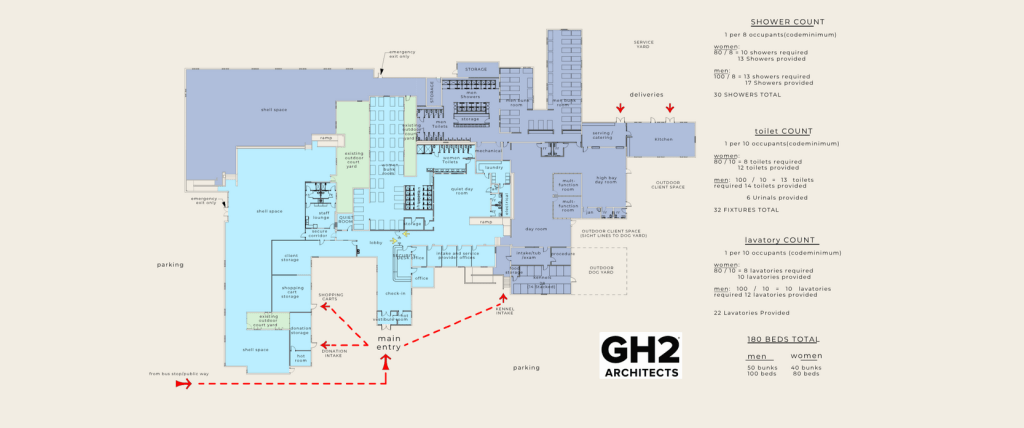
Key parts of the renovation process include roof replacements, security and safety, flood mitigation and making sure the facility is up to code on disability accessibility.
The Harbor will be owned and managed by The Anne & Henry Zarrow Foundation. Bill Major, president of the foundation, said it will work to create a special $5 million operating fund through private contributions to ensure the shelter is sustainable for at least the first four years.
The renovations are being done in collaboration with the Ruth Nelson Family Foundation and City Care of Oklahoma City, who expect to hire 40 employees. They’ll help operate the space and transition people into long-term housing.
“A lot of the folks that come to our low-barrier shelters are employed. They are just employed at a wage that isn’t livable,” Rachel Freeman, president and CEO of City Care, said. “If they’re employed, we’re going to work on that housing navigation piece pretty quickly, but if they need access to benefits or employment, we work on that first.”
District 4 Councilor Laura Bellis, who represents the area where The Harbor will be located, noted the city has spent time speaking with the residents who will be near the facility in the Crosbie Heights neighborhood.
“Crosbie Heights is one of the neighborhoods most disproportionately impacted by homelessness in our city,” Bellis said, noting that the community is very close to existing shelters. “It could have been easy for them to go, ‘No, not one more thing in our backyard.’ And that’s not been the case. They go, ‘Yes, we want to be part of the solution.’”
A low-barrier shelter is meant to minimize the requirements of entry for people in need of housing. The Harbor will not require sobriety, employment or enrollment in prescribed programs.
A key part of Mayor Monroe Nichols’ administrative promises has been to achieve functional zero homelessness by 2030. The mayor’s office launched “Safe Move Tulsa” last year, a $10 million plan to house 300 people in nine months.
As of Tuesday, Nichols said 70 people have been rehoused and five encampments have been closed. He expects to see a rapid jump to over 100 people “pretty soon” as they work more people through the pipeline.
The Harbor intends to increase the number of people accessing emergency shelter in Tulsa by 180 per day and 2,300 annually.
There were 1,449 people experiencing homelessness in January of last year, according to Housing Solutions Tulsa’s annual Point in Time Count. Results of the 2026 count have not yet been released.
Ismael Lele is a Report for America corps member and writes about business in Tulsa for The Oklahoma Eagle. Your donation to match our Report for America grant helps keep him writing stories like this one; please consider making a tax-deductible gift of any amount today by visiting this link.
