


More than a century after the 1921 Tulsa Race Massacre, members of Greenwood’s Vernon AME Church are determined to tell their own stories.
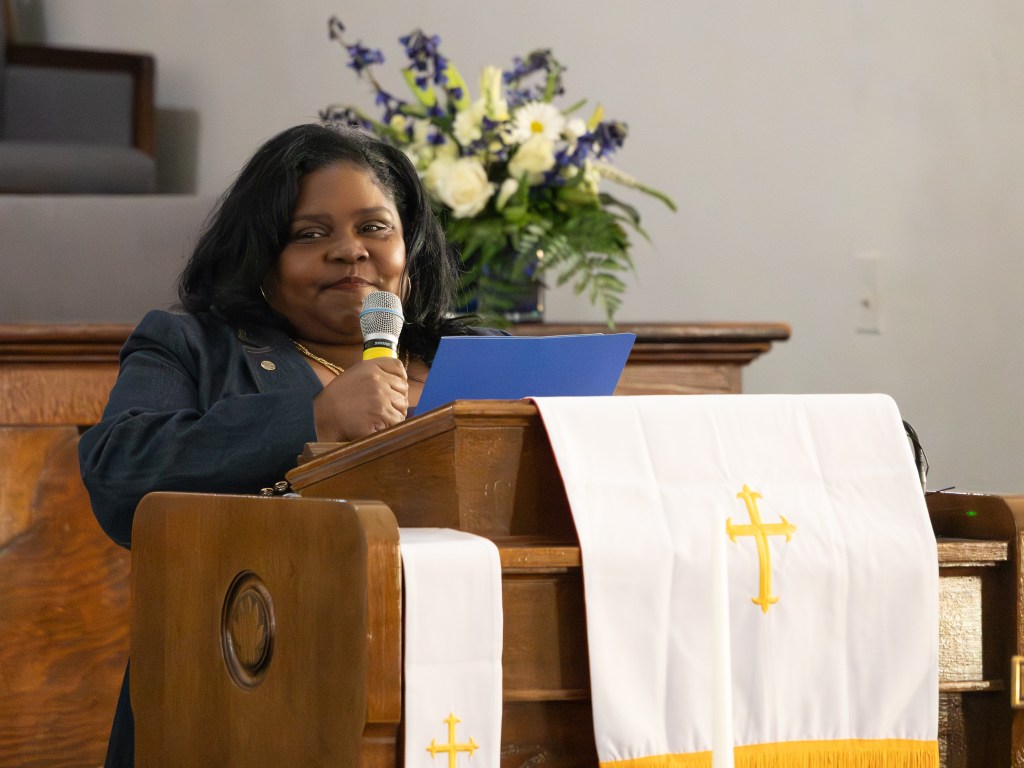
Archivists, archeologists and elected officials lined the pews of the church Thursday for the unveiling of The Vernon Witness, a multi-year project to preserve the church’s basement and turn it into a museum and cultural center.
Survivors found refuge by hiding in the basement as the upper floors of the church were destroyed.
Church officials say Vernon is the last remaining Black-owned structure still standing in the area after it was rebuilt in 1925.
“Vernon absorbed the trauma, the terror, the smoke and the fear and stood as a witness. Now, the church that absorbed trauma will teach truth,” Kristi Williams, a member and massacre descendant, said Thursday.
Williams, who founded community education program Black History Saturdays, spearheaded the preservation initiative. She sees the space as “not just history but inheritance.”
The initial phase of the preservation project is expected to take about 18 months. It is made possible, in part, due to $1.5 million in funding from The Mellon Foundation.
Alicia Odewale, a Tulsa native and one of the archeologists working on the project, said at its completion, visitors will see over 5,000 artifacts from the church and Greenwood.
“Everything our ancestors left behind to tell that story will be restored,” Odewale continued.
Odewale was teaching college courses in Texas when she first got the call from Williams to work on the project. She told The Eagle she believes it was God’s divine timing to bring her back home to join the team.
She sees the preservation of the church as a call “to bring our artifacts home and bring our people home.” Odewale and others on the team of preservationists said one of their primary concerns is ensuring artifacts are properly preserved — something they say has not always happened in the past.
“I was angry about how some artifacts were, frankly, thrown away,” Odewale told The Eagle following the ceremony. “It’s crazy how our history keeps being literally thrown away because we don’t have a place to store our artifacts, we don’t have a place to display them and keep them from being thrown away. These are the things that our ancestors left behind for us.”
The museum space will also illustrate the church’s founding, highlight members of the congregation and tell the story of how they rebuilt.

Williams envisions an exhibit where visitors will hear some of the sounds people heard during the massacre as they hid from the violence. “I want people to really feel it,” she said.
Ultimately, Williams wants Tulsans young and old to embrace where they come from.
“Our history is being taken from us. It’s being deleted as we speak,” Williams said. “Knowing your history, there’s a power in that. It helps with identity and knowing who you are.”
