

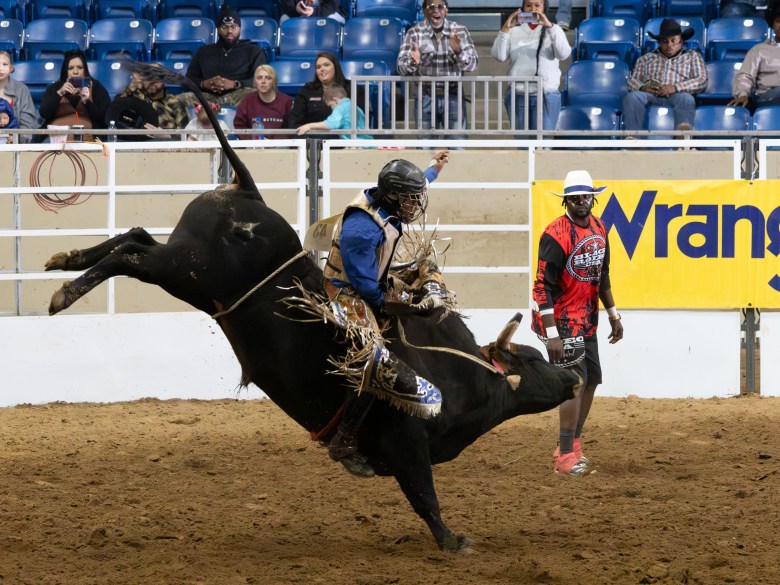
Decked in cowboy hats, boots and pride, hundreds of people crowded into the Ford Truck Arena Saturday night for the opening circuit of the Black Rodeo USA season.
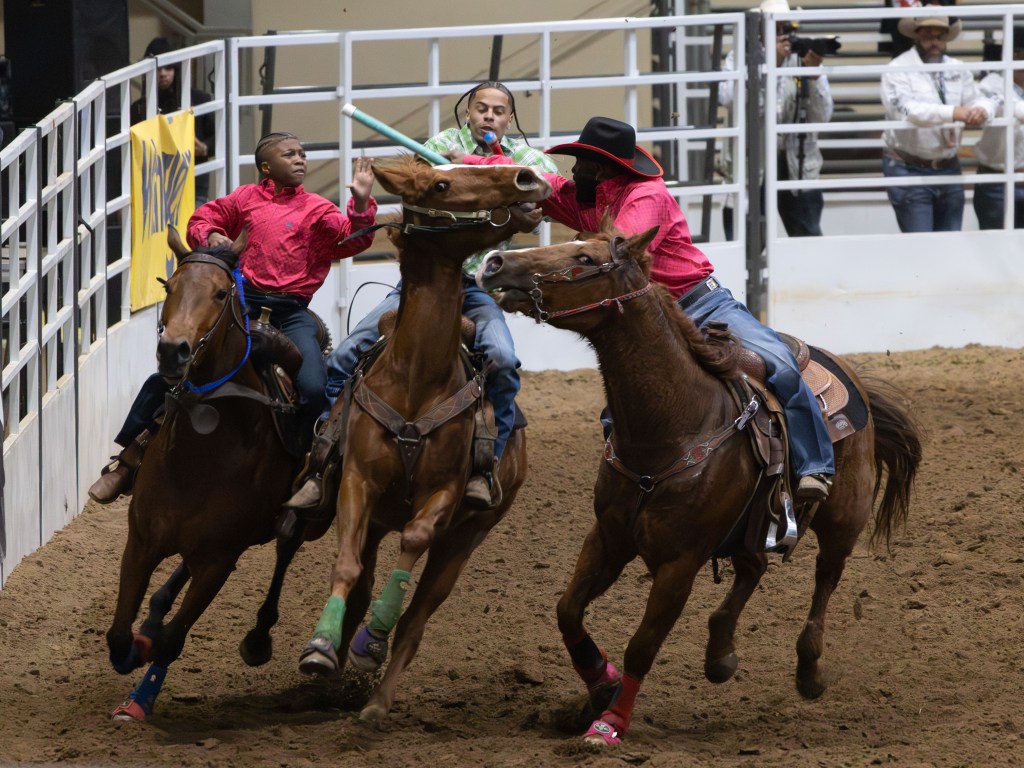
For generations, Black rodeos in Oklahoma have offered a platform for cowboys, cowgirls and juniors to compete for cash prizes. Saturday’s event was no different as people watched steer wrestling, calf roping, barrel racing, bronco riding, bull riding and the famous Pony Express relay race.
“It’s adrenaline pumping, but at 51 I still get nervous,” Katina Goff told The Eagle.
Goff, whose entire family is from Tulsa, is a timekeeper and barrel racer. She said many of them compete in rodeos.
“I’ve been running barrels for a long time,” she said. “We ride horses all our life. A lot of people don’t know there’s Black cowboys and cowgirls because when you watch TV you hardly see it.”
Communities across Oklahoma boast decades-long traditions of independent rodeos as a response to limited opportunities during segregation. As far back as the 1800s, Black cattle and ranch workers, who were often formerly enslaved or Civil War soldiers, became some of the first cowboys despite being nearly erased from Hollywood westerns.
For Midwest City bull rider Savion Strain, eight seconds atop a bucking bull felt like an eternity, but the energy from the crowd didn’t disappoint.
“It felt good, good interaction and good people all around,” Strain said after competing earlier in the afternoon.
LaMark Carter, an Oklahoma City steer wrestler, didn’t make a qualifying time, but he said it was important to honor the legacy of those that have come before him.
“Our ancestors did it, so we should do it,” Carter said. “It’s a way of life. Some people grew up in the streets. Some people grew up in the country.”
Instead of traditional country music, crowds grooved to the vibes of hip-hop stars like Kendrick Lamar and GloRilla as announcers listed Black history facts between events. The night began with a base-bumping performance from the Langston University drumline — Oklahoma’s only HBCU.

Karlos Hill, an African American studies professor at the University of Oklahoma, said this cultural moment is an accurate reflection of history.
“A Black rodeo is a direct rebuttal to the myth that the American West was a white story,” Hill said. “One in four cowboys in the American West was Black, and that cowboy work paid more than sharecropping. The rodeo offered a viable path toward economic independence.”
Former Tulsa Outlaws member Charles Owens couldn’t make Saturday’s show, but he still supports Black rodeos more than a decade after an accident during the Pony Express caused him to become paralyzed from the waist down.
“You can get hurt walking down the street. Just because I got hurt at a rodeo doesn’t mean I have to stop supporting rodeos,” Owens said.
He wants the younger generation to take pride in their culture and rich history as elders remember the past discrimination from white-owned rodeos.
“They made them participate after the main rodeos. And come to find out, a lot of contestants, a lot of good contestants, were African Americans. So once they stopped segregating and started seeing it, (that’s) when they opened it up to everybody,” Owens said.
In a state with more historically all-Black towns than any other in the nation, he said Black rodeos are here to stay.
“Why stop something that we started?” Owens said.