


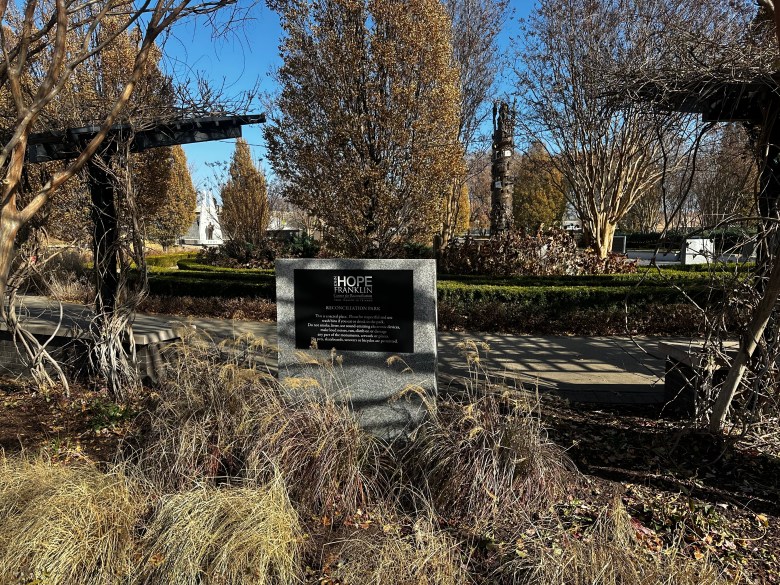
The John Hope Franklin Center for Reconciliation wants to raise $10 million to build a new facility at Reconciliation Park. The capital campaign, which launched Monday, is an effort to honor the legacy of Greenwood and its relationship with Native American culture.
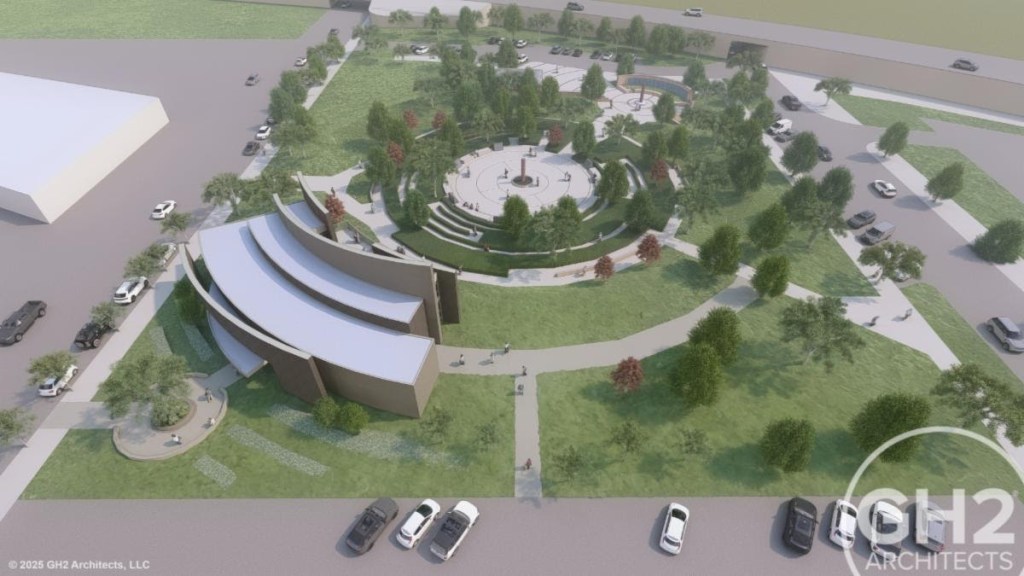
Renderings show the facility being located at the southwest corner of the park. It will serve as the entry point and house manuscripts and publications highlighting Black life in Indian Territory. The north facing wall of the building will be all glass, allowing visitors a visual of the park from inside, said Reuben Gant, executive director of the John Hope Franklin Center.
“We want to connect those historical dots to give people a true picture of Black life in Indian Territory and Oklahoma and how it intersects and connects with other cultures,” Gant said. He says the ultimate goal is creating a more harmonious community.
Most people, Gant said, don’t know that Black people traveled alongside Native Americans when they were forcibly removed from the southeastern U.S. Then there’s the Freedmen — descendants of enslaved people who were brought to Oklahoma by the Muscogee (Creek) Nation. These are the historical moments the center plans to highlight.
“Freedman citizenship plays a part in that, because Tulsa itself is in Indian Territory and is allotment land,” Gant told The Eagle.
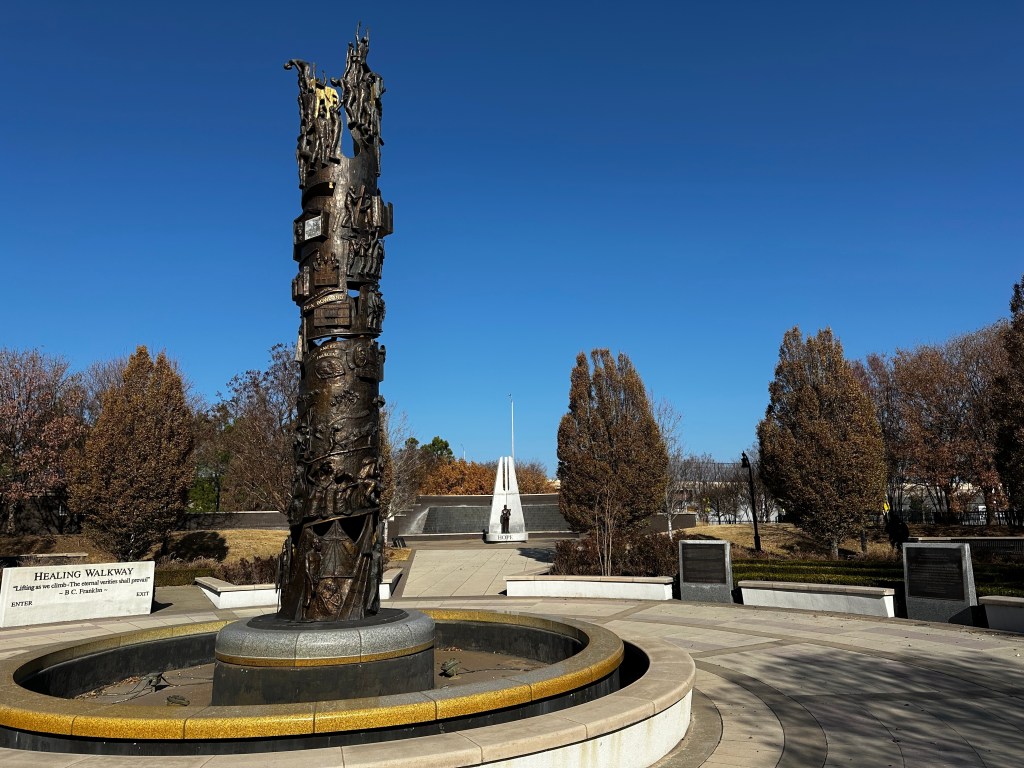
Reconciliation Park, located on 321 N. Detroit Ave., offers visitors a chance to walk through a short history of Black life in Oklahoma and its foundation in Tulsa. Its “Tower of Reconciliation” depicts enslaved people walking the “Trail of Tears,” entering Oklahoma, creating Black towns, surviving the 1921 Tulsa Race Massacre and rebuilding.
“We want to bring out that Greenwood was more than an event in one day of the year,” he said in reference to the massacre. “The legacy of Greenwood is much more than that.”
Strategic planning for the center first began in 2013. Gant said he doesn’t have a timeline for how long it will take to raise the money, but they’re no stranger to patience.
Two decades ago, the state allocated money to create a memorial to the massacre but halted funding in the midst of construction, Gant said. A committee led by Julius Pegues had to raise the rest of the money on its own.
“(It took) probably five years from start to finish, and that included two years or so (of) lobbying the legislature to reinstitute the funding — which we weren’t successful at doing — which caused us to go out and attempt to raise the funds from the community, which we did,” Gant said.
The committee tasked with creating the memorial later transitioned into the John Hope Franklin Center, named after the late historian.
At the moment the center doesn’t have any historical artifacts, but it plans to build a collection of articles and manuscripts before opening. Disseminating knowledge is its main goal. In keeping with that mission, access to the center will be completely free to the public, Gant said.
“We intend to reach out and touch as much of history as we can. We will continue to bring in speakers, historians, practitioners into the space,” Gant said. “We’ll have conversation space, dialogue space, where the public would be invited to discuss issues of concern as it relates to how we get along as different cultures.”
Ismael Lele is a Report for America corps member and writes about business in Tulsa for The Oklahoma Eagle. Your donation to match our Report for America grant helps keep him writing stories like this one; please consider making a tax-deductible gift of any amount today by visiting this link.
